
Echinosteliales
Echinosteliales
Description
Symptoms
The primary sign of their presence is the formation of tiny, often microscopic fruiting bodies known as sporangia.
These sporangia typically consist of a slender, thread-like stalk topped with a spherical head containing spores.
They are often observed on decaying plant debris, tree bark, and sometimes on the surface of damp greenhouse substrates.
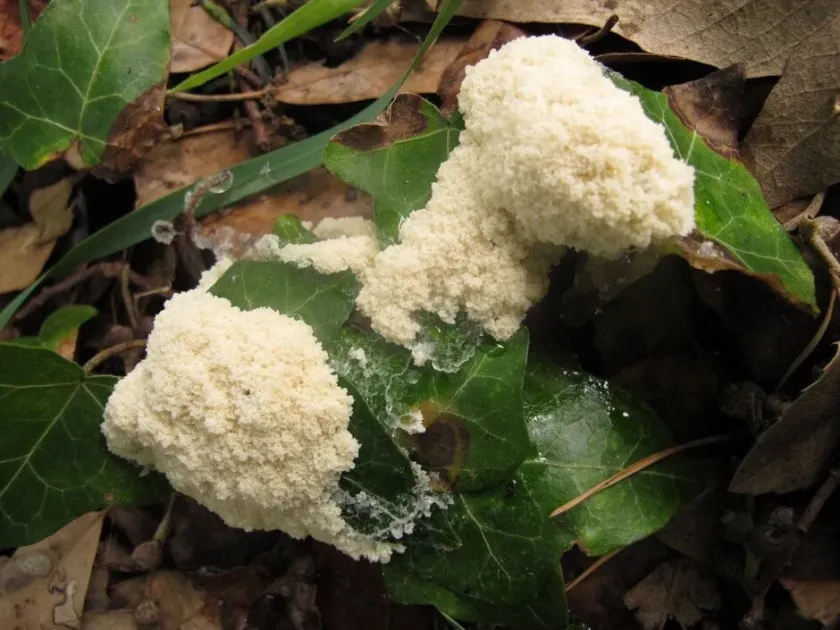
Visually, they appear as minute, whitish or translucent dots that can be difficult to distinguish without a magnifying glass.
Under heavy infestation, the surface may appear covered in a fine, powdery, or hazy layer caused by mass sporulation.
Pathogen
Echinosteliales is an order of slime molds (myxomycetes), which are fascinating organisms characterized by a dual life stage.
These organisms are not true pathogens like fungi, but rather amoeboid protists that function primarily as saprotrophs.
Their life cycle consists of a vegetative mobile plasmodium phase followed by a reproductive stage where they produce spore-bearing bodies.
While they are found on plant surfaces, they are typically decomposing organic material rather than invading living host cells.
Taxonomically, they belong to the kingdom Myxomycota and represent a group of microscopic, soil-dwelling or bark-dwelling organisms.
Conditions for development
Echinosteliales thrive in high-humidity environments where moisture is consistently available on surfaces.
Shaded areas with poor airflow provide the ideal conditions for the plasmodium to migrate and eventually form fruiting bodies.
Moderate temperatures and abundant decaying organic matter are key drivers for the development of these slime molds.
In greenhouses, condensation on leaves or trays creates a micro-climate conducive to their life cycle.
They are less common in dry, well-ventilated environments where the surface moisture evaporates quickly.
Why it matters
These organisms do not cause disease in healthy crops and are generally considered harmless from an agronomic perspective.
They act as natural decomposers, breaking down organic tissue that is already in a state of decay or senescence.
While they do not harm the host plants directly, their appearance often indicates that the environment is too humid.
They can sometimes be perceived as a nuisance in commercial nurseries due to their visual impact on plant pots and soil surfaces.
The presence of slime molds should be viewed as an indicator of environmental conditions rather than an active pathological threat.
Protection
Control measures for Echinosteliales are largely focused on managing the environment rather than using chemical pesticides.
Improving air circulation and lowering humidity levels is the most effective way to limit their population.
Good sanitation practices, such as removing dead leaves and rotting plant matter, eliminate their food sources.
Ensuring proper soil drainage and avoiding overhead irrigation can help keep plant surfaces dry and unsuitable for growth.
Fungicidal treatments are generally unnecessary as they are ineffective against these non-fungal organisms.
Discussion
No discussions yet — be the first.