
Echinosteliaceae
Echinosteliaceae
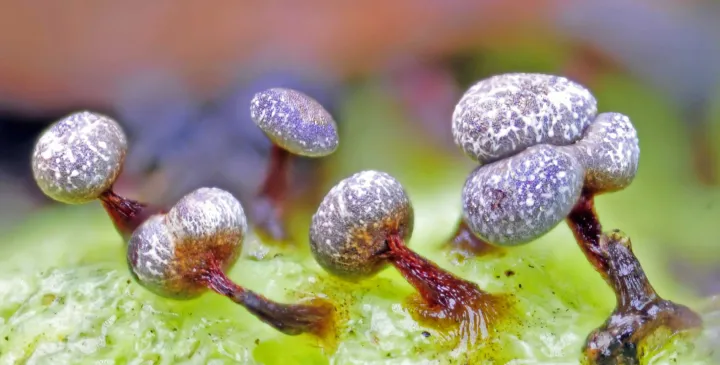
Description
Symptoms
The main sign of Echinosteliaceae presence is the formation of tiny, almost invisible spherical bodies on stalks located on the surface of bark, leaves, or stems.
Affected areas often appear as a light, dust-like coating that sheds easily upon touch, as it consists primarily of spore masses produced by the organisms.
The color of the fruiting bodies can vary from white to pink or light brown. They are frequently misidentified as common mold fungi by gardeners and farmers.
When young seedlings are affected, slime molds may cover the surface with a dense film, hindering gas exchange and slowing down the plant's overall development.
- Microscopic ball-shaped structures on stalks.
- Dusty, easily removable coating on plant parts.
- Localized discoloration of the plant epidermis.
- Mucus secretions in high-humidity environments.
Pathogen
Echinosteliaceae are a family of myxomycetes, or slime molds, which are not fungi in the traditional biological sense. They are unique protists capable of amoeboid movement during the plasmodial stage.
The pathogen forms microscopic sporophores after the fusion of myxamoebae. These organisms inhabit soil, decaying plant matter, and tree bark, finding favorable conditions for growth.
Unlike true pathogens, Echinosteliaceae rarely feed on living plant tissues. They typically act as saprotrophs, consuming dead organic matter and assisting in decomposition processes.
The biology of the species is characterized by tiny sporangia, often featuring a distinct stalk and head, which allows for effective dispersal via air currents.
It is crucial to distinguish between phytopathogenic fungi and slime molds, as the management strategies for these groups differ significantly due to their distinct biological cycles.
Conditions for development
The development of Echinosteliaceae is directly dependent on environmental humidity levels. They prefer shaded and damp areas with poor air circulation.
The optimal temperature for the active growth of the plasmodium stage ranges from +18 to +25 degrees Celsius, provided there is stable substrate moisture.
An abundance of rotting organic matter, such as fallen leaves and plant debris, creates an ideal nutritional environment for the growth of these colonies.
Spore dispersal is facilitated by wind, water splashing during irrigation or rainfall, and insects that can transport them to healthy parts of the plant.
During dry spells, slime molds can enter a dormant state by forming resistant spores, which remain viable in the soil for several years until conditions improve.
Why it matters
The main hazard posed by Echinosteliaceae is the mechanical contamination of plant surfaces and the potential inhibition of natural physiological processes.
They often act as indicators of poor sanitary conditions, signaling excessive humidity and the presence of decomposing waste near the crop areas.
In greenhouse operations, slime molds can spoil the aesthetic value of produce, covering leaves with an unpleasant film that is difficult to remove without damage.
While direct parasitism is extremely rare, mass coverage of vegetative organs may lead to secondary bacterial infections by blocking the plant's stomata.
Economic losses are usually indirect, involving labor costs for cleaning the produce and performing sanitation tasks within the facility.
Protection
The best prevention method is to maintain cleanliness in the growing area and promptly remove plant residues that serve as a substrate for slime molds.
Regulating air and soil humidity is a critical protection factor. It is necessary to ensure proper greenhouse ventilation and avoid waterlogging during irrigation.
In case of massive outbreaks, it is recommended to sanitize surfaces using disinfectants that are approved for use in agricultural or greenhouse settings.
The use of standard fungicides against Echinosteliaceae is often ineffective because they are not fungi, so emphasis should be placed on cultural control methods.
Improving soil drainage and preventing high plant density significantly reduces the risk of new slime mold colonies establishing on vulnerable crops.
Discussion
No discussions yet — be the first.