
Description
Symptoms
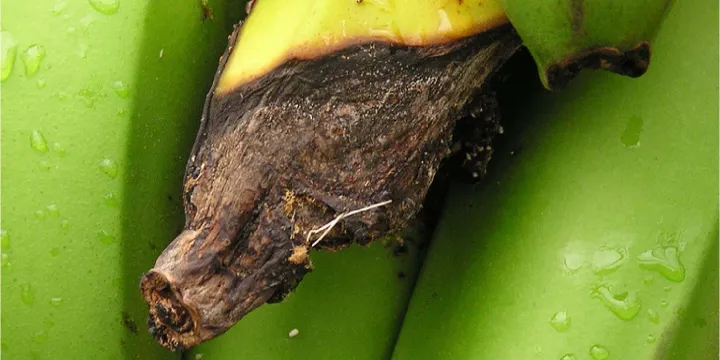
The primary symptom is the development of a dark, necrotic lesion at the distal end (tip) of the banana fruit. As the infection progresses, the lesion area turns black, firm, and dry.
The necrosis spreads longitudinally from the tip toward the stem of the fruit. The skin in the affected region becomes shriveled and rigid, losing its natural healthy luster.
Internally, the pulp beneath the necrotic skin may show signs of tissue softening and discoloration, often transitioning from creamy white to a dark brown or black shade.
Unlike other banana rots, this disease is characterized by a dry appearance without heavy exudation or liquefaction, which is a key diagnostic feature for field identification.
In advanced stages, the fungal sporulation may become visible as a dusty, black mass covering the necrotic area, indicating active spore production.
Pathogen
The causal agent of this disease is the fungus Nattrassia mangiferae (synonym Hendersonula toruloidea). It is a highly destructive pathogen known to affect various tropical crops, including bananas, mangoes, and citrus.
The disease is classified as a dry rot or necrotic condition. The fungus primarily invades through wounds or natural openings in the fruit skin, initiating tissue degradation through the secretion of lytic enzymes.
The lifecycle includes the production of pycnidia, which are reproductive structures that release spores. These spores are capable of surviving harsh environmental conditions and spreading via rain or wind.
The fungus is a saprophyte that can also live as a parasite, allowing it to survive on dead wood or decaying plant matter within the plantation before attacking healthy fruit.
Scientific studies indicate that Nattrassia mangiferae is capable of rapid mycelial growth, which facilitates the quick transition from localized infection to widespread tissue necrosis within a short time frame.
Conditions for development
High temperatures, typically ranging from 25°C to 35°C, create an ideal climate for the rapid growth and sporulation of Nattrassia mangiferae.
High relative humidity levels are essential for the germination of fungal spores, especially when combined with free water on the fruit surface from rain or dew.
Mechanical injuries resulting from rough handling during harvesting and packing are the primary entry points that lead to severe outbreaks of fruit tip rot.
Poor aeration in ripening chambers or during transport creates microclimates that encourage the rapid spread of the fungus from infected to healthy fruits within a bunch.
Plants under nutrient stress or those growing in suboptimal soil conditions exhibit increased susceptibility to the disease compared to well-maintained banana plants.
Why it matters
The disease causes major economic losses, primarily by rendering the fruit unacceptable for premium export markets due to unsightly lesions and reduced shelf life.
Infected fruits lose their market value, leading to high rejection rates at sorting stations and significant waste management costs for the producer.
The rapid progression of the disease can cause entire bunches to rot if they are not stored under strictly controlled conditions, resulting in substantial yield losses.
The presence of the fungus in a plantation serves as a persistent inoculum source, which requires continuous management and monitoring to prevent future outbreaks.
Reduced crop quality impacts the overall brand reputation of the farm and decreases the profitability of the banana production cycle significantly.
Protection
Effective management begins with stringent field sanitation, including the removal and destruction of debris or pruning residues that can harbor the fungus.
Minimizing mechanical damage during harvest is critical; using protective padding and careful handling techniques reduces the entry points for the pathogen.
- Application of approved post-harvest fungicides to protect the fruit surface.
- Strict maintenance of the cold chain during transport to keep the fungus dormant.
- Frequent cleaning and disinfection of sorting equipment, crates, and storage areas.
- Regular scouting and immediate removal of any fruits showing early symptoms.
- Improving plant vigor through balanced fertilization to bolster natural defenses.
Integrated Pest Management (IPM) practices, including the use of biocontrol agents, are increasingly employed to reduce reliance on heavy chemical applications.
Developing resistant varieties or managing the plantation environment to ensure better airflow can help mitigate the impact of the disease in high-risk regions.
Pathogens and affected parts
Affects crops · 1
Discussion
No discussions yet — be the first.