
Drechslera leaf spot
Drechslera halodes
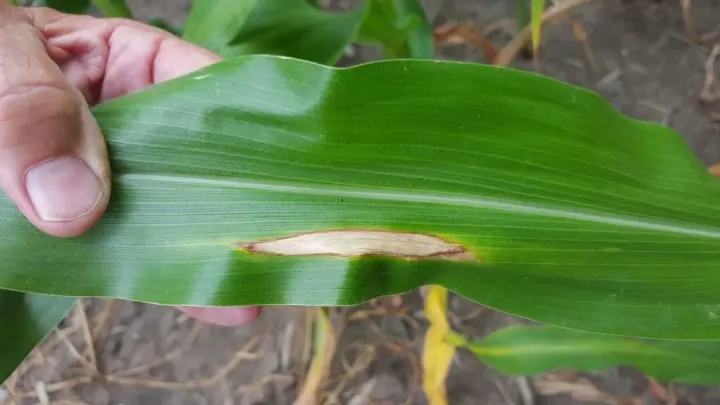
Description
Symptoms
The initial signs of infection appear as small, chlorotic flecks on leaves, which gradually expand into brown or dark-grey spots. These spots may be surrounded by a distinct chlorotic halo as the tissue around the lesion begins to yellow.
In high humidity, the centers of these necrotic lesions become covered with a velvety, olive-brown to black sporulating layer. This appearance is diagnostic of the disease and indicates active production of conidia.
On stems and sheaths, the disease causes elongated streaks that may weaken the plant structure, leading to lodging. This impact on the vascular system impairs the transport of water and nutrients to the grain-filling organs.
Severe infestations cause massive defoliation, where leaves turn necrotic and wither prematurely. This significantly reduces the green leaf area available for photosynthesis, ultimately stunting plant growth.
In cereal crops, the pathogen can also infect the glumes and rachis, causing discoloration of the head. Infected seeds may show black-point symptoms or internal discoloration, reducing their viability.
Pathogen
The fungus Drechslera halodes is the causal agent of this disease. It is a filamentous fungus belonging to the Ascomycota phylum, known for its ability to produce abundant conidia that serve as the primary inoculum for disease propagation.
The pathogen persists in the environment by colonizing crop residues, soil, and seed surfaces. It survives during unfavorable periods as thick-walled mycelium or resting spores, ensuring its presence until the next cropping season.
Dissemination occurs primarily through wind-borne conidia that land on susceptible host tissues. Under favorable moisture conditions, these spores germinate and penetrate the plant epidermis, establishing a systemic or localized infection.
The biological cycle is rapid, often allowing for several secondary cycles within a single growing season. This high reproductive rate enables the disease to reach epidemic proportions if environmental conditions remain conducive.
Genetic variability within the Drechslera halodes population often leads to the development of fungicide resistance, requiring integrated pest management strategies to maintain effectiveness in field control.
Conditions for development
Warm and humid conditions are the primary drivers for Drechslera halodes development. Optimal temperatures range between 20°C and 28°C, which accelerate fungal metabolism and sporulation.
Frequent rainfall or persistent dew periods facilitate the spread of spores from the soil and lower leaves to the upper canopy. Poor field drainage increases the risk of infection in the lower parts of the plant.
Densely planted crops create microclimates with restricted airflow, trapping moisture on foliage and promoting rapid disease progression. This environment is highly favorable for the fungus to establish itself.
Plants under physiological stress, such as drought, nutrient deficiencies, or soil compaction, exhibit lower resistance levels, making them more susceptible to colonization by the pathogen.
The presence of grass weeds acts as a secondary source of inoculum, allowing the fungus to maintain its cycle even when the primary host crop is not actively growing in the field.
Why it matters
The primary economic impact of Drechslera leaf spot is a significant reduction in grain yield. By reducing photosynthetic surface area, the disease hampers the plant's ability to fill the grain properly.
Quality parameters are also adversely affected, with lighter grain weight and decreased starch content. Infected seeds often have poor germination rates, leading to gaps in the stand establishment.
The disease weakens the root system and stem base, making plants more susceptible to lodging and secondary infections. This compromises the overall structural integrity of the crop canopy.
Widespread infection forces the plant to undergo early senescence, which shortens the grain-filling period. This truncation of the maturation process leads to shriveled grains that do not meet market standards.
Farmers face additional costs due to the need for multiple fungicide applications to prevent major yield losses during years characterized by high disease pressure and favorable weather conditions.
Protection
Effective management begins with the use of high-quality, fungicide-treated seeds. This prophylactic measure is essential to prevent seedling blight and long-distance spread of the pathogen.
Cultural practices, such as crop rotation, are crucial to break the fungal life cycle. Avoiding continuous monoculture helps to deplete the soil of the fungal inoculum stored on previous crop residues.
Chemical control using systemic fungicides during the stem elongation and heading phases is recommended when disease thresholds are met. Alternating chemical modes of action is vital to prevent resistance development.
Improving field sanitation by burying infected crop residues through deep plowing reduces the survival rate of the fungus in the field, lowering the initial inoculum pressure for the next season.
Balanced fertilization, particularly adequate potassium levels, strengthens plant tissues and enhances natural immunity against fungal pathogens, reducing the severity of leaf spot symptoms.
Discussion
No discussions yet — be the first.