
Dothiorella necrosis
Dothiorella ribis
Description
Symptoms
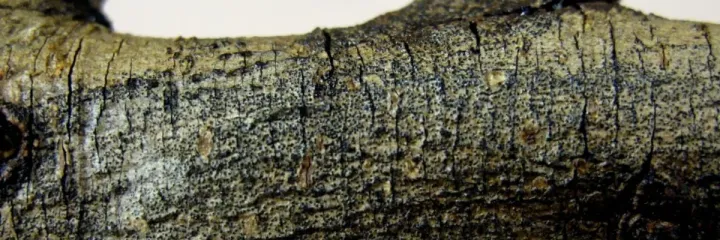
The most prominent symptom is the development of reddish-brown to dark brown, sunken lesions on the bark. These lesions expand over time, often girdling branches and causing sudden wilting.
As the infection progresses, the bark in the affected areas becomes dry and may crack or peel. Tiny black pimple-like structures, which are the fungal fruiting bodies (pycnidia), can often be seen on the surface of the infected bark.
Leaves on infected branches turn yellow, wither, and drop prematurely. This decline often occurs during the active growing season, providing a stark contrast to the surrounding healthy foliage.
A cross-section of an infected limb typically reveals discoloration of the internal woody tissues, often appearing as dark, necrotic streaks that indicate the extent of the fungal spread through the vascular system.
If the disease advances into the main trunk, it leads to deep, open cankers and severe structural weakening, eventually leading to tree failure.
Pathogen
Dothiorella necrosis is caused by the fungus Dothiorella ribis (also known as Botryosphaeria dothidea in its sexual stage). It is a persistent fungal pathogen known to cause cankers and dieback in a wide range of woody plants.
The fungus survives as mycelium or pycnidia within infected wood, dead branches, and bark debris. Spores are primarily disseminated by wind, rain splashes, and insects, allowing it to move easily through an orchard.
Infection occurs when spores enter the host plant through pruning wounds, frost cracks, sunburned areas, or galleries made by wood-boring insects. Once inside, the fungus colonizes the cambium and xylem tissues.
This disease is classified as a vascular and cortical infection. It disrupts the tree's internal water and nutrient transport systems, eventually causing the death of limbs or the entire tree if the main stem is girdled.
The resilience of this fungus allows it to remain viable in wood for several years, making it a challenging organism to manage in established plantation settings.
Conditions for development
Fungal activity is strongly linked to weather patterns, with warm, humid conditions favoring the growth and spread of Dothiorella ribis spores.
Orchards with high tree density, which restricts airflow and maintains humidity around the bark, are significantly more prone to infections and rapid spread of the disease.
Environmental stress, such as drought, extreme heat, or winter frost damage, makes trees highly susceptible. Weakened trees often lack the resources to contain the initial fungal colonization.
Mechanical injuries resulting from poor pruning practices or improper management create entry points. If tools are not sanitized between trees, they act as vectors for the pathogen.
Insects that bore into the wood are critical factors in the development of the disease, as they both damage the bark and can carry the fungal spores directly into the host tissues.
Why it matters
Dothiorella necrosis causes substantial financial harm by reducing the lifespan of orchards and limiting fruit production. Repeated infections lead to canopy decline and structural loss.
The disease reduces the overall health and vigor of trees, making them less productive and more prone to secondary infections from other pathogens and pests.
By killing productive branches, the disease forces growers into expensive and labor-intensive corrective pruning, which may significantly misshape trees and impact total yields.
In severe cases, entire trees may perish, necessitating their removal and replacement, which disrupts the long-term planning and profitability of the horticultural operation.
The pathogen is particularly problematic in young orchards, where infection can stunt growth and delay the onset of commercial fruit bearing.
Protection
The primary control strategy is rigorous sanitation: all infected branches should be pruned back to healthy wood, ensuring the cuts are well-cleaned and disinfected.
All large pruning cuts and accidental bark wounds should be sealed with specialized antifungal dressings or wound paints to prevent fungal entry.
Regular preventive sprays using copper-based fungicides are highly recommended, especially during early spring and before periods of frequent rainfall to protect the bark surface.
Promoting overall tree vigor through adequate fertilization, proper irrigation, and pest management is essential to bolster the tree's natural defense mechanisms.
- Sanitizing pruning tools with alcohol or bleach after each use.
- Removing and destroying all infected wood or debris from the orchard.
- Monitoring the orchard for early signs of bark discoloration.
- Protecting trunks from sunscald using white-wash or tree wraps.
Discussion
No discussions yet — be the first.