
Description
Symptoms
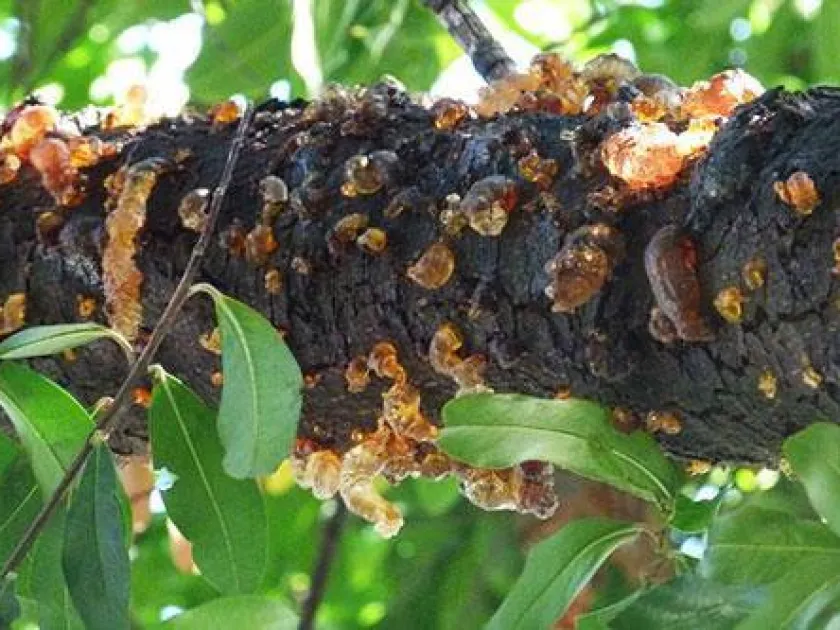
The primary symptom is gummosis, where thick, sticky exudate leaks from the bark in the affected areas. Over time, these gum deposits darken and harden.
Affected bark becomes discolored and brown, eventually sinking and dying. Necrosis typically penetrates deep into the wood, damaging the cambium layer.
Dieback of individual branches or entire sections of the canopy is common. Leaves on infected branches may wilt suddenly, curl, and turn yellow while remaining attached for a period.
When the bark is removed, distinct necrotic lesions or dark, stained streaks are visible in the woody tissue. Severe infections lead to longitudinal cracking of the bark.
In the late season, small black spots representing fungal pycnidia may emerge on the surface of the dead bark, releasing spores under humid conditions.
Pathogen
The causative agent of this disease is the ascomycete fungus Neofusicoccum ribis (formerly known as Botryosphaeria ribis). This pathogen belongs to a group of fungi responsible for necrosis and dieback of woody tissues.
The fungus typically follows an endophytic lifestyle, existing within host tissues without immediate signs of disease. Activation often occurs due to environmental stress or a weakened plant immune system.
The life cycle involves the formation of pycnidia, which are reproductive structures that release conidia. These spores are the primary source of infection during the growing season.
Spore dispersal occurs primarily through wind, rain splashes, and insects. The fungus enters the plant through natural openings or mechanical wounds, such as pruning cuts or bark cracks.
This pathogen is a polyphage with a broad host range, including pome fruits, stone fruits, grapevines, and citrus trees, posing a significant threat to various agricultural industries.
Conditions for development
High temperatures combined with excessive humidity promote the development of Neofusicoccum ribis. Long periods of rain following drought conditions are particularly conducive to outbreaks.
Plant stress is a major risk factor, often caused by freezing injuries, sunscald, or chronic drought, which allow the fungus to transition from an endophytic to a pathogenic state.
Infection is frequently linked to improper pruning practices where cuts remain unprotected. Fungal spores easily colonize these fresh wounds during wet weather.
Poor orchard sanitation and overcrowding prevent adequate air circulation in the canopy, maintaining microclimates that favor fungal growth and spore germination.
Over-fertilization with nitrogen can lead to succulent growth that is more susceptible to infection, especially if these tissues are not fully hardened before winter.
Why it matters
The disease causes significant damage by blocking the vascular system, resulting in the premature death of branches and a reduction in overall tree vigor.
Chronic infections lead to the gradual decline of the tree, which can result in complete mortality if the trunk or primary scaffold branches are girdled by necrosis.
Gummosis drains the plant's metabolic reserves, reducing the quality and size of fruit, and weakening the tree's defense against other pests and pathogens.
In citrus, the infection can affect the stem ends of fruits, causing premature fruit drop and significant economic losses for producers.
Managing the disease requires expensive sanitation, frequent monitoring, and potential tree removal, which adds considerable costs to orchard management.
Protection
The foundation of control is strict sanitation: removing and burning all infected branches. It is essential to prune at least 10–15 cm into healthy-looking wood to ensure the infection is contained.
All pruning wounds should be immediately treated with copper-based fungicides and sealed with appropriate wound paint or mastic to prevent spore entry.
Preventive fungicide sprays, particularly those containing copper, should be applied during the dormant season to reduce the primary inoculum load in the orchard.
Maintaining optimal tree health through balanced irrigation and fertilization is crucial. Healthy trees are significantly more resistant to fungal invasion.
Sterilizing pruning tools with alcohol or a disinfectant solution between trees is a vital practice to prevent the cross-contamination of the fungus throughout the orchard.
Pathogens and affected parts
Affects crops · 1
Discussion
No discussions yet — be the first.