
Discostroma
Discostroma
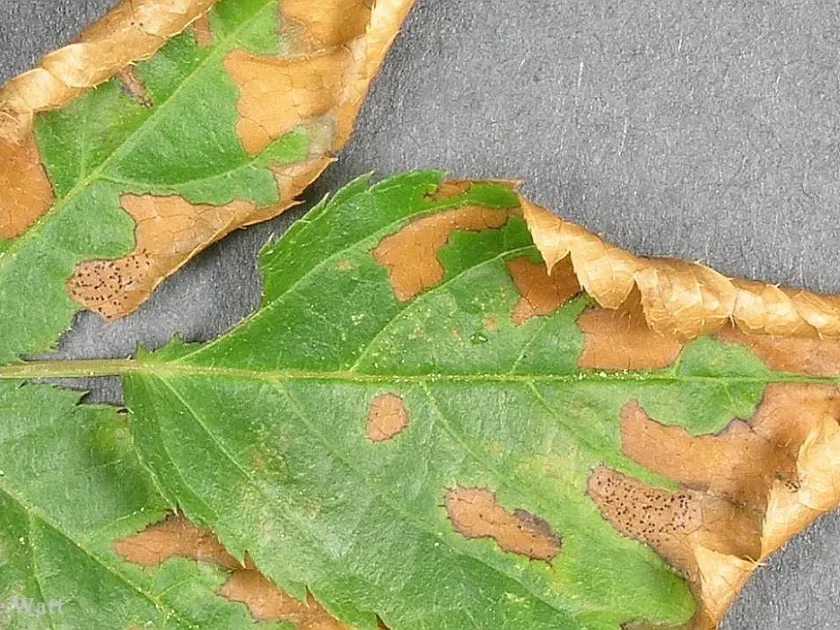
Description
Symptoms
The primary symptom of Discostroma infection is the necrosis of the bark on stems and branches. The affected areas often exhibit a brownish or grayish discoloration.
Small, black, pimple-like fruiting bodies emerge on the surface of the bark. These are the reproductive structures of the fungus breaking through the epidermis.
As the infection progresses, the bark begins to crack and peel away. This disruption of the vascular system prevents the flow of nutrients, leading to the wilting of foliage.
In severe cases, the infected branches dry out completely and become brittle. This is particularly noticeable in dense growth areas where air circulation is restricted.
- Darkened, necrotic patches on the stems.
- Visible black fruiting bodies breaking the bark surface.
- Wilting of leaves followed by branch dieback.
- Cracking and peeling of the outer bark layer.
Pathogen
The causative agent of the disease is the fungus Discostroma corticola, which belongs to the Ascomycota phylum. It primarily functions as a facultative parasite targeting weakened woody tissues.
The fungus survives during the winter months in infected plant debris, including fallen leaves and dead wood, as mycelium or as mature fruiting bodies (pseudothecia).
Infection begins in early spring when favorable moisture and temperature conditions trigger the release of spores, which are spread by wind, rain splashes, and insects.
The pathogen typically invades the host plant through mechanical wounds, pruning cuts, or small cracks in the bark. Once inside, it colonizes the cambium and cortical tissues.
Biological resilience is a key feature of this pathogen, as it can remain dormant for extended periods until the host plant exhibits signs of physiological stress.
Conditions for development
Prolonged periods of high humidity, especially during the spring and autumn months, significantly facilitate the rapid development and spread of Discostroma.
Dense, overgrown plantings where air circulation is poor create an ideal microclimate for the fungus to flourish on the stems and branches.
Plants weakened by frost damage, environmental stress, or insect infestations are much more susceptible to infection compared to healthy, vigorous specimens.
Excessive use of nitrogen-based fertilizers can lead to succulent growth that is more prone to fungal colonization due to weaker cell walls.
Neglected gardens with significant amounts of plant debris serve as persistent reservoirs of inoculum for recurring infections season after season.
Why it matters
Discostroma is highly damaging to berry crops, particularly blackberries and raspberries, causing extensive cane blight and subsequent yield loss.
The cumulative effect of the disease is a significant decline in plant health. Infected plants often struggle to produce fruit, leading to smaller or underdeveloped berries.
If left unmanaged, the disease can lead to the death of entire bushes. This necessitates costly removal and replacement of infected plant material.
The infection reduces the overall hardiness of the plant, making it more vulnerable to winter cold and temperature fluctuations in the late spring.
Beyond individual crop loss, Discostroma serves as a source of disease that can rapidly spread to surrounding healthy plants within the field.
Protection
The primary management strategy involves regular sanitation, including the pruning and removal of all symptomatic canes to reduce the inoculum level.
Maintaining proper plant spacing and thinning out excess branches ensures adequate light and air movement, which significantly inhibits fungal growth.
Prophylactic applications of copper-based fungicides during the dormant season or early spring are highly effective in protecting healthy tissues.
Integrated pest management is essential, as controlling wood-boring insects helps prevent the creation of wounds through which the fungus enters.
Optimizing plant nutrition by focusing on potassium and phosphorus helps strengthen cell walls, thereby improving the plant's natural resistance to pathogens.
Discussion
No discussions yet — be the first.