
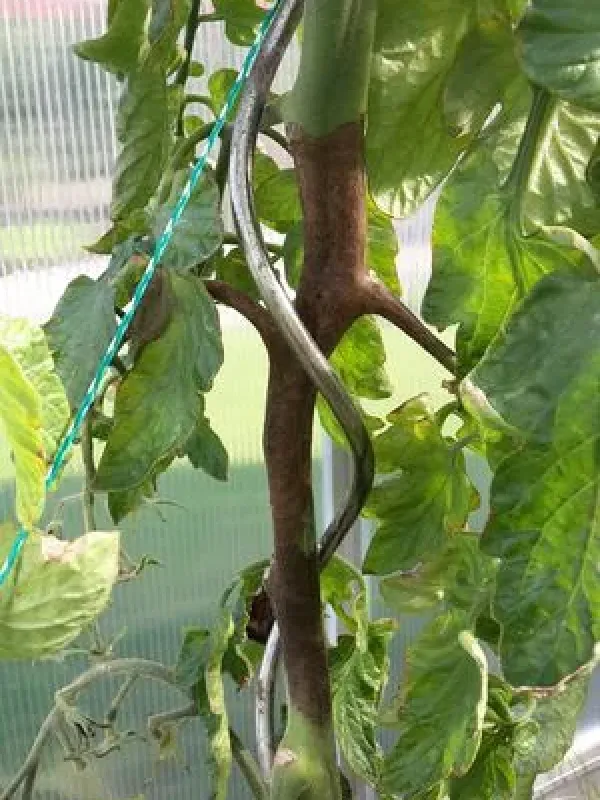
Description
Symptoms
The initial signs of diplodiosis include brown, gradually enlarging spots on leaf petioles and flower stalks. Affected tissues become brittle, which often leads to the wilting and lodging of the plant canopy.
On stems and roots, specific tissue decay is frequently observed, accompanied by the browning of the vascular system. The plant begins to show stunted growth, yellowing, and gradual wilting without obvious external causes.
Under high humidity, tiny black dots—the fungus's pycnidia—can be seen on the surface of affected parts. These serve as a key diagnostic sign to confirm the infection.
The root system of infected plants loses activity, turns brown or black, and tissues gradually collapse. This disrupts nutrient transport, leading to the decline of the entire plant.
Fruits on infected flower stalks lose turgor, cease development, and may become covered with dry rot. Unlike gray mold, diplodiosis damage is often localized within the vascular pathways.
Pathogen
The causative agent of this disease is the imperfect fungus Diplodina lycopersici (also known as Phoma lycopersici). This pathogen belongs to the Coelomycetes class and is capable of surviving for long periods in soil and on plant debris.
The fungus affects a wide range of crops, but on strawberries, it manifests through specific necrotic tissue damage. Its life cycle is closely linked to moisture levels, which are critical for the germination of fungal spores.
During its development, the parasite forms pycnidia, microscopic fruiting bodies containing pycnospores. These spores are responsible for the spread of the infection to healthy plants throughout the growing season.
An important biological feature of this pathogen is its high plasticity. It can infect both underground parts and aerial organs of the plant, making early diagnosis significantly difficult.
The fungus retains its pathogenicity in the soil for several years, making crop rotation a critical element of agronomy. Contaminated soil remains a threat even if no visible symptoms are present on the current crop.
Conditions for development
High air and soil humidity, especially during prolonged rainy periods, favor the development of the fungus. The optimal temperature range for active spore germination is 18–25 degrees Celsius.
Improper planting density creates a favorable microclimate for the pathogen. Poor air circulation within strawberry beds traps moisture on the leaves, which triggers spore development.
Plants weakened by nutrient deficiencies or pest attacks (such as nematodes or mites) are the most vulnerable. Mechanical injuries serve as entry points for the fungal infection.
Incorrect irrigation, particularly overhead watering in the evening, creates the perfect conditions for the rapid spread of the disease. Standing water in furrows also encourages pathogen activation.
High soil acidity and an excess of nitrogen fertilizers without sufficient phosphorus-potassium supplementation significantly lower the natural resistance of strawberry bushes to diplodiosis.
Why it matters
The harm caused by diplodiosis is primarily manifested in a sharp decrease in berry yield. Affected flower stalks die off, leading to the loss of berries at the formation stage.
The disease causes premature wilting, which reduces the productive lifespan of the plantation. Affected areas require early culling and complete replacement of the planting material.
The pathogen can significantly weaken young daughter plants, making them unsuitable for propagation. This causes direct economic loss for nurseries specialized in strawberry starter plants.
The infection spreads rapidly across the field when conditions are favorable. Without timely intervention, total loss of the crop is possible within one or two seasons.
Berries from infected bushes lose their marketability and taste. Using the harvest from affected patches for processing or storage is discouraged due to the potential presence of mycotoxins.
Protection
The basis of prevention is the use of healthy, certified planting material. Establishing plantations on land where nightshades or strawberries have not been grown previously reduces infection risks.
Agronomic practices should include maintaining optimal planting density and spatial isolation. Regular removal of weeds and plant debris is essential, as these act as reservoirs for the disease.
The protection system includes the use of fungicides during critical periods, such as bud development and after harvest. Copper-based preparations and systemic fungicides are generally effective.
- Timely removal and destruction of infected plants along with the surrounding soil.
- Application of potassium fertilizers to strengthen cell walls.
- Implementation of drip irrigation to keep aerial plant parts dry.
- Strict adherence to crop rotation, returning to the same site no sooner than every 4–5 years.
Disinfecting tools after working with infected areas is crucial. A responsible approach to field hygiene allows for significantly reducing the infectious load without excessive chemical use.
Pathogens and affected parts
Affects crops · 1
Discussion
No discussions yet — be the first.