
Black knot
Dibotryon
Description
Symptoms
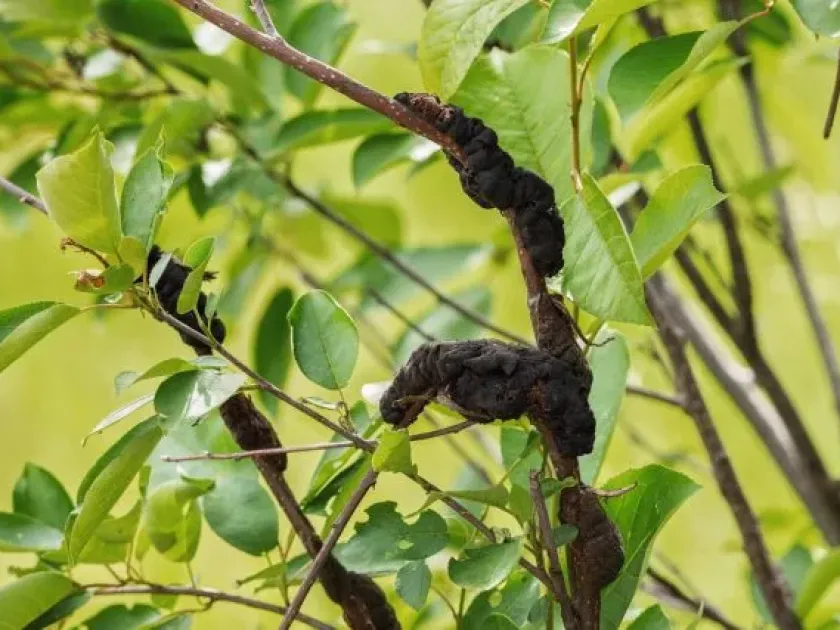
The most visible symptom is the formation of hard, black, cylindrical galls on twigs and branches, often described as having a charcoal-like texture.
In the spring, these developing galls appear as light brown or olive-green swellings, which are covered with a velvety layer of conidial spores.
As the season progresses, the knots turn hard and black, becoming noticeably rough and cracked, making them easy to identify during dormant periods.
The galls can vary significantly in size, from small swellings to large, elongated masses that may grow several centimeters in length.
Branches distal to the knot often die due to the disruption of water and nutrient transport caused by the vascular tissue damage within the gall.
Pathogen
Black knot is a widespread fungal disease caused by Dibotryon morbosum (also known as Apiosporina morbosa). It is a highly destructive pathogen of the Prunus genus.
The fungus produces two types of spores: ascospores, which are spread by wind and rain in the spring, and conidia, which spread the infection throughout the growing season.
The pathogen colonizes the cambium layer of branches, stimulating abnormal growth that creates the characteristic knot-like appearance on the surface of the wood.
The fungus overwinters in the knots and remains viable for several years if not physically removed from the orchard environment.
Infection primarily occurs through fresh wounds, lenticels, or buds during periods of wet weather and moderate temperatures.
Conditions for development
Development of black knot is favored by prolonged periods of spring rainfall and high humidity, which facilitate spore release and germination.
Optimal temperatures for fungal growth range from 15°C to 25°C, occurring frequently during the critical infection window of bud break and flowering.
Densely planted orchards or trees with thick, unpruned canopies are at higher risk because they retain moisture for longer periods.
The presence of nearby wild plum or cherry trees acts as a constant reservoir for the inoculum, putting cultivated orchards under continuous threat.
Trees that have been stressed by drought, poor nutrition, or winter injury are more susceptible to the colonization by D. morbosum.
Why it matters
Black knot can significantly reduce fruit yield by causing the death of fruit-bearing limbs throughout the canopy.
The cumulative effect of the disease leads to the decline of tree vigor, resulting in stunted growth and eventual death of the entire tree if left untreated.
Severe infestations render affected trees aesthetically and economically worthless, often necessitating their complete removal from the orchard.
The physical damage caused by the galls makes the tree more susceptible to secondary infections by wood-decay fungi and wood-boring insects.
Financial losses occur due to both the loss of fruit production and the high labor costs associated with continuous sanitation pruning and chemical control.
Protection
The cornerstone of management is aggressive pruning: remove knots at least 10–15 cm below the visible swelling and dispose of wood by burning or burying.
Scout for the disease during the winter dormancy period when the absence of foliage makes the black knots easy to locate and prune out.
Apply copper-based fungicides in the early spring, starting at the green tip stage, to protect new growth from the initial seasonal spore showers.
Maintain optimal tree health through balanced fertilization and proper irrigation to help the trees resist or recover from minor infections.
- Sterilize pruning tools with alcohol or bleach between cuts.
- Remove any wild plum or cherry trees within a 200-meter radius.
- Prioritize pruning during dry, dormant weather conditions.
- Apply fungicide sprays consistently according to the label.
Discussion
No discussions yet — be the first.