
Black root rot of cucumber
Diaporthe sclerotioides
Description
Symptoms
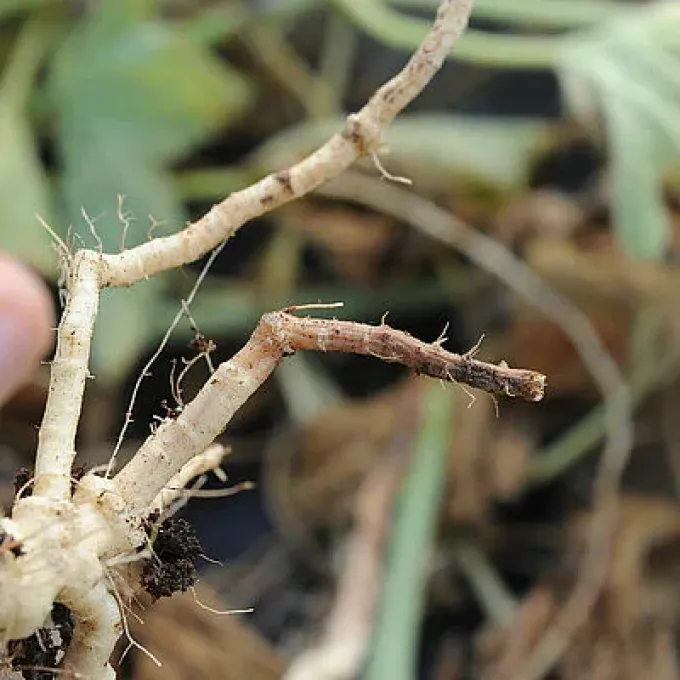
Symptoms typically manifest as dark brown or black necrotic lesions on the roots and the base of the stem, often starting near the soil surface.
The cortex of the infected roots begins to decay and eventually sloughs off, leaving only the central vascular core, which severely compromises the plant's integrity.
Above-ground symptoms appear as sudden wilting, particularly during the peak heat of the day, with plants often failing to recover even during the night.
As the disease progresses, the lower leaves start to turn yellow and eventually wither, causing a dramatic reduction in overall vegetative growth.
In advanced cases, the entire root system becomes stunted and blackened, and diagnostic signs such as small black sclerotia may be visible on the necrotic tissues.
Pathogen
The causative agent of black root rot is the soil-borne fungus Diaporthe sclerotioides (previously known as Phomopsis sclerotioides). It is a significant pathogen affecting cucumbers grown in greenhouses and protected structures.
The fungus is highly resilient, capable of surviving in the soil for extended periods due to the formation of specialized dormant structures known as sclerotia.
Infection primarily occurs when the roots of the cucumber plants come into contact with contaminated soil or substrates, especially if there are existing physical wounds.
The biology of Diaporthe sclerotioides is characterized by its ability to thrive in cooler soil temperatures, often leading to early-season infections.
Once established, the pathogen colonizes the vascular tissues of the root system, effectively cutting off the plant's nutrient and water supply chain.
Conditions for development
Continuous cropping of cucumbers in the same soil without rotation creates the ideal environment for the buildup of this pathogen.
Prolonged exposure to high soil moisture levels, combined with moderate temperatures ranging between +15°C and +20°C, significantly accelerates fungal activity.
Compacted, poorly aerated soils provide the perfect anaerobic or semi-anaerobic conditions that favor the development of the rot.
The movement of contaminated soil particles via tools, shoes, or irrigation water serves as a primary driver for the spread of the disease within the greenhouse.
Inadequate sanitation protocols regarding the greenhouse structure and the use of poorly disinfected substrates are major risk factors for disease outbreaks.
Why it matters
The economic impact of black root rot is severe, as it leads to widespread plant mortality and significant declines in total marketable yield.
Infected plants exhibit reduced vigor, making them more susceptible to secondary infections and environmental stresses, further complicating crop management.
The disease forces growers to abandon production areas, necessitating costly soil replacement or complex chemical fumigation treatments.
Market quality is severely impacted; fruits produced by stressed, diseased plants are often undersized, deformed, and lack nutritional quality.
The persistence of Diaporthe sclerotioides creates long-term challenges, potentially rendering infested greenhouse blocks unfit for cucumber production for several years.
Protection
Preventative measures such as strict crop rotation and the use of resistant rootstocks or varieties are the most reliable strategies for long-term management.
Greenhouse sanitation, including steaming or chemical disinfection of the soil and structure between cropping cycles, is essential to minimize inoculum levels.
Managing soil moisture and improving drainage can reduce the incidence of rot by preventing the conditions that favor fungal proliferation.
Integrated pest management should include the application of biological control agents, such as beneficial fungi, to suppress pathogen populations in the rhizosphere.
- Prompt removal and disposal of infected plants and surrounding soil.
- Use of sterile growing media for seedling production.
- Regular inspections of root health during the vegetative stage.
Discussion
No discussions yet — be the first.