
Boxwood cylindrosporium leaf spot
Cylindrosporium buxicola
Description
Symptoms
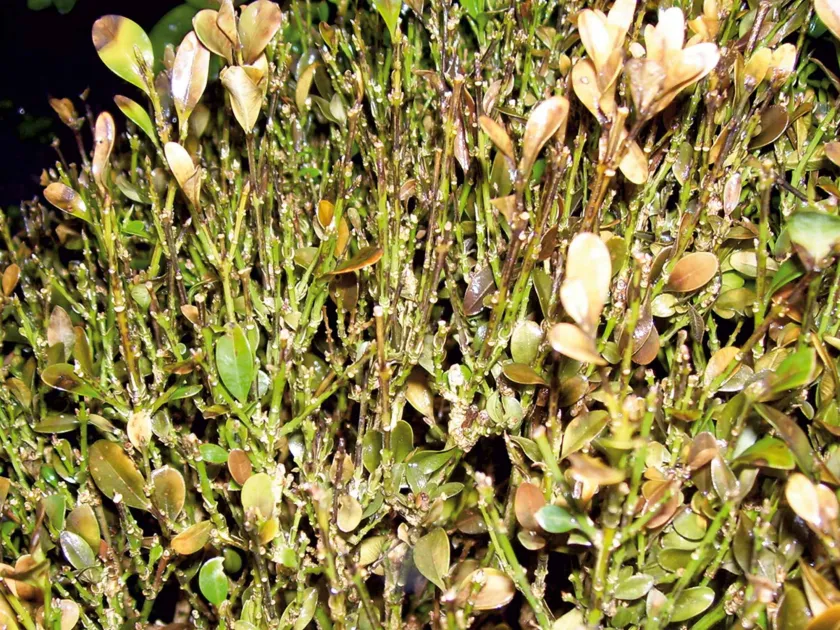
The first signs of the disease are small, scattered light brown or greyish spots on the leaves, typically surrounded by a darker, defined margin.
As the infection progresses, these spots enlarge and merge, eventually covering large portions of the leaf surface, leading to chlorosis and necrosis.
A distinctive whitish or cream-colored fungal growth, which consists of spores, often appears on the underside of the infected leaves during humid weather.
Severe infection causes premature leaf drop, which leads to the baring of branches and a significant decrease in the shrub's visual appeal.
In advanced cases, the fungus can cause dieback of young shoots and branches, weakening the plant and inhibiting its overall growth cycle.
Pathogen
The causative agent of this disease is the fungus Cylindrosporium buxicola, which specifically targets the leaves and shoots of the common boxwood (Buxus sempervirens).
This pathogen acts as an obligate parasite, thriving by drawing nutrients from the host plant's tissues and completing its life cycle within the foliage.
Dissemination occurs through conidia, which are easily transported by wind, splashing rain, or physical contact with contaminated garden tools.
The fungus overwinters in the leaf litter beneath the shrubs and in dead plant debris, where it remains dormant until environmental conditions improve.
Once the weather warms up in the spring, the pathogen activates, producing new spores that infect the fresh, emerging spring growth of the boxwood.
Conditions for development
High humidity and moderate temperatures are the most critical factors that trigger the spread and infection cycle of Cylindrosporium buxicola.
Dense plantings with poor air circulation create stagnant, humid microclimates that are perfect for the rapid colonization of fungal pathogens.
Prolonged leaf wetness caused by overhead irrigation or frequent rainfall allows spores to germinate efficiently on the leaf surface.
Shaded areas with reduced sunlight inhibit the drying of foliage, further extending the window of opportunity for the fungus to penetrate plant tissues.
Plants that are already under stress due to nutrient deficiencies or root system issues are significantly more susceptible to successful fungal infection.
Why it matters
The disease severely impacts the ornamental value of topiary and hedges, often necessitating heavy pruning or the complete removal of affected shrubs.
Constant loss of foliage prevents the plant from performing photosynthesis effectively, which halts growth and reduces the density of the shrub.
Prolonged infection weakens the boxwood's defenses, making it increasingly vulnerable to secondary pathogens and harsh winter conditions.
For professional nurseries, an outbreak of this disease can result in large-scale losses of inventory and potential trade restrictions.
Failure to manage the disease promptly can lead to a long-term infestation that compromises the entire boxwood collection in a garden setting.
Protection
Preventative cultural practices are essential, including regular pruning to promote airflow and the thorough removal of all fallen infected leaves.
Spacing plants correctly is vital to ensure that sunlight reaches all sides of the shrub and that the foliage dries quickly after rain.
Application of copper-based fungicides or systemic chemical treatments can effectively control outbreaks when applied at the first sign of symptoms.
Adopting drip irrigation systems prevents the wetting of foliage and helps maintain a dry environment around the leaves during the critical season.
- Sanitize all pruning tools regularly to prevent spreading spores.
- Monitor plants frequently for early spots to enable rapid response.
- Apply balanced fertilizers to promote vigor and systemic resistance.
Discussion
No discussions yet — be the first.