
Description
Symptoms
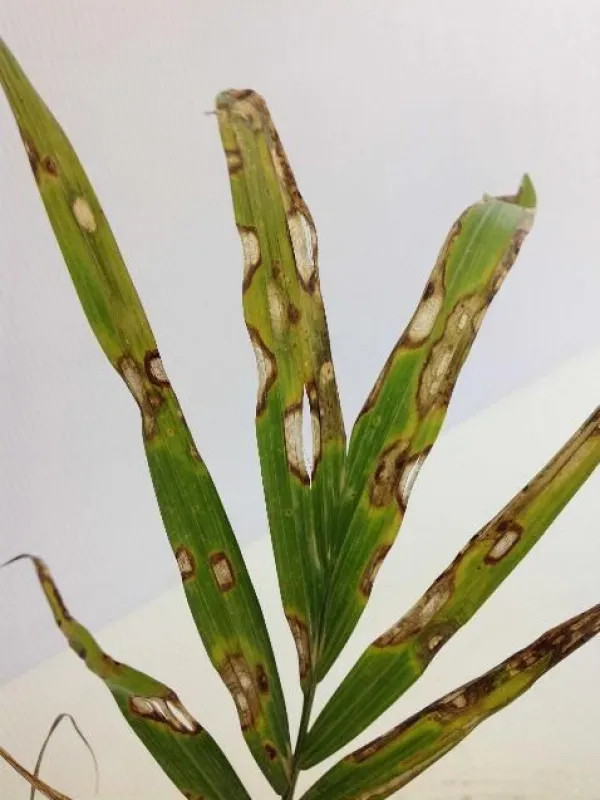
The primary symptom of Cylindrocladium blight is the appearance of circular or irregular spots on leaf blades, often surrounded by a distinct dark margin.
In high humidity conditions, a visible whitish or creamy spore mass forms on the underside of the leaves or on the infected parts of the stems.
Severe infection leads to premature tissue necrosis, leaf curling, and mass defoliation, which critically reduces the plant's photosynthetic capacity.
When stems and the root collar are affected, cankers develop, potentially girdling the plant and causing wilting of entire shoots or total plant death.
In woody species, such as black walnut, the disease often manifests as stem cankers on the bark, accompanied by exudate or resin flow.
Pathogen
The disease is caused by fungi of the genus Cylindrocladium (now frequently classified as Calonectria), belonging to the class Ascomycetes.
The pathogen possesses high survival capability in the soil, forming microsclerotia or persisting as mycelium in plant debris for extended periods.
Infection spreads via conidia, which are easily transported by air currents, rain splashes, or contaminated agricultural tools during maintenance.
The fungus affects a wide range of crops, including bananas, eucalyptus, black walnut, and various ornamental plants, entering tissues through stomata or wounds.
A biological feature of this species is its high virulence and the ability to produce fruiting bodies (perithecia) across a broad temperature range.
Conditions for development
The main factor triggering the active development of Cylindrocladium blight is high relative humidity, exceeding 85-90%.
The pathogen thrives most intensively in temperatures between +20°C and +28°C, making it extremely dangerous in tropical and subtropical climatic zones.
Dense planting and the lack of proper air circulation in greenhouses create an ideal microenvironment for the rapid spread of spores.
Excessive irrigation, leading to water stagnation in the root zone, significantly increases the risk of root infection and the development of rots.
The presence of free moisture on the leaf surface is a mandatory condition for conidial germination and penetration into the plant epidermis.
Why it matters
Cylindrocladium blight causes serious economic damage, leading to massive seedling mortality in nurseries and a reduction in the market value of produce.
In banana plantations, the disease results in reduced fruit weight and quality, rendering the harvest unsuitable for long-term storage and transportation.
Infection of black walnut leads to stem deformation and stunted growth, negatively impacting wood quality and the longevity of forest stands.
For ornamental crops, the disease destroys aesthetic appeal, forcing growers to discard entire batches of commercial inventory.
Systemic infection of the plant's vascular system by the pathogen often leads to irreversible wilting that cannot be treated in advanced stages.
Protection
The primary method of control is strict adherence to sanitary norms: the removal and destruction of all plant debris that serves as an infection reservoir.
It is recommended to use only healthy, certified planting material that has undergone preliminary fungicide treatment before sowing or planting.
In greenhouses, it is essential to manage humidity and temperature levels, avoiding over-irrigation and ensuring efficient ventilation.
Effective protective tools include the application of chemical agents: fungicides based on mancozeb, thiophanate-methyl, or benzimidazoles.
- Regular disinfection of all working tools and equipment.
- Maintenance of optimal planting density to prevent canopy overcrowding.
- Implementation of crop rotation with non-host species.
- Ensuring proper soil drainage to prevent waterlogging.
Pathogens and affected parts
Affects crops · 2
Discussion
No discussions yet — be the first.