
Description
Symptoms
Initial symptoms include chlorosis and wilting of the lower leaves, which eventually progress upward as the root system loses its functionality.
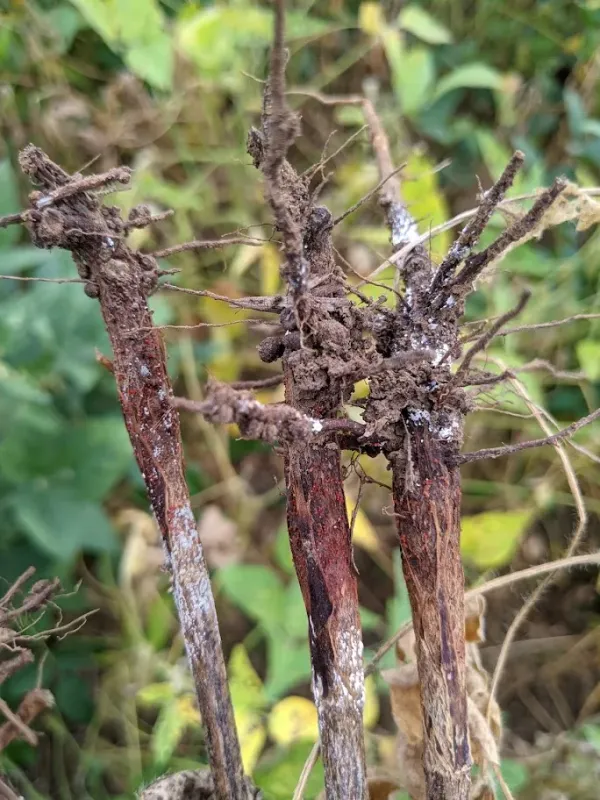
Roots show clear signs of infection, appearing black and decayed, with the root cortex often sloughing off when pulled from the soil.
Under high humidity conditions, a sparse to dense mycelial growth may appear on the roots and the lower stem, often accompanied by reddish-brown sporulation.
In alfalfa fields, the disease manifests as thinning patches of stunted plants that gradually die, particularly during periods of high physiological demand.
Stunting of the entire plant is typical, as the restricted root system can no longer supply the necessary water and nutrients to the vegetative parts.
Pathogen
The causal agent of this disease is the fungus Calonectria crotalariae (teleomorph stage: Calonectria ilicicola). It is a soil-borne pathogen capable of surviving for long periods via microsclerotia.
The fungus infects the vascular system and root tissues, usually through wounds, causing necrosis and systemic decay of the plant's root architecture.
It spreads efficiently via contaminated soil moved by equipment, infected plant debris, and water runoff during heavy rainfall or irrigation cycles.
This pathogen possesses a high reproductive capacity, producing numerous conidia that serve as secondary inoculum during the growing season.
Due to its persistence in the soil and wide host range, it is considered a significant threat to sustainable agricultural production in many regions.
Conditions for development
The disease thrives in warm and wet soil environments, with temperatures between 20°C and 30°C being optimal for the rapid germination of the fungus.
Poor soil drainage, compaction, and excessive irrigation are critical factors that promote infection by creating anaerobic zones in the root zone.
Frequent cropping of susceptible species, such as alfalfa or peanuts, leads to a rapid accumulation of the pathogen's microsclerotia in the field soil.
Mechanical damage to roots, often caused by root-feeding nematodes or insect larvae, drastically increases the severity and speed of the infection.
Soil pH levels and the availability of nutrients can influence the activity of the pathogen, though moisture remains the primary driver of disease development.
Why it matters
The primary damage includes significant reduction in stand density, leading to direct yield losses of biomass and seed production in perennial legumes.
Infected plants exhibit reduced vigor, poor overwintering capacity, and limited ability to regrow efficiently after multiple harvests or mowings.
Root rot compromises the plant's structural integrity and its ability to access resources, making the crop highly vulnerable to environmental stressors like drought.
Economic losses arise not only from reduced crop quality and quantity but also from the high costs associated with fungicide applications and soil management.
Long-term presence of C. crotalariae in the soil limits future crop choices, often necessitating long-term rotations with non-host crops to clear the field.
Protection
Implementing a strict crop rotation strategy, typically excluding legumes for several years, is the most effective approach to reduce soil inoculum levels.
Improving field drainage and soil aeration through proper tillage practices significantly lowers the risk of disease outbreaks caused by moisture buildup.
The use of high-quality, disease-free seed is essential to prevent the introduction of the pathogen into clean fields.
Fungicidal seed treatments and, where applicable, soil drenching can help protect young plants during the most vulnerable establishment phase.
- Integrated pest management for nematodes and root-damaging insects.
- Sanitation protocols to clean equipment moving between infested and clean fields.
- Selecting and planting resistant or tolerant crop varieties.
- Regular scouting for disease hotspots to implement containment measures early.
Pathogens and affected parts
Affects crops · 1
Discussion
No discussions yet — be the first.