
Description
Symptoms
Symptoms typically begin as small, round, reddish-brown spots on the leaves. These spots gradually expand, often darkening at the center and developing a light greyish border.
In many cases, the affected leaf tissue develops a yellow, chlorotic halo around the necrotic spots. As the disease progresses, these spots may merge, covering large portions of the foliage.
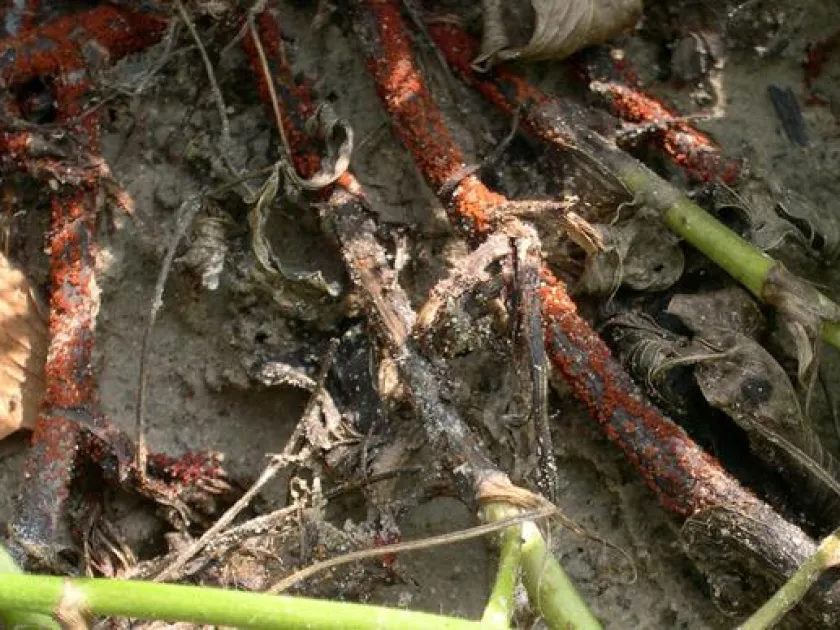
Infection often leads to sudden wilting and dieback of the branches. Because the fungus frequently targets the root system or the root crown, the plant loses its ability to sustain its upper canopy.
During periods of high humidity, a delicate white or greyish mold may appear on the undersides of the leaves or near the base of the stem, indicating active sporulation of the pathogen.
Advanced stages of the disease result in the total defoliation of the affected branches, significant distortion of the plant's growth habit, and, in severe cases, the death of the entire plant.
Pathogen
Cylindrocladium blight is caused by the fungus Cylindrocladium floridanum (often referred to as Calonectria floridana). It is a soil-borne pathogen known for causing severe damage to a wide range of ornamental plants.
The fungus survives in the soil through microsclerotia, which are resistant structures that allow it to persist for several years in unfavorable conditions. It produces spores, called conidia, that are spread by water splashes.
Plants such as rhododendrons and azaleas are highly susceptible to this pathogen. Once established, the fungus can infect both the roots and the aerial parts of the host plant, leading to systemic decline.
The pathogen thrives in the nursery environment, where frequent overhead irrigation and dense plant spacing create ideal conditions for the rapid multiplication of the fungal colonies.
By producing a variety of cell-wall-degrading enzymes, the fungus easily breaches plant defenses, rapidly colonizing tissues and disrupting the plant's ability to transport water and nutrients.
Conditions for development
High humidity and consistent moisture are the most critical factors for the development of Cylindrocladium floridanum. The pathogen requires surface water to facilitate the germination of its spores.
The fungus prefers temperatures between 20°C and 25°C. In such conditions, the lifecycle of the pathogen accelerates, allowing it to move from a single infected leaf to an entire crop in a matter of days.
Poor air circulation, often caused by overcrowding in greenhouses or outdoor nurseries, keeps the canopy wet for longer periods, which significantly increases the risk of infection.
The spread of the disease is heavily facilitated by human activity, particularly through the use of contaminated tools that carry fungal spores from infected plants to healthy ones during pruning.
Poorly drained, heavy soils that remain waterlogged for long durations create a hospitable environment for the fungus to attack the root system, often leading to rapid root rot.
Why it matters
This disease represents a major threat to the nursery industry. It can lead to the loss of entire batches of high-value stock, such as rhododendrons, causing substantial economic losses.
The blight reduces the visual quality of ornamental plants, making them unmarketable. Even minor infections can result in significant pruning costs and the need for rigorous disease management programs.
Once the soil is infested with Cylindrocladium, it can remain a source of infection for future plantings, requiring expensive sterilization or the complete removal of the growing medium.
Furthermore, the pathogen’s ability to survive in both roots and foliage makes it a persistent challenge for plant health managers who must balance chemical interventions with sustainable practices.
The cumulative effect of the disease leads to a weakened plant population that is more susceptible to other secondary infections and environmental stressors, leading to overall garden degradation.
Protection
Prevention is the most effective approach. This includes the purchase of certified pathogen-free plant material and the isolation of all new stock before introducing it to the main collection.
Cultural controls are paramount: ensure proper spacing for airflow, avoid overhead irrigation, and use sterile growing media. Immediately remove and destroy any plants showing signs of infection.
- Disinfect all pruning tools with appropriate alcohol or bleach solutions between plants.
- Improve drainage systems in the nursery to prevent water accumulation.
- Use systemic fungicides such as thiophanate-methyl as a preventative measure.
- Incorporate beneficial biological control agents, like Trichoderma species, into the soil.
- Regularly inspect plants for the early signs of leaf spots.
Chemical control programs must be rotation-based to prevent the development of fungicide resistance. Careful monitoring and strict adherence to sanitation protocols are the cornerstones of managing this disease successfully.
Pathogens and affected parts
Affects crops · 1
Discussion
No discussions yet — be the first.