
Olive leaf spot
Cycloconium
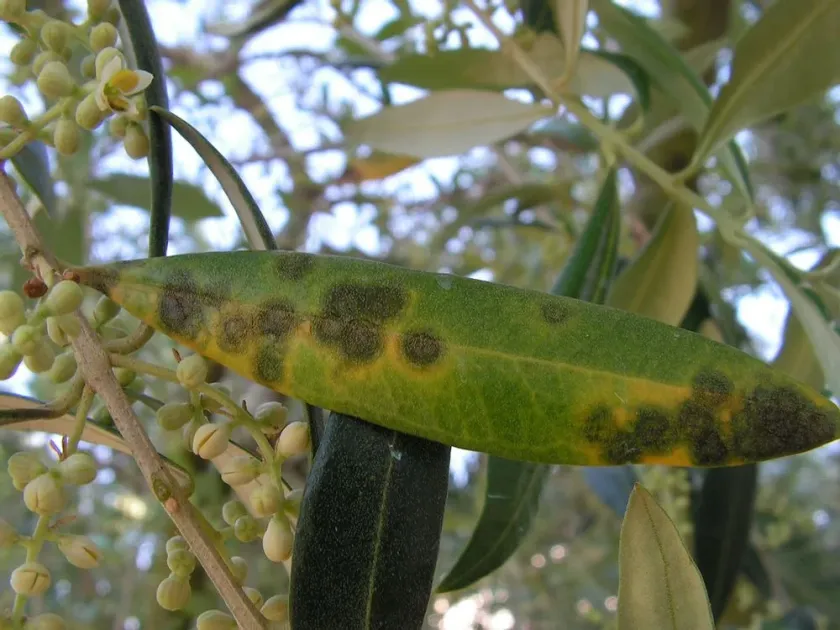
Description
Symptoms
The primary symptom is the appearance of dark, circular spots on the upper surface of the leaves, often ranging in color from dark grey to brown.
These spots frequently develop a distinctive chlorotic yellow halo around them, creating an appearance similar to a peacock's eye.
As the infection progresses, the spots may show a dull olive-green color due to the development of fungal spores on the leaf surface.
Severe infestations lead to significant yellowing of the foliage, followed by premature leaf drop, which results in canopy thinning.
Although rare, in cases of high disease pressure, spots may also appear on the leaf petioles or even on the developing olive fruits.
Pathogen
The disease is caused by the fungus Cycloconium oleaginum, a specific pathogen that exclusively affects olive trees.
The mycelium resides primarily under the leaf cuticle, which creates a physical barrier that makes contact fungicides less effective if applied after the fungus has established.
Conidia are spread through the canopy primarily by rain splash and high-humidity air, facilitating the rapid dissemination of the disease during wet weather.
The pathogen survives throughout the winter within infected leaves that remain on the branches or reside in the orchard debris.
Its biological cycle is finely tuned to the olive tree, allowing the fungus to persist even during cooler months when the host plant is less active.
Conditions for development
Optimal conditions for fungal development include moderate temperatures ranging from 15 to 20 degrees Celsius and high relative humidity.
Poor airflow within the canopy, typically caused by dense foliage, promotes the formation of a microclimate favorable for spore germination.
Persistent rainfall during the spring and autumn months is the most critical factor for the rapid spread of the disease within an olive grove.
Orchards located in low-lying areas with poor drainage are significantly more susceptible to outbreaks of olive leaf spot.
Stagnant air and long periods of leaf wetness allow the pathogen sufficient time to penetrate the plant tissues successfully.
Why it matters
Heavy defoliation reduces the tree's photosynthetic capacity, which leads to stunted growth and lower fruit yields over time.
The weakened tree is less capable of maintaining fruit quality, which can eventually lead to smaller fruit sizes and lower oil content.
Chronic infections weaken the structural integrity of the tree, making it more prone to secondary wood diseases and environmental stress.
Economic losses include reduced harvest volume and the ongoing costs required for intensive disease management programs.
Persistent canopy loss can lead to the death of smaller branches, necessitating labor-intensive pruning to remove deadwood.
Protection
Pruning is the most effective cultural practice to ensure adequate light penetration and air circulation, which prevents the build-up of humidity.
Application of copper-based fungicides serves as the standard preventative measure, usually timed before the start of the rainy season.
Orchard sanitation, including the removal and destruction of fallen leaves, is vital to reduce the overall inoculum load in the soil.
Selecting resistant olive cultivars provides the most sustainable defense strategy, especially in regions prone to high humidity.
Integrated pest management strategies should focus on monitoring the canopy during vulnerable stages to apply treatments only when necessary.
Discussion
No discussions yet — be the first.