
Cryptomycetaceae fungi
Cryptomycetaceae
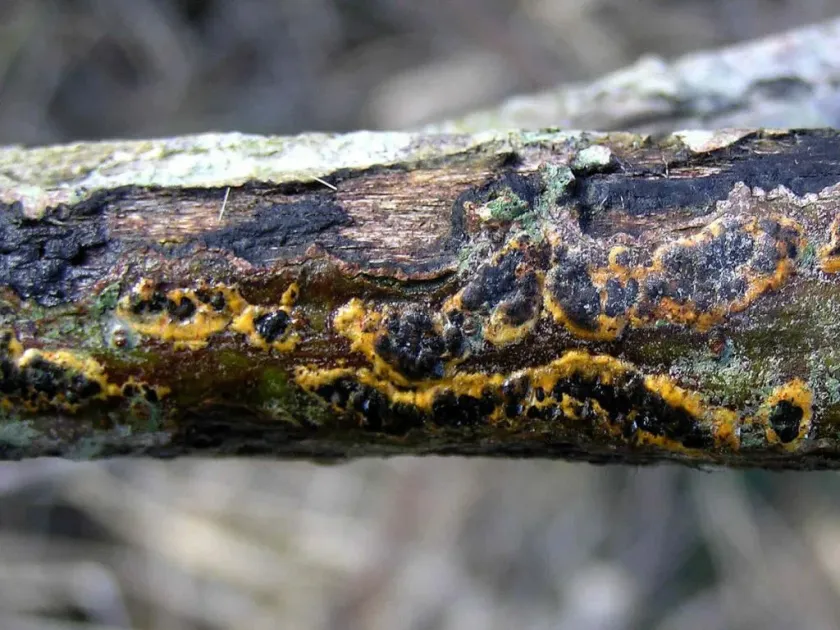
Description
Symptoms
The most visible symptom is the development of necrotic lesions on young shoots, twigs, and stems of host plants.
Affected bark areas often show signs of cracking, peeling, or visible deformation as the fungus grows underneath the surface.
Small, dark fruiting bodies (ascomata) frequently appear on the surface of the infected bark as the fungus reaches the reproductive stage.
Dieback of branches is a common consequence, often followed by premature yellowing and dropping of leaves in the affected areas.
In advanced cases, the localized tissue death can lead to girdling of twigs, which ultimately results in the death of the distal parts of the plant.
Pathogen
Fungi of the Cryptomycetaceae family are specialized plant pathogens that primarily infect various woody and shrub species.
These organisms belong to the Ascomycota phylum and have evolved to thrive within the host's bark and cambium layers.
The infection propagates through spores, which are disseminated by wind, rain splashes, or mechanical transport during humid conditions.
The mycelium colonizes the inner tissues, effectively disrupting the nutrient flow and overall vitality of the affected plant host.
Their cryptic lifestyle makes these fungi particularly challenging to detect in the early stages of infestation.
Conditions for development
Prolonged wet weather and high relative humidity are critical environmental triggers for the spread and germination of spores.
Poor aeration in dense plantings creates an ideal microclimate for the pathogen to establish itself and proliferate.
Moderate temperatures during spring and autumn seasons significantly increase the risk of successful infection.
Plants under stress, whether from drought, cold damage, or mechanical injury, are significantly more susceptible to fungal invasion.
Overwintering on fallen leaves or infected woody debris allows the fungus to remain present in the environment for multiple seasons.
Why it matters
The primary harm caused by Cryptomycetaceae is the cumulative weakening of the host plant, which reduces both vigor and growth.
Recurring infections lead to significant stunting and the loss of aesthetic value in ornamental trees and shrubs.
The structural integrity of the stems and branches may be compromised, making them more susceptible to breakage under wind or snow loads.
Severe infestations can lead to the systematic dieback of entire branches, potentially resulting in the death of the plant over time.
Economic losses in nurseries and horticultural sectors are substantial due to the need for rigorous pruning and management protocols.
Protection
Sanitation is the most effective control method: pruning and destroying all infected branches is essential to reduce the inoculum load.
Applying copper-based fungicides can help create a protective barrier on the bark, preventing new infections from taking hold.
Maintaining adequate spacing and thinning of canopies promotes better airflow, which reduces the humidity levels favored by the fungus.
Proper fertilization and irrigation practices help boost the plant's natural immune system and promote rapid wound recovery.
Early identification through regular inspections is vital for implementing timely control measures before the infection spreads extensively.
Discussion
No discussions yet — be the first.