
Cryptodiaporthe
Cryptodiaporthe
Description
Symptoms
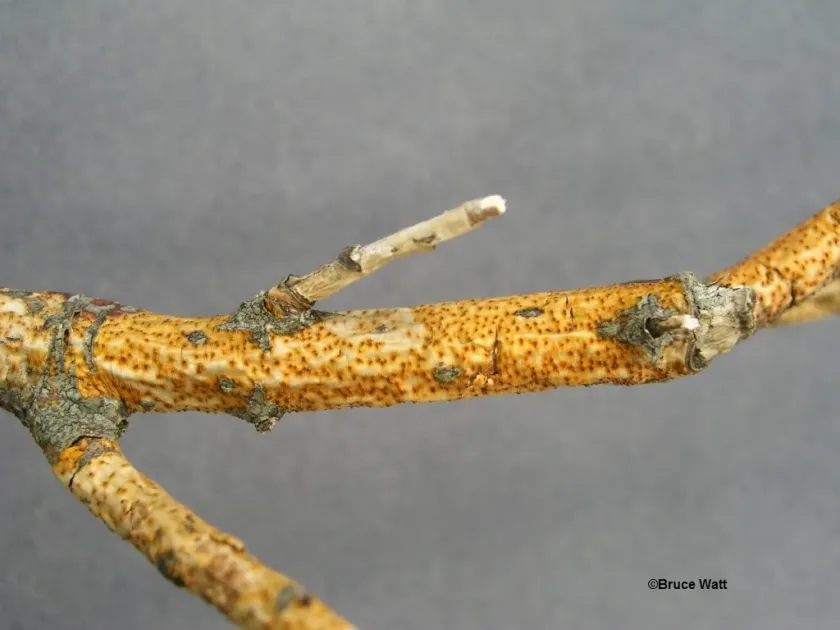
The initial signs of Cryptodiaporthe infection include the appearance of reddish-brown, slightly sunken areas on the bark. Over time, these areas become necrotic and may exhibit tiny, black pimple-like structures, which are the fruiting bodies of the fungus.
A common symptom is the sudden wilting and drying of individual branches, often with the leaves remaining attached but brown and shriveled. This gives the appearance of a fire-blight infection, but close inspection reveals the specific bark damage caused by the necrosis.
On larger branches or the main trunk, the disease forms large, persistent cankers that can completely encircle the wood. This girdling action cuts off the supply of water and nutrients, causing the entire upper portion of the tree to die rapidly.
As the disease progresses, the bark in the infected zones often splits and peels away from the wood. Beneath this dead bark, one can frequently observe white or greyish fungal mycelium, which confirms the active presence of the pathogen.
Infected fruits show dark, sunken lesions that expand rapidly, leading to mummification. These fruits serve as a critical reservoir for the pathogen, allowing it to persist and re-infect healthy parts of the tree during subsequent growing seasons.
Pathogen
Cryptodiaporthe is a genus of fungi, most notably Cryptodiaporthe perniciosa, which causes significant necrotic diseases in various fruit trees. This pathogen primarily targets the bark and cambium layers, leading to branch dieback and overall tree health decline.
The fungus overwinters as mycelium and pycnidia within infected bark tissues or on fallen leaves. As temperatures rise in spring, the pathogen reactivates, producing spores that are easily disseminated by wind, rain splashes, and insect vectors throughout the orchard.
Infection typically occurs through wounds, including pruning cuts, frost damage, or insect-created lesions. Once inside the host, the mycelium colonizes the vascular system and cambium, releasing toxins that inhibit nutrient transport and cause local tissue death.
The life cycle of the fungus is closely tied to host susceptibility; once the initial colonization is established, the fungus continues to spread radially and longitudinally through the branch, eventually leading to girdle-like symptoms around the trunk or limbs.
Laboratory diagnosis involves isolating the fungal colonies on specialized media to identify the specific characteristics of Cryptodiaporthe. Accurate identification is essential for developing targeted control strategies in orchards facing severe disease pressure.
Conditions for development
Cryptodiaporthe thrives in environments characterized by high humidity and moderate temperatures. Extended periods of rain during the spring are particularly conducive to heavy spore release and successful infection of new succulent shoots.
Trees that are already under physiological stress, such as those suffering from nutrient deficiency, improper irrigation, or winter injury, are significantly more vulnerable. These stressors reduce the tree's natural defense mechanisms, making it easier for the fungus to establish itself.
Poor orchard hygiene and lack of proper pruning result in dense, poorly ventilated canopies. High humidity trapped within these thick canopies creates the perfect microclimate for the fungus to multiply and spread to adjacent branches.
Insects act as mechanical vectors, transporting spores between infected and healthy trees. Furthermore, the damage caused by these pests provides fresh entry points for the pathogen, accelerating the rate of infection across the orchard.
A warm and wet autumn is also a critical period for disease development, as it allows the fungus to colonize leaves and pruning wounds before the onset of deep dormancy. This ensures that the pathogen remains viable through the winter months.
Why it matters
The primary damage caused by Cryptodiaporthe is the death of essential scaffolding branches, which leads to a dramatic drop in fruit yield. Severe cases may result in the total death of productive trees, necessitating costly removal and replanting.
The market value of fruit is compromised because infected trees produce lower-quality, blemished harvests that are highly susceptible to secondary storage rots. This leads to substantial financial losses for producers and distributors.
Managing the disease requires significant labor and investment in intensive chemical treatments and surgical tree pruning. Failure to contain the infection can result in an orchard-wide epidemic, threatening the long-term viability of the farm.
By weakening the host's overall immunity, Cryptodiaporthe makes trees highly sensitive to environmental stresses such as freezing temperatures. This interaction leads to increased winter mortality, compounding the damage caused by the fungus itself.
The spread of this pathogen in nurseries poses a major threat to the industry, as contaminated planting stock can serve as the primary source of infection in new orchard plantings, leading to widespread long-term disease issues.
Protection
Sanitary pruning is the most fundamental control measure, requiring the removal of all affected branches well into healthy tissue. All pruning tools must be thoroughly disinfected after each cut to prevent the inadvertent spread of spores.
Wounds created by surgery must be sealed with professional-grade wound dressings or antiseptic pastes to prevent re-infection. Protecting these open areas is crucial for allowing the tree to form a proper callus and recover.
Application of copper-based fungicides and systemic products during critical periods—early spring before bud break and late autumn after leaf fall—is highly effective. These treatments suppress the infectious inoculum on the bark surface.
Maintaining optimal orchard vigor through balanced fertilization and correct irrigation is essential. A healthy tree can better isolate infection sites and slow down the necrotizing process, reducing the overall impact of the disease.
Integrated pest management (IPM) is necessary to reduce the population of bark-damaging insects that facilitate fungal entry. By maintaining an overall healthy orchard environment, growers can significantly minimize the pressure from Cryptodiaporthe.
Discussion
No discussions yet — be the first.