
Crepidotus applanatus
Crepidotus applanatus
Description
Symptoms
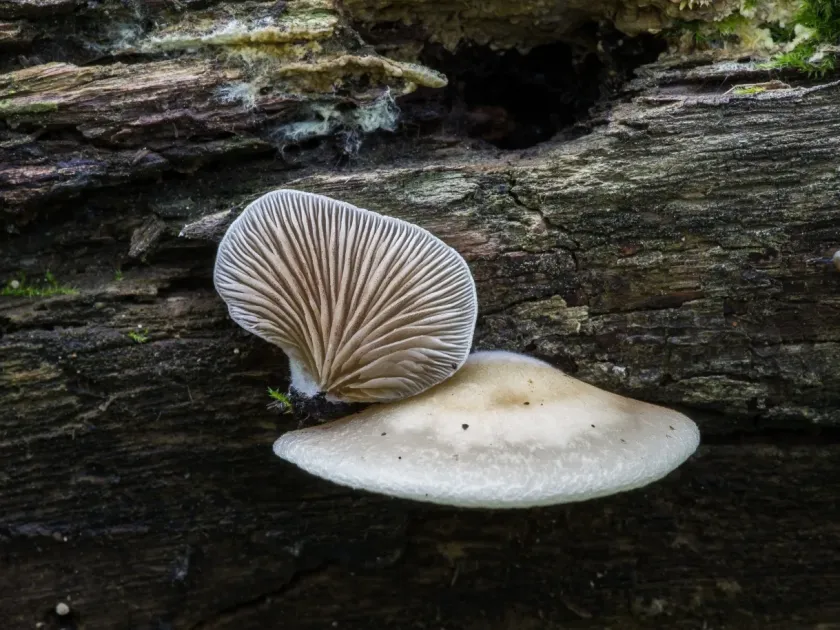
The primary symptom is the appearance of fan-shaped, shelf-like fruiting bodies. These lack a distinct stalk and are attached directly to the wood or bark of the host tree.
The caps are typically flat, smooth, and whitish to cream-colored. As they age, they may develop a brownish tint due to the accumulation of spores on the surface.
Internal symptoms include the degradation of wood quality. The infected areas lose their density, become brittle, and exhibit a distinct pale or yellowish discoloration characteristic of white rot.
The bark near the colonized area often becomes loose or cracked. In advanced stages, the fungus may cause the wood to crumble, significantly weakening the tree's structural stability.
- Fan-shaped fungal brackets on tree trunks.
- Soft and brittle texture of the wood.
- Pale-colored internal rot.
- Cracking and peeling bark in localized areas.
Pathogen
The causal agent is the fungus Crepidotus applanatus, belonging to the Crepidotaceae family. It is a wood-decay saprotrophic fungus that can act as a pathogen on weakened living trees.
The type of disease is classified as white rot. The fungus produces enzymes that degrade complex polymers like lignin and cellulose, which are essential for the structural integrity of wood tissue.
Biologically, it is a specialized xylotroph that primarily colonizes deciduous wood. It thrives by breaking down wood structure, transforming it into nutrients for its growth.
The fungus typically enters through wounds, broken branches, or frost cracks in the bark. Once inside, it develops a mycelial network that spreads throughout the xylem of the host.
Reproduction occurs via spores produced on the underside of the fruiting bodies. These spores are wind-dispersed and can settle on any suitable substrate to initiate new infection cycles.
Conditions for development
The growth of Crepidotus applanatus is highly dependent on high moisture levels. Rainy weather and humid conditions create the perfect environment for its rapid expansion.
Shaded areas with poor airflow are particularly susceptible to colonization. High humidity prevents the surface of the bark from drying out, allowing the spores to germinate easily.
Mechanical damage to the tree, such as cuts from pruning or damage by animals, serves as an entry point for the fungus to penetrate the inner layers of the wood.
Tree physiological health is a crucial factor. Trees stressed by drought, poor soil conditions, or previous infections are more susceptible to becoming hosts for this fungus.
The presence of nearby decaying wood, such as stumps or fallen branches, significantly increases the pressure of infection on healthy trees in the vicinity.
Why it matters
The main harm caused by this fungus is the structural weakening of the tree. As it degrades the wood, the risk of limb breakage or complete tree failure during storms increases.
For fruit-bearing trees, the infection diverts energy away from fruit production. This results in reduced yields and overall poor vitality of the plant.
In forest or landscape management, the fungus leads to premature decline and crown dieback. This reduces the aesthetic value and ecological health of the planted area.
The spread of this pathogen can lead to the loss of large numbers of trees if left untreated. Older trees are especially at risk due to their lower capacity to compartmentalize injuries.
Infected wood loses its commercial value and structural utility, requiring specialized handling and removal to stop the fungus from spreading to surrounding timber.
Protection
Proactive management is the most effective approach. The first priority is to remove all dead wood, stumps, and debris, which serve as reservoirs for the fungal spores.
Proper wound care is essential. All mechanical wounds should be cleaned and treated with protective sealants or fungicides to prevent colonization by airborne spores.
Pruning should be done with sanitized tools during dry weather to ensure that the wounds dry quickly, making it difficult for the fungus to establish a foothold.
Maintaining tree vigor through appropriate fertilization and regular watering helps the tree develop its own natural defenses against fungal intruders.
If fruiting bodies are spotted, they should be removed immediately. Any damaged or decayed wood should be excised down to healthy tissue to prevent further internal spread.
Discussion
No discussions yet — be the first.