
Description
Symptoms
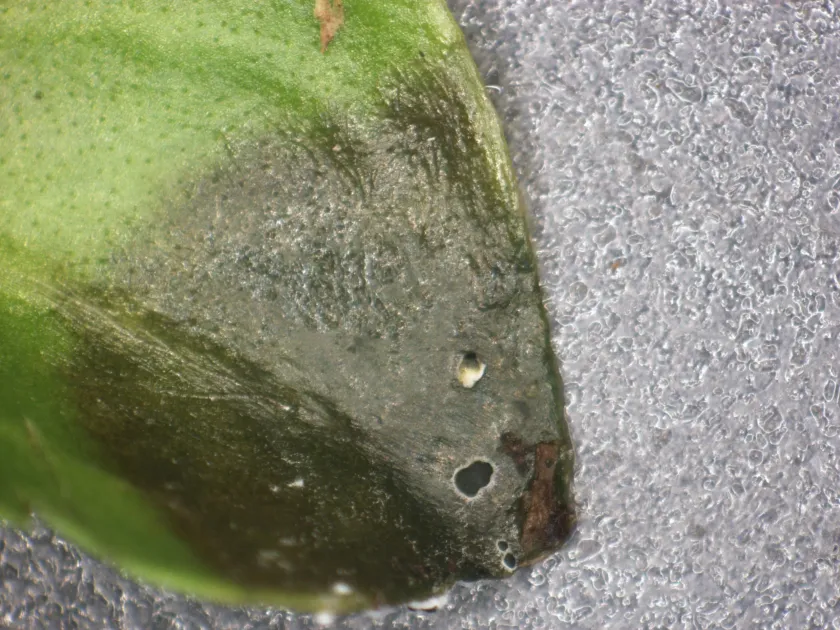
The primary symptom of Myrothecium leaf spot is the emergence of small, circular lesions on leaves, stems, and petioles. These spots often develop necrotic centers surrounded by a distinct dark margin.
A hallmark of this pathogen is the appearance of dense, white to cream-colored or greenish fungal sporulation structures. These cushions typically develop within the center of the necrotic spots.
On fruit, such as watermelons, the disease presents as sunken, water-soaked spots. These lesions rapidly expand, causing tissue decay and making the fruit unmarketable due to the rapid onset of rot.
Advanced stages of the infection may affect the plant's vascular system. This disruption often leads to premature wilting of the foliage, stem distortion, and the eventual death of the affected plant parts.
Field diagnostics require careful inspection of the lower canopy, where microclimatic conditions often facilitate initial infection. Identifying the characteristic spore pads is crucial for confirming the presence of the pathogen.
Pathogen
The disease is caused by the fungus Myrothecium roridum, a soil-borne and seed-borne pathogen. It is highly resilient and capable of surviving in diverse and challenging environmental conditions.
The fungus persists in infected plant debris left in the soil for extended periods. It can also be transmitted via contaminated seeds that have not undergone rigorous phytosanitary treatment.
The life cycle involves the rapid production of conidia, which spread easily through wind, splashing rain, or agricultural machinery. The fungus gains entry into the plant host via microscopic wounds or natural openings.
Myrothecium roridum produces enzymes and toxins that break down plant cell walls. This biochemical activity accelerates the development of lesions and enables the fungus to colonize the host tissue efficiently.
As an opportunistic parasite, the pathogen frequently attacks plants already under environmental stress. High plant density can increase the disease pressure, making control significantly more complex.
Conditions for development
High relative humidity is the most critical environmental factor for the development of Myrothecium leaf spot. Humidity levels above 85-90% provide the ideal environment for conidial germination.
The optimal temperature range for the rapid proliferation of the fungus is between +22 and +28 degrees Celsius. Within this range, the pathogen can achieve a high infection rate in a short timeframe.
Poor ventilation in greenhouse environments or excessively dense field plantings creates a stagnant microclimate. This prevents leaf surfaces from drying, which is essential for interrupting the infection cycle.
Surface moisture, such as dew or water droplets from overhead irrigation, promotes the infection process. Avoiding evening irrigation can help keep plant surfaces dry and reduce the risk of successful spore colonization.
Nutritional imbalances, particularly excessive nitrogen fertilization, can make plant tissues softer and more succulent. These conditions enhance susceptibility, allowing the fungus to penetrate the host more easily.
Why it matters
Myrothecium roridum causes significant economic losses in various crops. Watermelons and other cucurbits are particularly vulnerable, with fruit rot directly impacting total harvestable yield.
By compromising the leaf surface area, the disease reduces the plant's photosynthetic efficiency. This leads to stunted growth, delayed maturation, and an overall reduction in the plant's vigor and vitality.
Severe infestations can result in total crop failure within specific patches. Because the pathogen affects both the vegetative parts and the fruit, the damage is comprehensive and difficult to contain.
Beyond direct yield loss, the cost of labor and chemical inputs for disease management represents a major financial burden. The need for constant monitoring adds further to the cost of production.
The persistence of the fungus in the soil complicates long-term field management. Farmers are often forced to implement extended crop rotation cycles to minimize the pathogen load in the soil.
Protection
Crop rotation is the cornerstone of effective management. Avoiding the planting of susceptible cucurbit crops on the same land for at least 3-4 years helps reduce the inoculum levels in the soil.
Using certified, disease-free seed is the first line of defense. Proper seed treatment with effective fungicides is essential to prevent the initial introduction of the pathogen into new fields.
Maintaining proper plant spacing improves air circulation and prevents humidity buildup. Weeding and pruning can further enhance airflow, keeping the foliage dry and unfavorable for the fungus.
If symptoms appear, systemic fungicides or copper-based treatments can be used to contain the infection. Regular monitoring is key to applying these measures during the early stages of disease progression.
Post-harvest sanitation involves the thorough removal and destruction of all infected plant residues. Deep plowing facilitates the decomposition of organic matter and helps bury remaining inoculum.
Pathogens and affected parts
Affects crops · 1
Discussion
No discussions yet — be the first.