
Description
Symptoms
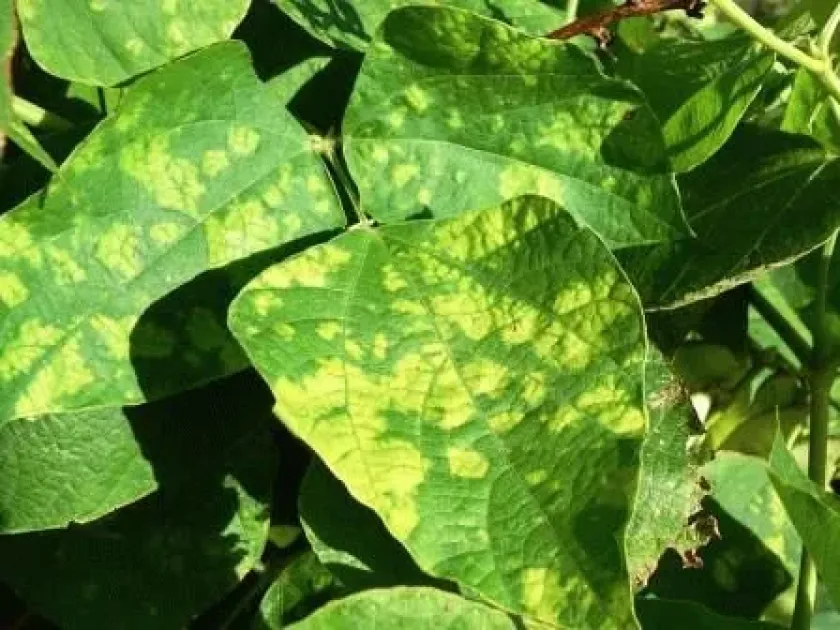
The initial symptoms of cowpea leaf spot manifest as small chlorotic spots on the lower leaves, which gradually develop a brownish or grey center.
As the disease progresses, these lesions become necrotic and are often delineated by leaf veins, resulting in an angular or irregular shape characteristic of the pathogen.
Under conditions of high humidity, a faint, grayish velvety growth of fungal conidiophores and conidia can be observed on the underside of the infected lesions.
In severe cases, individual spots coalesce to cover significant areas of the leaf blade, leading to premature yellowing and eventual shedding of the foliage.
Symptoms may also appear on petioles, stems, and pods, which directly negatively impacts the overall development and commercial quality of the legume crop.
Pathogen
The disease is caused by the fungus Cercospora canescens, a member of the Fungi Imperfecti, which is highly prevalent in various tropical and temperate regions.
This pathogen survives primarily in crop debris, allowing it to initiate new infections in subsequent seasons whenever a suitable host is planted.
The infection process begins when conidia, disseminated by wind or rain splash, land on susceptible tissues and penetrate through stomata or mechanical wounds.
The fungal mycelium colonizes the inter-cellular spaces of the plant host, secreting phytotoxins that trigger localized cell death and the formation of necrotic spots.
The fungal life cycle can be completed in approximately ten to fourteen days, enabling rapid secondary spread of the infection throughout the field.
Conditions for development
The development of leaf spot is highly favored by high relative humidity, typically exceeding 75 percent, and prolonged periods of leaf wetness from rain or dew.
The pathogen thrives in warm conditions, with an optimal temperature range for spore germination and lesion development between +22 and +28 degrees Celsius.
High planting density, which restricts airflow and prevents rapid drying of the canopy, creates a conducive microclimate for the fungus to establish itself.
Frequent rainfall events coupled with cloudy skies significantly enhance the infection rate by ensuring the necessary moisture for the pathogen's sporulation.
Stress factors, such as nutrient deficiencies or pest infestations, reduce the plant's natural defense mechanisms, making it more susceptible to heavy infection.
Why it matters
The primary damage caused by this disease is the reduction of the effective photosynthetic area of the leaves, leading to stunted plant growth and reduced vigor.
Premature defoliation significantly impairs the plant's ability to fill pods, resulting in smaller, shriveled, or immature seeds that lower overall market value.
In crops like soybeans and peanuts, heavy infection can lead to substantial yield losses, sometimes ranging between 15 and 40 percent in susceptible varieties.
Beyond quantity, the disease negatively affects the nutritional quality of the seeds, reducing their protein and oil content and degrading their storage potential.
Seed-borne transmission remains a concern, as infected seeds can carry the pathogen, potentially reducing germination rates and overall crop stand establishment.
Protection
Effective management begins with the use of certified disease-free seeds and the implementation of a proper crop rotation program to break the disease cycle.
Cultural practices, such as the destruction or deep incorporation of crop residues, are crucial to reducing the primary inoculum source in the soil.
Fungicide applications, particularly those containing triazoles or strobilurins, can be effective in suppressing the disease when applied at the onset of symptoms.
- Choosing resistant or tolerant cowpea and soybean cultivars.
- Maintaining proper row spacing to ensure adequate air circulation.
- Controlling weeds that may serve as alternative hosts for the fungus.
- Applying balanced fertilization to improve plant health and resistance.
Regular field scouting is essential to detect early symptoms, allowing for timely intervention before the infection reaches epidemic proportions across the crop.
Pathogens and affected parts
Affects crops · 2
Discussion
No discussions yet — be the first.