
Cotton mosaic
Cotton mosaic agent
Description
Symptoms
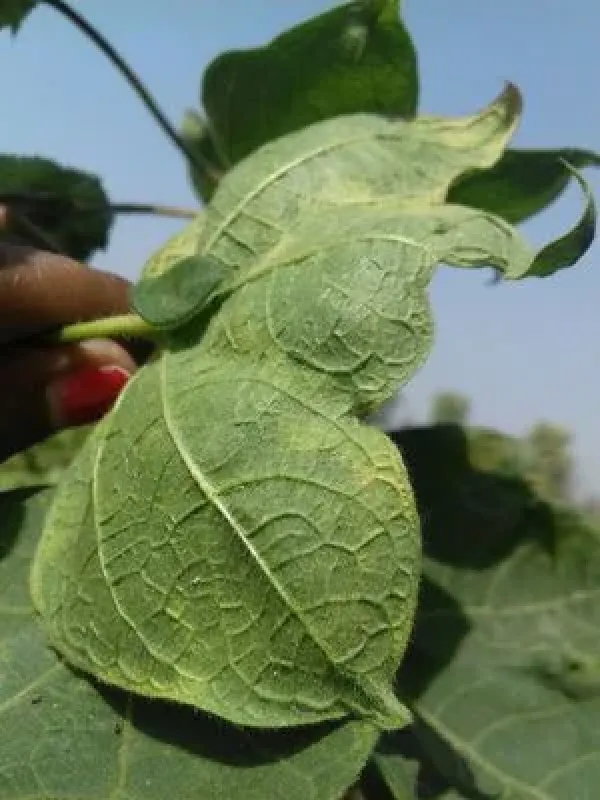
The primary visual symptom of the disease is a characteristic mosaic pattern on the cotton leaf blades. Leaves exhibit alternating light green and dark green patches, giving the plant a mottled appearance.
As the disease progresses, leaves often become deformed, wrinkled, or curled, which significantly reduces the photosynthetic surface area and hinders plant development.
During the flowering phase, infected plants show a marked reduction in flower buds and boll setting. Flowers may display abnormal coloring or fail to open fully, impacting yield.
In severe cases, terminal shoots can become stunted, brittle, or distorted. Some varieties may show necrosis along the leaf veins as the viral load increases.
Diagnosis in the field can be challenging due to symptoms often mimicking nutrient deficiencies, so laboratory testing is recommended for confirmation.
Pathogen
The causative agent is the Cotton mosaic virus, a plant virus typically transmitted by insect vectors that feed on the phloem sap of the host plant.
The primary vector in nature is the whitefly (Bemisia tabaci) and certain species of aphids, which transmit the virus while feeding on plant tissues.
The virus acts systemically, moving through the plant's vascular system to reach all organs, making it impossible to cure an infected plant once it has been colonized.
The virus survives the off-season primarily in the roots of perennial weed hosts, which serve as the initial reservoir for infections in the spring.
Mechanical transmission can also occur through contaminated farm tools used during pruning or other field operations, spreading the virus between plants.
Conditions for development
The development and rapid spread of the disease are heavily influenced by hot, dry weather, which favors the rapid population growth of whiteflies.
A high density of whitefly populations in the field is the most critical risk factor, as these pests facilitate the rapid spread of the virus to healthy plants.
Dense planting can create a microclimate that supports vector activity, increasing local humidity and providing protection for the insects responsible for transmission.
Continuous cropping of cotton on the same land allows for the buildup of the virus in the soil and local weed reservoirs, increasing infection pressure.
Poor weed management acts as a catalyst for the disease, as many Malvaceae weeds function as "green bridges," allowing the virus to overwinter successfully.
Why it matters
The major impact of cotton mosaic is a significant decline in fiber quality, resulting in shorter, weaker, and discolored lint that is less valuable on the market.
The disease causes substantial shedding of squares and bolls, leading to dramatic yield losses, often ranging from 30% to 50% in heavily infested fields.
Infected plants suffer from disrupted metabolic processes, leading to reduced vigor, impaired photosynthesis, and eventually premature plant death.
Since there is no effective curative treatment for viral diseases in cotton, the economic losses are often permanent once the infection is widespread.
Weakened plants are significantly more susceptible to secondary infestations of fungal pathogens and other opportunistic pests, complicating overall crop health.
Protection
The primary management strategy focuses on controlling the vector populations, particularly whiteflies, through timely and strategic insecticide applications.
Rigorous weed management is essential to eliminate reservoirs of the virus both within the cotton field and along its surrounding borders.
Implementing crop rotation with non-host plant species helps to break the viral cycle and significantly lowers the infection pressure for subsequent seasons.
The use of resistant or tolerant cotton cultivars is the most effective and sustainable long-term method for managing cotton mosaic disease.
- Enforcing strict quarantine on imported seeds to prevent spread.
- Roguery and destruction of early infected plants to reduce primary inoculum.
- Regular cleaning and disinfection of tools used in field operations.
- Promoting natural predators to manage insect vector populations.
Discussion
No discussions yet — be the first.