
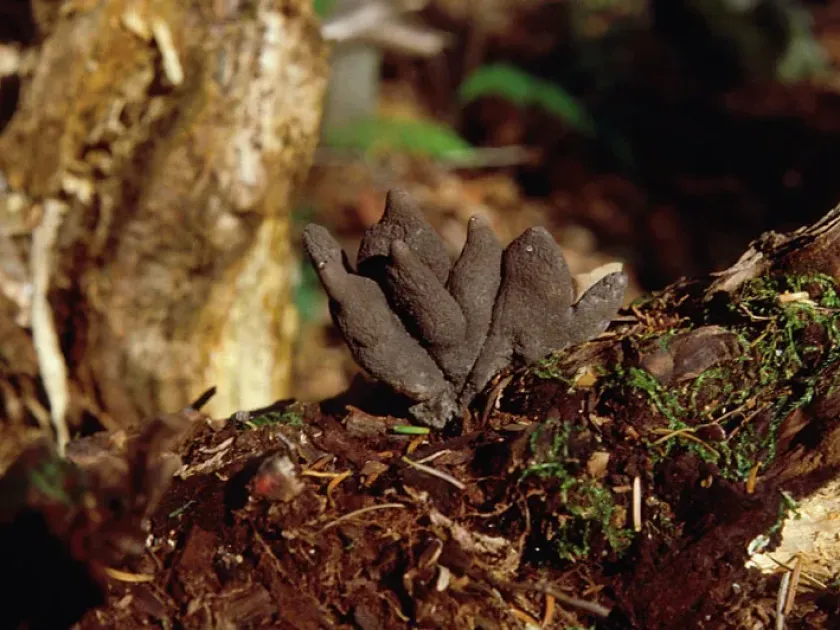
Description
Symptoms
The primary symptom is the development of hardened, dark-brown to black crust-like lesions on the main root and root crown.
Above-ground, plants exhibit stunted growth, chlorosis, and wilting, particularly during periods of moderate stress.
Microscopic or visual examination of the roots reveals tissue necrosis and the shedding of the outer root bark.
As the disease progresses, the root loses its structural integrity, resembling a corky or dead woody texture.
In alfalfa fields, the disease manifests as distinct circular patches of thinning stands where plants die prematurely.
Pathogen
The causative agent of corky root rot is the fungus from the Xylaria genus. These are ascomycete fungi that can act as opportunistic pathogens in the root zone.
This disease is classified as a root rot, characterized by the gradual degradation of root tissues and the subsequent systemic failure of the plant.
The pathogen is known for its ability to persist in the soil for several years by inhabiting organic matter, which makes eradication extremely difficult.
The fungus develops slowly, but its destructive impact on the vascular structure leads to irreversible damage to the host plant.
The biological cycle involves the production of stromata, which serve as the primary source of inoculum during the growing season.
Conditions for development
High soil moisture levels and poor drainage are the most critical factors that encourage the proliferation of the Xylaria fungus.
Soil acidity plays a significant role in disease development, as lower pH levels can weaken the natural defense mechanisms of the host plants.
Mechanical injuries sustained during tillage or cultivation practices provide easy access points for the fungal mycelium to penetrate roots.
Continuous monocropping of susceptible species creates a buildup of fungal inoculum in the soil over time.
Optimal soil temperatures ranging from 18°C to 25°C facilitate the rapid expansion and infectious potential of the pathogen.
Why it matters
The disease causes a severe reduction in biomass yield due to the mass mortality of plants within the infected fields.
Infected plants have compromised vigor, making them significantly more susceptible to winter-kill and environmental stress.
Root damage leads to impaired nutrient uptake, which directly affects the protein content and quality of the harvested alfalfa.
Large-scale infestations result in major economic losses due to the necessity of field abandonment or premature re-seeding.
The persistence of the pathogen in the soil restricts the options for crop rotation, limiting land utility for many years.
Protection
The most effective management strategy is a robust crop rotation plan, avoiding host plants for a duration of at least 4-5 years.
Soil amendment through liming is highly recommended to neutralize acidity and create a less favorable environment for the fungus.
Implementing proper land leveling and drainage systems is essential to prevent the water-logging that invites root infection.
Only high-quality, treated seed should be used, combined with appropriate fungicidal seed dressing to provide early protection.
- Thorough removal and destruction of crop residues after harvesting.
- Regular soil testing to monitor pH levels and nutrient status.
- Avoidance of mechanical root disturbance during the growing season.
Pathogens and affected parts
Affects crops · 1
Discussion
No discussions yet — be the first.