
Cordyceps gracilis
Cordyceps gracilis
Description
Symptoms
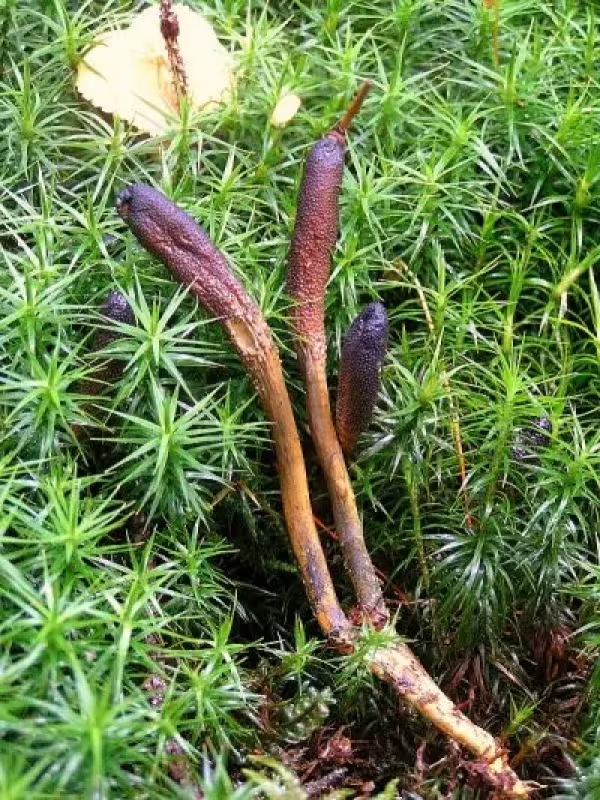
The most visible sign of Cordyceps gracilis is the emergence of thin, yellowish-brown fruiting bodies from the soil surface near host remains.
The tips of these fruiting bodies are often club-shaped, where sexual spores are produced and released when environmental conditions are optimal.
Careful excavation of the soil around the fruiting bodies usually reveals the mummified remains of the host insect, which are often covered in mycelial threads.
These signs are most commonly observed during periods of high soil moisture and moderate temperatures, which are essential for the fungal reproductive cycle.
In most agronomic settings, the presence of these fungi is subtle and easily overlooked unless a detailed survey of soil fauna is conducted.
Pathogen
Cordyceps gracilis is an entomopathogenic fungus within the Clavicipitaceae family. It is a specialized parasite that targets specific soil-dwelling insect larvae, particularly those of Lepidoptera.
The life cycle begins when fungal spores adhere to the insect's cuticle. Following germination, the mycelium penetrates the host, absorbing nutrients and eventually causing the death of the insect.
This parasitic process is highly evolved, allowing the fungus to survive in diverse soil environments by utilizing insect hosts as its primary nutritional source.
The fungus produces distinct, slender, club-shaped stromata that emerge from the host's cadaver to release spores into the environment.
Unlike phytopathogenic fungi, Cordyceps gracilis does not infect living plant tissues, maintaining a strict biological focus on insect hosts.
Conditions for development
Cordyceps gracilis requires high levels of relative humidity to successfully complete its development and produce fruiting bodies above ground.
Moderate temperatures, typically ranging from 15°C to 22°C, provide the ideal environment for mycelial growth and spore maturation.
The presence of organic matter in the soil helps maintain the necessary microclimate, protecting the fungus from extreme weather fluctuations.
Spore dispersal is facilitated by natural environmental factors, including precipitation, wind, and the movement of small soil-dwelling invertebrates.
Areas with low chemical pressure and healthy soil structures are the most favorable environments for the natural persistence of this fungal population.
Why it matters
Cordyceps gracilis does not pose a threat to agricultural crops; it is not a plant pathogen and cannot cause plant diseases or reduce harvest yields.
There is no economic damage associated with this fungus, as its activity is strictly limited to the regulation of soil-dwelling insect populations.
Instead, it can be viewed as an indicator of a healthy, biodiverse soil ecosystem where natural biological control mechanisms are at work.
The fungus does not release any phytotoxic compounds, meaning that the health and physiology of nearby cultivated plants remain completely unaffected.
It serves as a natural regulator of insect density, which is generally considered a beneficial ecological service within managed farmland.
Protection
No protective measures are required against Cordyceps gracilis, as it is a natural component of the soil ecosystem rather than a crop pest.
If its presence is observed, it should not be targeted with fungicides, as this would unnecessarily disrupt the beneficial soil biota.
Standard agronomic practices such as proper drainage and crop rotation are sufficient to maintain soil health without needing to interfere with native fungal populations.
The use of broad-spectrum fungicides should be minimized to preserve the natural biological balance of the soil, including the presence of entomopathogenic fungi.
- Maintain healthy soil moisture levels.
- Avoid unnecessary use of chemical pesticides.
- Encourage biodiversity to support natural insect control agents.
Discussion
No discussions yet — be the first.