
Black slime mold
Comatricha nigra
Description
Symptoms
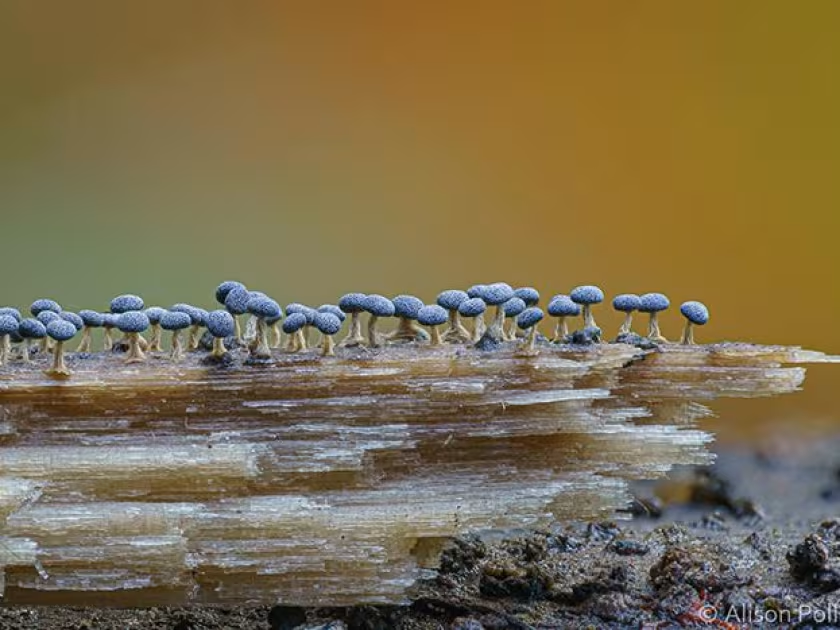
The appearance of Comatricha nigra is marked by the development of tiny, dark-colored sporangia that look like miniature stalks.
These fruiting bodies are typically elongated or club-shaped, attached to the decaying substrate by very thin, thread-like stems.
Upon maturity, the sporangia rupture, releasing a massive quantity of spores, which covers the surface with a dark, dust-like layer.
The colonies often resemble a velvet or bristle-like texture, commonly found on damp wood, bark, or decomposing plant materials.
Because of their small size, individual specimens are difficult to spot, but clusters become easily visible once mass sporulation occurs.
Pathogen
The organism is Comatricha nigra, a species of slime mold belonging to the division Myxomycota.
It is not a parasitic pathogen; instead, it is a saprotrophic organism that feeds on microorganisms and organic debris.
Its life cycle starts as a plasmodium, a mobile, multi-nucleated mass that moves across surfaces consuming decaying organic matter.
When environmental conditions change, the plasmodium enters a reproductive phase, transforming into permanent sporangia structures.
As a biological entity, it plays a natural role in the decomposition of dead organic matter within the soil and forest ecosystems.
Conditions for development
High levels of humidity are the primary requirement for the active growth and development of Comatricha nigra.
It thrives in shaded, low-airflow environments where moisture is retained in the substrate for long periods.
Optimal temperatures for its development range between +15°C and +25°C, accelerating the formation of reproductive structures.
The organism commonly spreads on rotting logs, damp mulch, decaying vegetation, and in poorly ventilated greenhouse conditions.
Stagnant air and persistent moisture are the key environmental triggers that allow the plasmodium to mature successfully.
Why it matters
While Comatricha nigra is not a plant parasite, its presence can be detrimental to the commercial quality of agricultural produce.
It causes aesthetic degradation when its spores cover harvested products, rendering them unsuitable for sale.
The presence of this slime mold indicates poor sanitation or excessive moisture, which may eventually lead to other, more harmful pathogens.
Accumulation of spores in indoor agricultural settings can trigger respiratory issues or allergies among farm staff and handlers.
In high concentrations, it may smother delicate surfaces or clog small crevices, complicating the post-harvest processing of sensitive crops.
Protection
The most effective strategy for control is the management of moisture levels and the maintenance of good air circulation.
Regular sanitation, including the removal of decaying organic waste and woody debris, helps to eliminate the organism's food supply.
Improving the drainage and ventilation within greenhouses is critical to prevent the conditions that favor slime mold growth.
- Implement strict sanitation protocols to remove debris.
- Enhance airflow through proper plant spacing.
- Use drainage to prevent standing water near crops.
For large infestations, manual removal of the affected substrate followed by surface disinfection is recommended to halt the spread.
Discussion
No discussions yet — be the first.