

Description
Symptoms
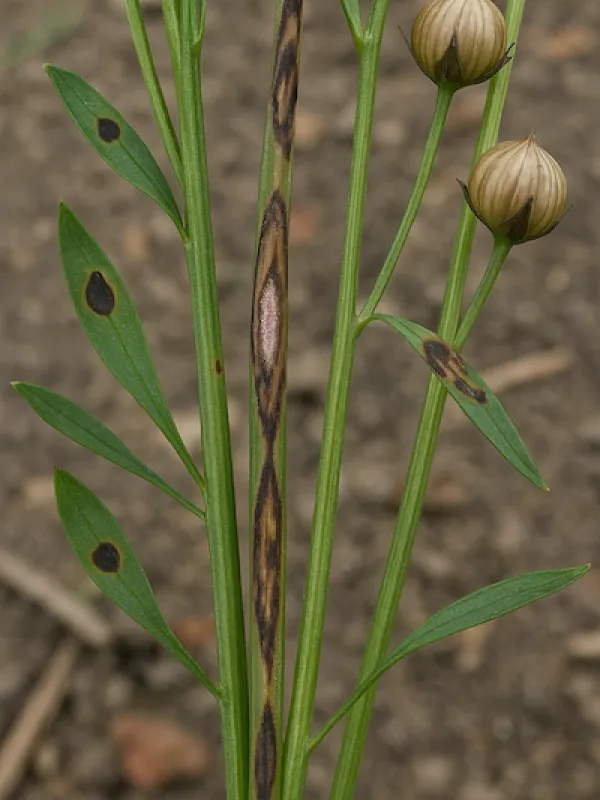
The first symptoms of flax anthracnose usually appear on seedlings as brown spots or streaks on the cotyledons and the hypocotyl. Infected tissues often become thin and necrotic, leading to damping-off and the death of young plants in the field.
On adult plants, the pathogen affects stems and leaves, causing oval, sunken brown spots. As the disease progresses, these lesions can coalesce, girdle the stem, and severely impair the plant's ability to transport water and nutrients.
Under humid conditions, the characteristic fungal fruiting bodies (acervuli) appear as small, sometimes pinkish or whitish pads on the lesions. These structures are the primary source of secondary inoculum during the growing season.
Affected stems often show premature yellowing and wilting, which stands out against healthy parts of the crop. In severe cases, the entire plant may wither and die before the seeds are fully developed.
The root system can also be affected, showing browning and decay of the fine root hairs. Consequently, infected plants lose their anchorage in the soil and can be easily pulled out, showing a significant reduction in overall plant vigor.
Pathogen
The disease is caused by the fungus Colletotrichum lini, which is highly specialized to infect flax. This pathogen is known for its ability to persist in diverse environmental conditions and spread rapidly under favorable climates.
The fungus produces masses of conidia in acervuli, which break through the host's epidermis. These spores are disseminated primarily by rain splashes, wind, and movement of equipment, allowing the disease to spread across the field.
Seed-borne transmission is the most critical factor for the initial spread of the disease. The fungus can survive as mycelium within the seed coats or inside the seeds themselves, making high-quality, disease-free seed essential for production.
The survival of Colletotrichum lini on crop debris in the soil allows it to persist for several years. Even in the absence of a flax crop, the pathogen remains a constant threat, waiting for the next host cycle to begin.
Genetic variability in the pathogen population complicates breeding efforts, as new strains may emerge that overcome existing host resistance. Understanding the pathogen's biology is vital for developing effective integrated pest management strategies.
Conditions for development
Flax anthracnose thrives in warm and humid conditions, with temperatures between 18°C and 25°C being optimal for fungal growth. Frequent rainfall and high relative humidity are essential triggers for sporulation and infection.
Crop rotation history is a major factor in disease incidence. Fields where flax is grown too frequently are at a much higher risk of soil-borne infection, as the pathogen accumulates in the crop residue remaining from previous seasons.
Dense planting patterns reduce air circulation within the canopy, creating a microclimate that remains humid for longer periods. This moisture retention is a key factor that accelerates the spread and severity of anthracnose.
Excessive nitrogen fertilization often leads to lush, succulent vegetative growth that is more susceptible to fungal penetration. A balanced nutrient program helps maintain stronger plant structures that better resist the disease.
Any injury to the plant, whether caused by insects, machinery, or abiotic factors, provides an entry point for the fungus. Maintaining healthy plants and preventing physical stress are crucial for minimizing the infection risk.
Why it matters
The primary damage is a drastic reduction in stand density due to seedling mortality, which often necessitates costly reseeding. This initial loss makes it difficult to achieve the target plant population for optimal yields.
Infection significantly reduces the quality of flax fiber, making it brittle and weak. This lowers the commercial grade of the fiber, directly impacting the profitability of the flax harvest for the textile industry.
Yield losses also occur due to poor seed development. Infected plants produce fewer and smaller seeds, which often have low germination rates, further propagating the disease in the following planting cycle.
Infected crops are less competitive against weeds, leading to increased weed pressure and additional management costs. The overall health of the field is compromised, making it susceptible to secondary stresses.
In severe epidemic years, growers can experience substantial economic losses, with yield reductions ranging from 20% to over 50%. Effective management is essential for the long-term economic viability of flax farming.
Protection
Using certified, disease-free seeds is the most effective preventative measure against flax anthracnose. Seed treatments with appropriate systemic fungicides are mandatory to eliminate the pathogen from the seed surface and internal tissues.
Implementing a long crop rotation cycle, with at least 5 to 6 years between flax crops, is necessary to reduce the soil-borne inoculum. Choosing suitable crop predecessors helps break the pathogen's life cycle.
Deep plowing in the autumn helps to bury infected crop residues, which facilitates their decomposition and reduces the amount of pathogen material available to cause infection in the spring.
Adopting proper seeding rates and balanced fertilization programs strengthens plant vigor and natural resilience. Phosphorus and potassium applications, in particular, support robust plant growth and immunity.
Fungicide sprays during the vegetative stage, applied upon the first detection of symptoms, are critical to arresting the spread of the disease. Monitoring the field and acting promptly can save the crop from extensive damage.
Reference
Connections · Flax anthracnose
Most often together:
Marketplace
Products · 1
Community
Discussion
No discussions yet — be the first.