
Pepper Anthracnose
Colletotrichum capsici
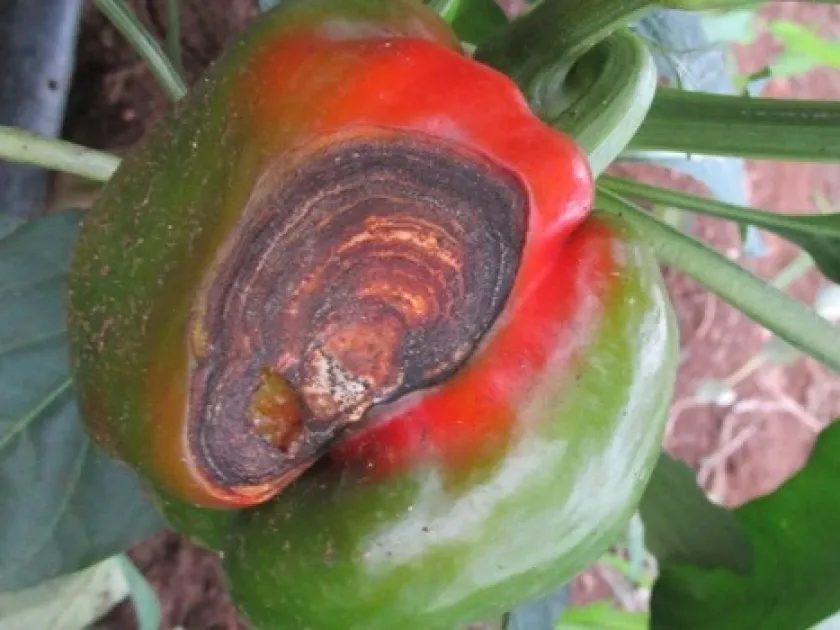
Description
Symptoms
Early symptoms appear as small, water-soaked, circular lesions on the fruit surface, which eventually enlarge, become sunken, and turn dark brown or black.
In humid conditions, the centers of these lesions develop acervuli—small cushions that exude masses of pink or orange-colored spores.
While fruit symptoms are most common, the fungus can also infect leaves and stems, causing dark necrotic spots that may lead to defoliation.
As the disease progresses, the fruit tissue becomes mushy and the lesion area may expand to cover the entire pepper, causing it to mummify.
Infected seedlings may show damping-off symptoms or dark lesions on the hypocotyl, which can weaken the plant permanently or lead to death.
Pathogen
The disease is caused by the pathogenic fungus Colletotrichum capsici, which attacks all above-ground parts of the plant throughout its growing season.
The fungus survives in infected plant debris, seeds, and soil, remaining viable for several years, which makes rotation a critical management practice.
Spore dissemination occurs primarily through water splashes during rain or overhead irrigation, as well as by wind or contaminated agricultural tools.
The pathogen typically invades plant tissues through wounds or natural openings, exploiting the surface of developing or ripening pepper fruits.
As an obligate parasite, it colonizes the host tissue quickly, producing enzymes that degrade cell walls and lead to rapid tissue necrosis and fruit decay.
Conditions for development
Anthracnose development is heavily favored by high relative humidity (above 80%) and warm temperatures, typically between 22°C and 30°C.
Frequent rainfall or overhead irrigation cycles provide the necessary surface moisture for fungal conidia to germinate and penetrate the fruit skin.
Poor ventilation and high plant density in greenhouses create a microclimate that remains damp for long periods, accelerating the infection cycle.
Physical injuries to the fruit, often caused by insects like pepper weevils or mechanical damage during harvest, serve as prime entry points for the pathogen.
Susceptibility increases significantly during the ripening stage, as the fruit accumulates sugars and physiological changes occur in the epidermal cells.
Why it matters
Pepper anthracnose can cause devastating crop losses, leading to the total rejection of produce for market due to poor quality and aesthetic damage.
Infected fruits are prone to secondary infections by bacteria, which further degrade the harvested product and lead to significant post-harvest losses.
The disease spreads rapidly across the field or greenhouse, meaning that a few infected plants can quickly jeopardize the entire yield of the season.
Reduced leaf surface area caused by stem and foliage infection impairs the plant's ability to photosynthesize, resulting in stunted growth and small, low-quality peppers.
Financial losses are compounded by the high cost of intensive fungicide programs and the necessity of discarding large portions of the harvest during packing.
Protection
The foundation of control is the use of disease-free, high-quality seeds, preferably treated with effective fungicides before planting.
Practicing strict crop rotation is essential, ensuring that solanaceous crops do not return to the same plot for at least three to four years.
Timely application of chemical control agents, such as copper-based fungicides or triazoles, is highly effective when used as a preventative measure.
- Implementing drip irrigation to keep fruit surfaces dry.
- Removing and burying or burning all crop residues immediately after harvest.
- Managing insect populations that cause physical damage to fruit skins.
Optimizing greenhouse ventilation and maintaining optimal plant spacing helps reduce moisture levels, effectively hindering the spread of the fungal pathogen.
Discussion
No discussions yet — be the first.