
Colacium vesiculosum
Colacium vesiculosum
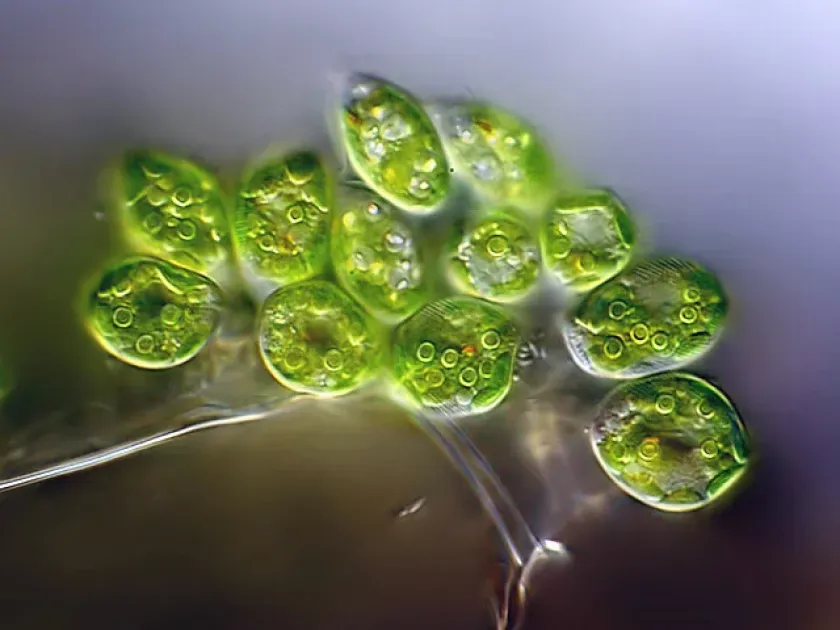
Description
Symptoms
The primary sign of a Colacium vesiculosum infestation is the presence of a slimy, often greenish or brownish film covering the surface of aquatic animals or vegetation.
Under a microscope, these colonies appear as clusters of pear-shaped cells attached to the substrate by transparent stalks. The structure resembles tiny trees or bushes.
In severe cases, the surface of infested hosts becomes dull and textured. This visible buildup often changes the appearance of the affected organisms in pond environments.
Infested zooplankton often show signs of impaired movement. Because the colonies can become quite heavy, the host struggles to swim normally, which is a major symptom of high infestation density.
Large-scale growth can give the water itself a murky or green tint, indicating that the population of epibionts has reached significant levels in the ecosystem.
Pathogen
Colacium vesiculosum is a specialized genus of euglenoid flagellates. Unlike their free-swimming relatives, these organisms adopt a sedentary lifestyle, attaching themselves to various aquatic substrates.
In aquaculture and limnology, this organism is categorized as an epibiont—a life form that lives on the surface of another living organism. It does not act as a traditional plant pathogen but competes for space and nutrients.
Each cell is protected by a self-secreted capsule. The organism uses a short stalk to anchor itself firmly to surfaces, such as the exoskeleton of crustaceans, rotifers, or aquatic plant tissues.
Reproduction occurs through cell division within the mother's membrane. After division, daughter cells often remain attached to the base, creating dense, visible colonies over time.
They are mixotrophic, utilizing both photosynthesis and the absorption of dissolved organic matter, which explains their rapid proliferation in nutrient-rich waters.
Conditions for development
Colacium vesiculosum thrives in water with high concentrations of nitrogen and phosphorus. Eutrophic environments provide the ideal conditions for its rapid development.
Warm water temperatures, typically between 18°C and 25°C, significantly accelerate the rate of cell division and the formation of extensive colonies on available substrates.
Stagnant water conditions or areas with low circulation allow zoospores to settle easily and anchor onto hosts, which is why infestations are more common in non-flowing systems.
While they are capable of mixotrophy, moderate light levels support their photosynthetic needs and contribute to more robust colony growth in tanks and ponds.
Excessive organic waste, often resulting from overfeeding fish or improper waste management, provides the necessary nutrients for the explosive growth of these euglenoids.
Why it matters
The main harm caused by Colacium vesiculosum is the mechanical burden placed on the host. Massive colony growth can weigh down small crustaceans, preventing them from feeding or escaping predators.
When colonies cover the mouthparts or feeding appendages of zooplankton, it drastically reduces their ability to filter-feed, negatively affecting the entire food chain in pond aquaculture.
For aquatic plants, a thick layer of these organisms blocks light, inhibiting the plant's ability to photosynthesize and leading to stunted growth or eventual tissue decay.
The decay of massive colonies can lead to sudden drops in dissolved oxygen levels, potentially causing severe stress or mortality among sensitive fish populations.
Altered water chemistry resulting from the metabolic waste of these colonies creates an unfavorable environment for more delicate aquatic species to thrive.
Protection
Controlling Colacium vesiculosum begins with improving water quality. Reducing the influx of organic fertilizers and fish feed is essential for limiting population growth.
Enhancing water circulation and aeration prevents the accumulation of these organisms on surfaces and helps maintain a healthier aquatic environment.
Regular mechanical filtration is highly effective in closed systems like aquariums to physically remove biomass and maintain water clarity.
Biological control methods, such as introducing efficient filter-feeding species, can help manage the abundance of euglenoid populations naturally.
- Maintain low levels of phosphates and nitrates.
- Ensure proper waste removal from the pond bottom.
- Use UV sterilizers in small recirculating systems.
- Promote natural water flow and circulation.
Discussion
No discussions yet — be the first.