
Colacium
Colacium
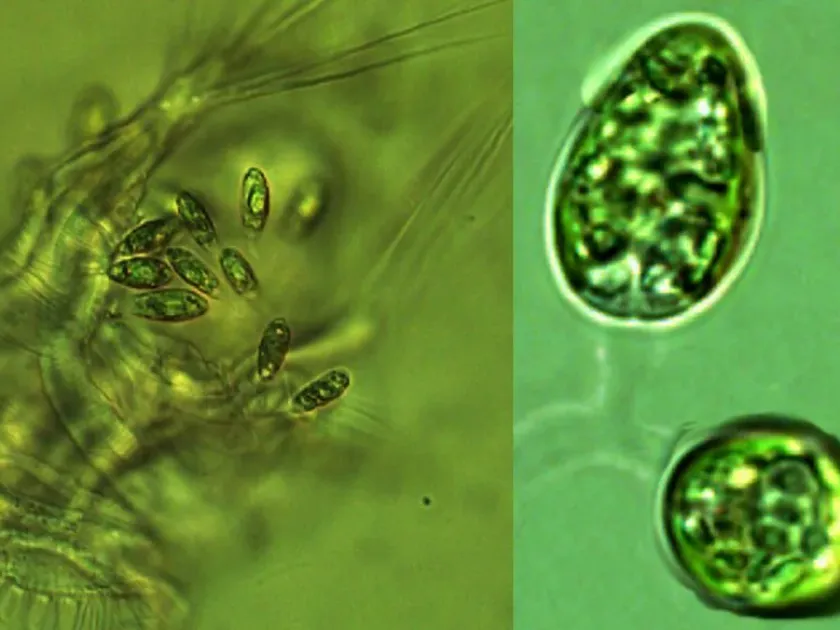
Description
Symptoms
The most visible symptom is a slimy, dense, and often greenish or brownish coating forming on the stems and leaves of the plants.
Affected plants may exhibit signs of chlorosis due to the limitation of light penetration and impaired photosynthetic capability.
Microscopic examination reveals clusters of pear-shaped or cylindrical cells attached to the epidermis of the plant leaves.
In advanced cases, the coating becomes thicker, leading to the yellowing and eventual browning of the plant tissue underneath.
Leaves may appear distorted or wilted as the growth of the algae interferes with the plant’s normal physiological functions.
Pathogen
Colacium (genus Colacium) is a group of euglenoid algae that can exhibit an epibiotic lifestyle, attaching themselves to various substrates, including aquatic plants.
In agronomical terms, this organism is considered a problematic epibiont that colonizes the surfaces of plants grown in aquatic or hydroponic systems.
The organism uses specialized mucilaginous stalks to secure itself firmly to the host tissue, where it extracts nutrients and persists.
These algae are not traditional pathogens but their massive proliferation can lead to pathological conditions in high-density plant populations.
The life cycle of Colacium is highly dependent on environmental variables and the presence of organic nutrients in the aquatic medium.
Conditions for development
The development of Colacium is primarily driven by high levels of water eutrophication, specifically nitrogen and phosphorus enrichment.
Water temperatures between 18°C and 25°C provide an optimal environment for rapid cell division and colonial growth.
Low water velocity or stagnant conditions in irrigation channels facilitate the settlement of the algae on plant surfaces.
Accumulation of organic detritus in hydroponic reservoirs acts as a primary nutrient source that triggers population spikes.
Lack of adequate light management and water filtration allows for the rapid spread of the algae throughout the greenhouse facility.
Why it matters
The physical barrier created by the algae prevents adequate sunlight from reaching the chlorophyll, significantly reducing plant growth rates.
By interfering with stomatal conductance, the presence of Colacium limits the plant's ability to engage in gas exchange and transpiration.
The accumulation of waste products from the algae near the plant surface increases the risk of secondary microbial infections and rot.
Commercial crops grown in hydroponic systems suffer severe aesthetic and quality losses, rendering them unsuitable for market distribution.
Long-term infestation drains the plant of essential energy reserves, making it susceptible to other environmental stressors.
Protection
Maintaining high standards of water quality by monitoring nutrient levels is the most effective preventative measure against infestation.
Installing robust filtration systems and utilizing UV water sterilization can effectively eliminate the algae before it colonizes crops.
Ensuring constant water movement through aeration helps prevent the conditions required for the algae to attach to the plant host.
Regular disinfection of irrigation pipes and greenhouse equipment is essential to break the cycle of recurrence.
Integrated water management, including periodic tank cleaning, is necessary to keep Colacium populations below the economic injury level.
Discussion
No discussions yet — be the first.