
Description
Symptoms
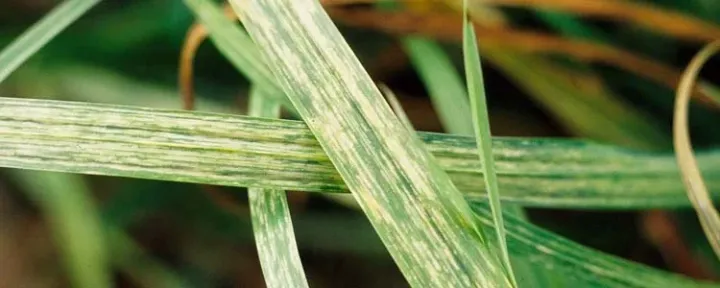
The most characteristic symptom of Cocksfoot mosaic is the presence of light green to yellow mosaic patterns on the leaves. These patterns consist of chlorotic streaks and spots that contrast with the healthy green tissue.
Advanced infection often leads to leaf deformation, including curling, narrowing, or a wavy appearance. These symptoms reflect significant metabolic disruption and impaired photosynthetic activity in the affected plants.
Infected plants exhibit reduced vigor and noticeable stunting. The number of tillers per plant often decreases, resulting in a sparse crop stand and lower overall biomass production.
In the reproductive stage, the virus affects head formation. The spikes may be malformed, sterile, or partially filled, significantly reducing grain yield and quality in cereals like winter wheat.
- Yellowish mosaic patterns on leaf surfaces.
- Leaf curling and deformation.
- Significant stunting and reduced growth rates.
- Decreased tillering in cereal crops.
- Poor spike development and grain sterility.
Pathogen
Cocksfoot mosaic is caused by the Dactylis mosaic virus (DMV), a member of the Potyvirus genus. It is a viral pathogen with filamentous particles that primarily affects plants within the Poaceae family.
The virus is transmitted through mechanical means via plant sap and by various aphid species. These insects act as vectors, acquiring the virus from infected hosts and transmitting it to healthy plants during feeding.
The host range of the virus includes several important agricultural crops, including winter wheat. The virus can persist in wild grass species, which serve as perennial reservoirs for the infection throughout the year.
As a systemic pathogen, the virus moves through the vascular system of the plant, affecting its growth and development. It integrates into the host's metabolism, causing physiological stress and reducing its ability to thrive.
Detection of the virus in the early stages is challenging due to latent infections in some grasses. Modern diagnostics, such as ELISA or PCR tests, are essential for identifying the pathogen in breeding and seed production programs.
Conditions for development
The spread of Cocksfoot mosaic is heavily dependent on the population dynamics of aphid vectors. Warm and humid conditions favor both aphid reproduction and the movement of the virus across the field.
The presence of perennial weeds near wheat fields acts as a continuous source of inoculum. These plants allow the virus to survive during periods when the main crop is absent or dormant.
Mechanical operations, such as mowing or tillage, can facilitate virus transmission if tools become contaminated with infected plant sap. Careful handling of equipment is necessary to prevent accidental spread.
Optimal environmental conditions for viral replication occur within a range of 20–25 degrees Celsius. In these temperatures, the virus exhibits maximum biological activity within the host cells.
High crop density and the proximity of wild host grasses create a favorable environment for the virus to establish an infection. Proper field management is key to minimizing these risk factors.
Why it matters
The primary damage caused by Cocksfoot mosaic is the reduction in photosynthetic capacity. This leads to lower levels of carbohydrate storage, which are crucial for the proper filling of grains.
In winter wheat, infection leads to substantial yield losses, characterized by shriveled grains and reduced quality. Such produce often fails to meet market standards for weight and vitality.
Infected plants are often less winter-hardy compared to healthy ones. The physiological stress caused by the virus weakens the crop, making it more susceptible to damage during cold weather or frost events.
Increased vulnerability to secondary infections is a major concern. Plants weakened by the virus are frequently colonized by various fungal and bacterial pathogens, leading to further stand loss.
Economic damage includes both the direct loss of harvest volume and the costs associated with implementing vector control and replanting diseased sections of the field.
Protection
The main strategy for managing the disease is the control of aphid populations. Systematic application of insecticides during the growing season helps minimize the vector-mediated spread of the virus.
Sanitation is critical; removing wild host grasses and weeds near fields helps eliminate the primary reservoirs of the virus. Maintaining clean field borders is an effective preventive measure.
The use of resistant or tolerant crop varieties is the most sustainable approach to protection. Breeding for virus resistance remains a priority for many cereal crop improvement programs.
Ensuring that only certified, virus-free seeds are used prevents the introduction of the pathogen into new areas. Seed health is a fundamental pillar of biosecurity in crop production.
Regular field scouting allows for the early detection of localized infection spots. Rogueing (removing and destroying) infected plants can help prevent the disease from spreading throughout the rest of the field.
Pathogens and affected parts
Affects crops · 1
Discussion
No discussions yet — be the first.