
Helminthosporium blight
Cochliobolus
Description
Symptoms
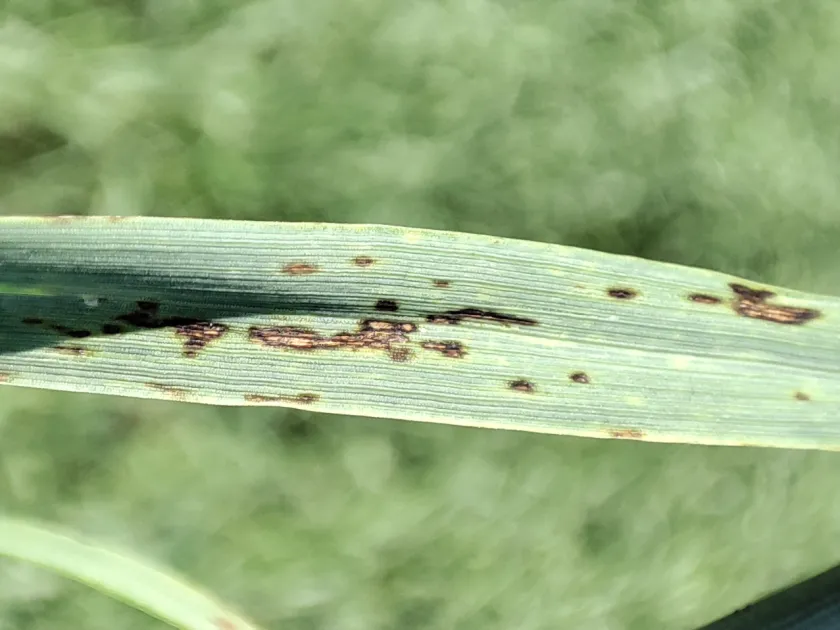
Initial symptoms typically appear as small, oval or elongated brown spots, often surrounded by a chlorotic halo that indicates toxin diffusion.
As the infection progresses, these spots expand and coalesce, eventually killing large sections of the leaf and leading to severe defoliation of the crop.
Under humid conditions, the lesions produce a dark olive-brown, velvety layer of conidiophores and conidia, which is the diagnostic sign of the disease.
Seedlings may exhibit dark streaks or root rot, often leading to pre-emergence or post-emergence damping-off, which causes uneven crop stands.
- brown, necrotic spots with light centers;
- yellowing and wilting of the leaf tissues;
- sooty mold-like growth on lesions;
- darkening of the grain (black point) at the base;
- stunted growth and reduced grain filling.
Pathogen
Helminthosporium blight is caused by a complex of fungal pathogens, specifically species of Bipolaris (with Cochliobolus as the sexual stage), known for their aggressive colonization.
The pathogen is capable of infecting all aerial parts of the host plant, including seedlings, leaves, stems, and heads, throughout the growing season.
The fungus survives as dormant mycelium or spores on crop debris, within soil, and on infected seeds, serving as a primary source of inoculum for subsequent seasons.
Dissemination occurs through wind currents and rain splashes, allowing the fungus to spread rapidly across fields during periods of wet weather.
The pathogen uses enzymatic degradation and toxin secretion to break down plant tissues, resulting in the characteristic necrosis observed on the leaves and stalks.
Conditions for development
The fungus thrives in warm conditions, with temperatures ranging between 20°C and 28°C, which are optimal for spore germination and rapid mycelial growth.
Prolonged high humidity, heavy dew, or frequent rainfall are essential for the effective dissemination and establishment of the disease in the field.
Poor crop rotation practices, specifically the continuous cropping of cereals, significantly increase the inoculum pressure in the soil environment.
Dense crop stands create a humid microclimate within the canopy, limiting airflow and providing the perfect environment for the pathogen to flourish.
Plants that are stressed due to nutrient deficiency, waterlogging, or drought are significantly more susceptible to severe blight development.
Why it matters
Helminthosporium blight causes substantial economic losses, with yield reductions ranging from 15% to 40% depending on the severity of the outbreak.
The loss of leaf area directly impacts photosynthetic efficiency, which leads to smaller, shriveled, and light-weight grains at harvest.
Grain quality is severely compromised, with increased rates of damaged kernels leading to lower market grade and processing value.
Infected seed lots exhibit reduced germination rates and weakened seedling vigor, leading to poor establishment and potential stand failure.
Mycotoxins produced by the pathogen can contaminate the harvested grain, potentially posing safety risks for livestock feed and food processing.
Protection
Effective management begins with strict crop rotation and the thorough incorporation of crop residue to accelerate the breakdown of the fungal inoculum.
The selection and planting of resistant or tolerant cultivars remain the most sustainable strategy to minimize the impact of the disease.
Seed treatment with systemic fungicides is a crucial practice to protect emerging seedlings from early-stage infections carried on the seed coat.
Foliar fungicide applications should be timed based on scouting and favorable weather forecasts, particularly during the stages of flag leaf development.
Balanced fertilization, particularly adequate potassium levels, plays a vital role in strengthening plant cell walls and enhancing resistance against fungal pathogens.
Discussion
No discussions yet — be the first.