
Plum leaf spot
Coccomyces prunophorae
Description
Symptoms
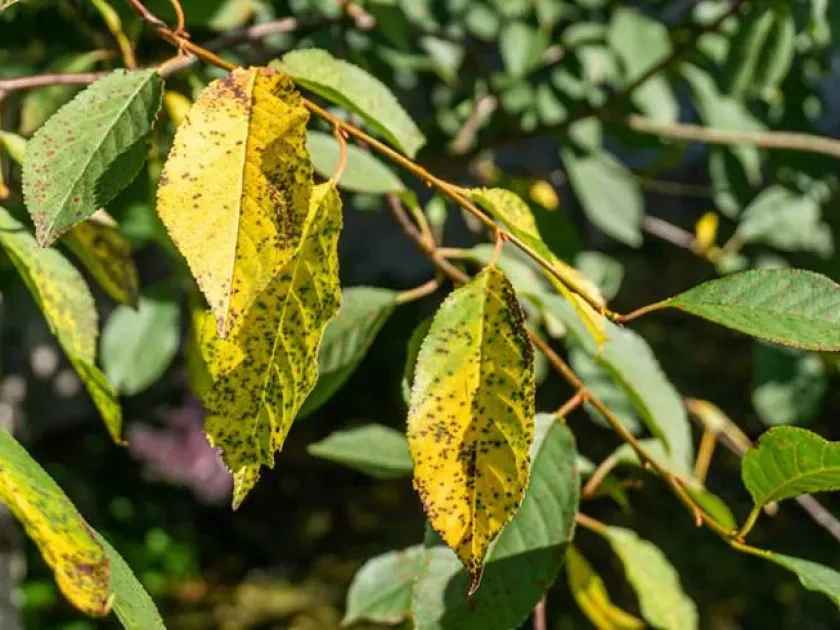
The first symptoms appear in early summer as small, circular, reddish-brown spots on the upper surface of the leaves. These spots can enlarge and merge over time.
On the underside of the infected leaves, whitish or pinkish fungal spore masses appear. This provides the primary source of secondary infection throughout the warmer months.
A major indicator is severe chlorosis or leaf browning, followed by premature leaf drop. In heavy infestations, trees may lose a significant portion of their foliage by mid-July.
While less common on the fruit itself, the fungus can cause small, depressed lesions on the plums. This ruins the fruit's quality and makes it susceptible to rotting.
During the fall, black structures known as apothecia develop on the surface of fallen leaves, signaling the end of the active season and the start of the overwintering phase.
Pathogen
The disease is caused by the fungus Coccomyces prunophorae (also known as Blumeriella jaapii). It is a significant pathogen that targets stone fruits, particularly plums and cherries.
The fungus reproduces via spores that spread through wind and splashing rain. It completes its cycle within the leaves, causing tissue damage and nutrient depletion throughout the growing season.
It overwinters primarily on fallen, infected leaves on the orchard floor. During early spring, the fungus develops sexual spores which are released during rain events to infect new foliage.
Once the infection enters the leaf through the stomata, the fungal mycelium grows within the leaf tissue, disrupting the host's normal biological functions and leading to cell death.
This pathogen is highly contagious within an orchard environment. If left unmanaged, the fungal population can increase rapidly, threatening the entire block of trees.
Conditions for development
Plum leaf spot thrives in environments with high humidity and moderate temperatures, typically between 18°C and 22°C (64°F–72°F). Prolonged wet weather is the main driver of outbreaks.
Rain is essential for the dispersal of spores. Splashing raindrops move the spores from the ground or infected leaves to healthy parts of the tree canopy.
Poor orchard sanitation, such as dense tree spacing or lack of canopy thinning, allows humidity to persist within the leaves, creating a perfect incubation chamber for the fungus.
Trees that are already stressed due to drought, nutritional deficiencies, or pest attacks show increased vulnerability to the pathogen and sustain more damage.
In seasons characterized by frequent precipitation and high moisture levels, the risk of a widespread infection is significantly elevated, requiring diligent monitoring.
Why it matters
The primary impact of the disease is the loss of foliage. Without leaves, the tree cannot perform photosynthesis, leading to a massive reduction in the tree's overall vigor.
Premature defoliation prevents the tree from storing carbohydrates in the branches and roots. This significantly reduces the tree's winter hardiness, making it susceptible to cold injury.
Yield loss is significant, as the tree lacks the energy reserves required to develop or ripen fruit properly. Repeated infections often lead to stunted fruit production.
Chronic infection weakens the tree's immune system, making it more susceptible to opportunistic pathogens and wood-rotting fungi, which can reduce the tree's lifespan.
If the cycle of premature leaf loss continues over several years, the tree will eventually collapse, resulting in total loss of production and potential death of the specimen.
Protection
The most important control measure is orchard hygiene. Raking and destroying fallen leaves removes the primary source of the fungus for the following spring.
Pruning is essential for air circulation. By thinning the canopy, growers can reduce the time leaves remain wet, which directly inhibits the germination of fungal spores.
Chemical control involves the application of fungicides. Effective timing usually includes treatments before and immediately after flowering, and once more after harvest.
Rotating fungicides with different modes of action is vital to prevent the fungus from developing resistance, ensuring that the control strategy remains effective over time.
- Improve soil drainage to reduce humidity around the base of the trees.
- Maintain balanced fertilization to keep trees strong and resilient.
- Regularly monitor the undersides of leaves during the growing season.
Discussion
No discussions yet — be the first.