
Clover phyllody
Clover proliferation phytoplasma
Description
Symptoms
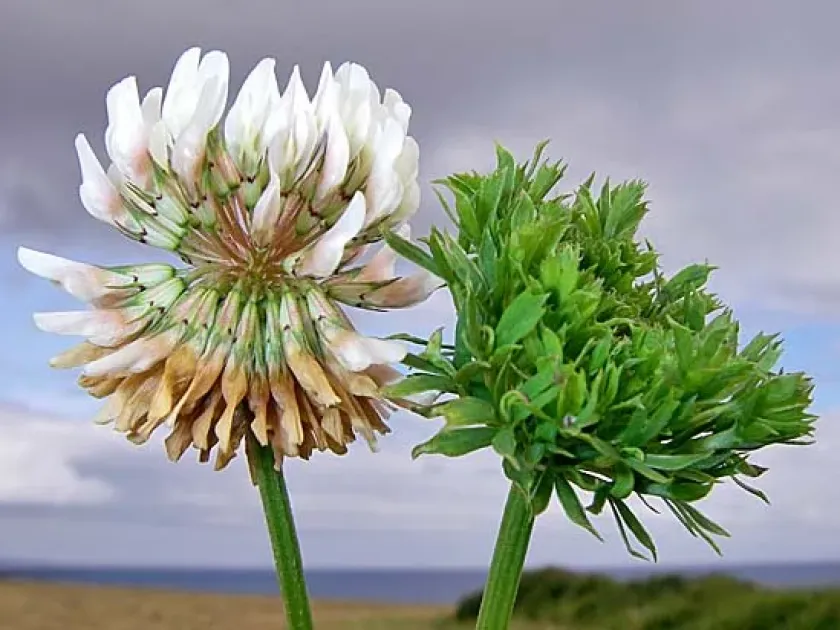
The most distinctive symptom is the virescence and phyllody, where floral organs are transformed into green, leaf-like structures.
Affected plants often show stunting, characterized by shortened internodes that result in a compact, bushy, or rosette-like appearance.
Flowers are typically sterile, failing to produce viable seeds, which is a devastating outcome for clover seed production fields.
Leaves may exhibit chlorosis, reddening, or general yellowing as the pathogen interferes with the plant's nutrient translocation system.
The root system of infected plants often becomes underdeveloped, leading to reduced vigor and increased sensitivity to environmental stresses.
Pathogen
Clover phyllody is caused by phytoplasmas, which are wall-less bacteria that inhabit the phloem tissue of infected host plants.
These pathogens are obligate parasites, meaning they are entirely dependent on the host plant's internal environment for their survival and reproduction.
The transmission of the disease is strictly dependent on insect vectors, primarily leafhoppers, which acquire the pathogen while feeding.
The disease persists in the environment within perennial weed hosts, acting as a reservoir throughout the winter months.
Molecular detection methods, such as PCR, are necessary for accurate identification of the specific phytoplasma strain involved.
Conditions for development
Disease outbreaks are highly correlated with the presence and population density of leafhopper vectors in the clover field.
Warm and dry weather conditions favor the rapid migration and feeding activity of these insects, increasing the rate of pathogen spread.
Proximity to alternative weed hosts that harbor both the phytoplasma and the vectors significantly increases the risk of infection.
Poor field management, including the failure to control weeds or maintain clear boundaries, promotes the buildup of local disease reservoirs.
The incubation period within the plant can vary based on temperature, often leading to a delayed appearance of symptoms until mid-season.
Why it matters
The primary economic impact is the total loss of seed yield due to the sterility of transformed floral tissues in infected clover.
Forage quality and biomass production decrease significantly as the plants struggle to maintain normal metabolic functions.
Phyllody reduces the lifespan of the clover stand, leading to premature thinning and the invasion of less desirable weed species.
Weakened plants are more susceptible to secondary infections and environmental stressors like frost or drought.
The systemic nature of the disease makes it impossible to cure an infected individual plant, necessitating the removal of affected areas.
Protection
Integrated pest management strategies focusing on the control of leafhopper populations are essential to limit disease spread.
Sanitation of fields by removing alternative weed hosts is a critical preventative measure to reduce the primary inoculum source.
Maintaining proper field distance from established, older clover stands can help protect new plantings from early-season transmission.
The use of certified, healthy seed and disease-resistant cultivars can significantly mitigate the risk of severe infections.
Regular monitoring of insect activity allows for timely application of insecticides, preventing the peak transmission period from causing widespread damage.
Discussion
No discussions yet — be the first.