
Ergot
Clavicipitales
Description
Symptoms
The first indicator of an active infection during the flowering phase is the appearance of sticky, yellow droplets of honeydew on the wheat or rye heads.
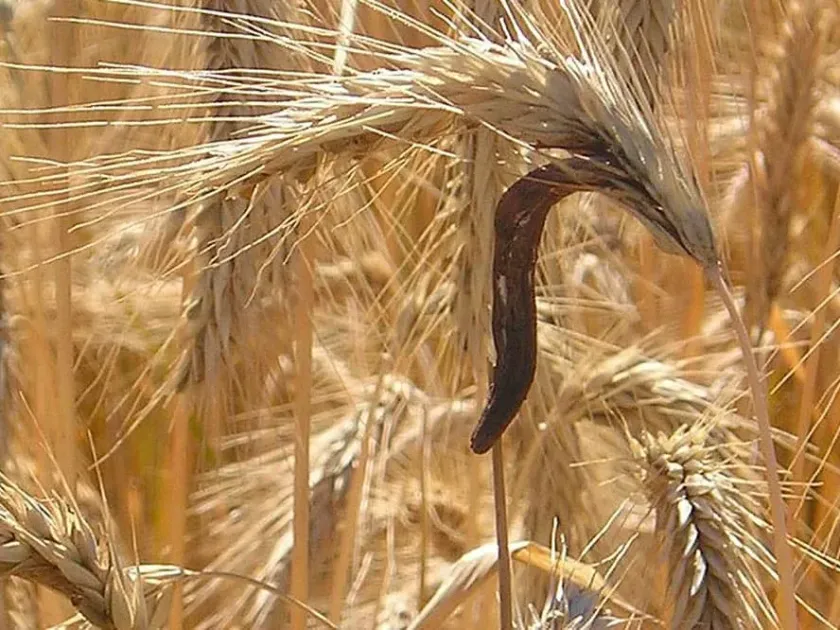
Upon closer inspection, one can identify dark, elongated, horn-shaped sclerotia growing out of the spikelets instead of the expected healthy cereal grains.
Plants affected by the disease often display reduced yields, as the infected florets are incapable of producing viable grain due to the fungal takeover.
The distribution of the disease in a field often follows a patchy pattern, reflecting the localized spread of spores by wind and insect vectors.
At the time of harvest, the presence of the hard, dark purple or black ergot bodies is clearly visible when examining the threshed grain mass.
Pathogen
Ergot is caused by the fungus Claviceps purpurea, which belongs to the Clavicipitales order. It survives unfavorable conditions by forming sclerotia (ergot bodies).
In the spring, these sclerotia germinate to produce stromata, which release ascospores that are wind-dispersed to the flowers of susceptible grasses and cereal crops.
The fungus infects the ovary of the host plant, replacing the healthy grain with a mass of fungal hyphae that eventually hardens into a new sclerotium.
During the flowering stage, the fungus secretes a sugary, sticky substance known as "honeydew," which contains asexual conidia used to spread the infection to adjacent plants.
By harvest time, the mature sclerotia are harvested along with the grain or fall to the soil, where they remain ready to complete the cycle the following season.
Conditions for development
The development of ergot is heavily dependent on weather conditions, with cool and damp periods during the anthesis of cereals being the most critical factor.
High humidity and frequent rainfall encourage the germination of overwintering sclerotia and facilitate the efficient dispersal of fungal spores.
Extended flowering windows, caused by uneven crop development or environmental stress, maximize the time the crop is susceptible to primary infection.
The presence of wild grasses in the vicinity of crop fields acts as a persistent reservoir for the pathogen, ensuring the continuous presence of spores.
Inadequate agricultural practices, such as monocropping without rotation, promote the build-up of sclerotia in the soil profile, leading to severe outbreaks.
Why it matters
The primary concern regarding ergot is the production of toxic alkaloids, which are harmful to both humans and livestock if consumed in contaminated grain.
Livestock ingestion of infected feed can lead to ergotism, a severe medical condition characterized by neurological symptoms, gangrene, and reduced animal productivity.
Farmers face significant financial losses due to grain downgrading, the necessity for expensive cleaning processes, or the outright rejection of contaminated batches.
The disease causes direct yield loss by replacing developing seeds with fungal tissue, thereby reducing the total marketable volume of the grain harvest.
Contaminated seed lots serve as a vehicle for the pathogen to spread to clean fields, necessitating rigorous seed quality control in all agricultural operations.
Protection
The most fundamental strategy for control is the use of high-quality, certified seeds that have been thoroughly cleaned to remove all traces of ergot sclerotia.
Practicing diverse crop rotation, including non-host crops, helps to break the life cycle of the fungus and reduce the soil-borne inoculum density.
Deep plowing following the harvest helps bury the sclerotia, preventing their germination and the subsequent release of ascospores in the following spring.
Effective management of grassy weeds around field borders and non-crop areas is essential to minimize natural sources of fungal spores.
When weather conditions indicate high infection risk during flowering, the application of targeted fungicides can provide necessary protection for the developing crop.
Discussion
No discussions yet — be the first.