
Ergot
Clavicipitaceae
Description
Symptoms
The most prominent sign of ergot infection during the early stages is the appearance of "honeydew" droplets on the ears of the grain. This sticky exudate is a clear indicator of active fungal sporulation.
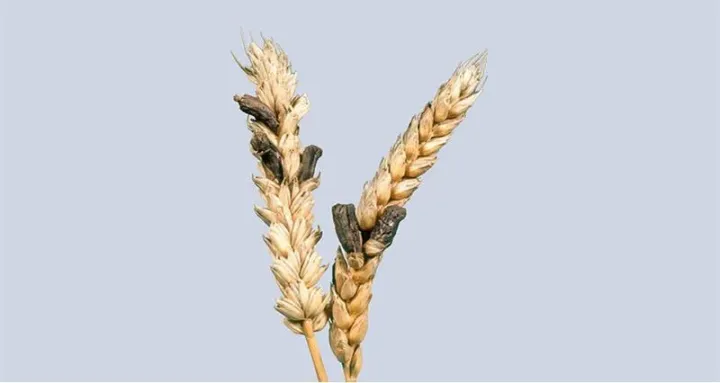
As the grain matures, the dark, elongated sclerotia become visible, protruding from the glumes where healthy kernels should have developed. These bodies are distinct and easily recognizable.
In field conditions, the disease often appears in patches, spreading from initially infected plants to neighbors due to the movement of insects and wind-blown spores.
Upon harvest, the sclerotia are easily threshed out along with the grain. Their presence among the harvested yield is often the first thing observed by producers if the crop was not inspected earlier.
A musty or unusual odor can sometimes be detected in severely infected fields, resulting from the fungal activity within the developing grain heads.
Pathogen
Ergot is caused by the fungus Claviceps purpurea, a member of the Clavicipitaceae family. This parasite specifically targets the ovaries of various grasses and cereal crops, including rye, wheat, and barley.
The fungus survives the off-season by forming hard, dark purple structures known as sclerotia, or "ergot bodies," which effectively replace the grain in the host plant's head.
In the spring, these sclerotia germinate to produce tiny fruiting bodies (stromata) that release ascospores. These spores are dispersed by wind or insects to land on the feathery stigmas of flowering grass heads.
Once infection is established, the plant begins to exude a sugary, sticky liquid known as "honeydew," which contains an abundance of asexual conidia. This substance serves as a vehicle for secondary spread by insects.
Eventually, the fungal mycelium within the ovary hardens into a new sclerotium, completing the life cycle and ensuring the survival of the fungus for the following year.
Conditions for development
Ergot development is heavily dependent on weather conditions, specifically cool and wet weather during the flowering period of cereals, which promotes spore germination.
Any factors that extend the flowering period, such as temperature fluctuations or uneven plant development within the field, significantly increase the window for successful fungal infection.
High populations of wild grasses in and around the fields act as reservoirs for the fungus, allowing it to persist and spread into crop rows annually.
Reduced tillage practices can be detrimental in fields with a history of ergot, as surface-level sclerotia can easily germinate and reach the canopy of the next crop.
Lack of proper crop rotation forces the pathogen to remain in the same soil, leading to an annual accumulation of infectious sclerotia levels.
Why it matters
The primary concern regarding ergot is the production of potent alkaloids (such as ergotamine) within the sclerotia. These toxins are dangerous to both humans and livestock if consumed.
Consuming grain or feed contaminated with ergot can lead to ergotism, a severe condition characterized by neurological symptoms, vasoconstriction, and even gangrene.
Beyond human health risks, the presence of ergot reduces total crop yields because the sclerotia directly displace the valuable grain kernels in the ear.
Economic losses are compounded by the costs of cleaning and sorting contaminated batches, as ergot bodies must be separated to meet strict grain marketing standards.
Furthermore, any contaminated grain is rendered entirely unfit for seed purposes, as the sclerotia introduce a direct source of infection for the following season.
Protection
Effective management begins with the use of clean, certified seed that is free from sclerotia. Advanced color sorting technology is often used to remove ergot bodies during post-harvest cleaning.
Crop rotation is essential; since sclerotia typically survive in the soil for only a year or two, rotating away from susceptible grasses breaks the infection cycle.
Deep plowing can bury sclerotia at a depth from which they are unable to germinate and reach the surface, effectively preventing the production of ascospores.
Control of grassy weeds along field edges is a critical preventive measure, as these plants serve as local bridges for the fungus to jump into the main crop.
Choosing crop varieties with uniform flowering patterns helps minimize the duration of the infection window, making it harder for the pathogen to establish itself.
Discussion
No discussions yet — be the first.