
Claviceps microcephala
Claviceps microcephala
Description
Symptoms
The initial symptom is the appearance of a sticky, sweet-smelling liquid known as "honeydew," which oozes from the infected florets.
This honeydew contains abundant conidia (asexual spores) that are easily spread by insects or rain splashes to neighboring plants.
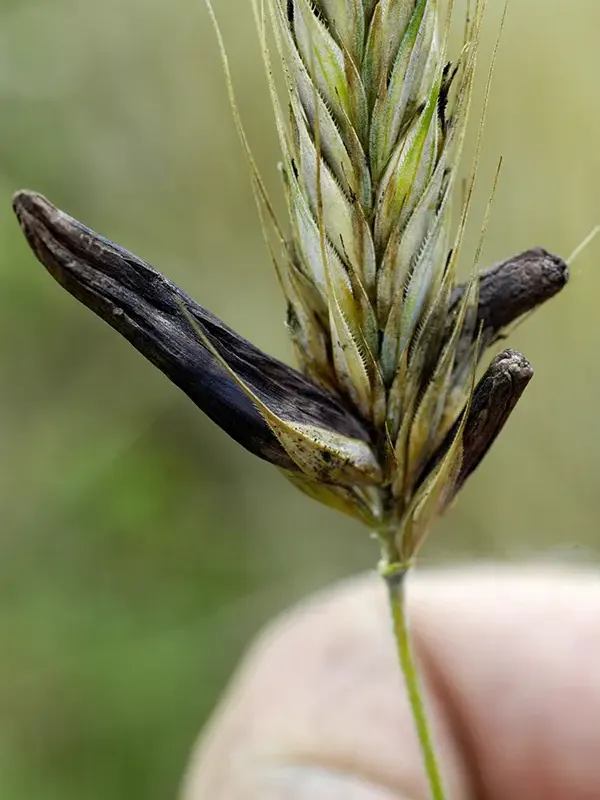
As the grain matures, the honeydew disappears, replaced by the dark, elongated sclerotia that emerge from the glumes where a seed should be.
These sclerotia are typically smaller than those of the common ergot Claviceps purpurea but are equally firm and dark in color.
Infected ears may show signs of premature ripening or slight discoloration of the glumes, making them recognizable during the late stages of growth.
Pathogen
The pathogen Claviceps microcephala is an ascomycete fungus that acts as an obligate parasite of grasses, specifically targeting the ovaries of host plants.
The lifecycle begins with sclerotia, which are dark, hardened fungal masses that overwinter in the soil or remain mixed with harvested seeds.
In spring, these sclerotia germinate to produce fruiting bodies (stromata), which release ascospores into the air during the host's flowering period.
Once spores land on the flower's stigma, they germinate and colonize the ovary, replacing the developing seed with fungal mycelium.
This process results in the formation of a new sclerotium, completing the cycle and ensuring the survival of the parasite until the next season.
Conditions for development
Cool, humid weather conditions during the flowering phase of cereals are the primary drivers for the development and spread of Claviceps microcephala.
Prolonged flowering periods, often caused by fluctuating temperatures, extend the window of susceptibility for the plant to become infected.
High relative humidity and frequent rainfall are essential for the germination of sclerotia and the subsequent dispersal of airborne spores.
The presence of wild grass species in or around fields provides a constant reservoir for the fungus, allowing it to persist even in the absence of crops.
Inadequate soil cultivation practices can leave sclerotia on or near the surface, facilitating their germination in the following spring.
Why it matters
The primary impact of the disease is a direct reduction in grain yield, as the florets are filled with sclerotia rather than viable grain.
The presence of ergot alkaloids in the sclerotia makes the harvested product toxic, posing severe health risks to both humans and livestock.
Ingestion of contaminated grain can lead to ergotism, a condition characterized by vasoconstriction, tissue necrosis, and neurological damage.
Farmers face significant financial losses due to the necessity of grain cleaning and the risk of the entire batch being rejected by processors.
Furthermore, the inclusion of sclerotia in seed lots significantly impairs germination rates and crop establishment in subsequent seasons.
Protection
The most critical management practice is the use of high-quality, certified seeds that have been thoroughly cleaned to remove all sclerotia.
Implementing effective crop rotation is essential to prevent the buildup of the pathogen in the soil over consecutive years.
Deep plowing after harvest serves to bury sclerotia at depths from which they cannot emerge, effectively killing them before the next growing season.
Strict weed control in and around fields reduces the available hosts for the fungus, minimizing the overall inoculum pressure in the environment.
In specific cases where environmental conditions favor high disease pressure, the application of targeted fungicides during early flowering may be recommended.
Discussion
No discussions yet — be the first.