
Clavaria argillacea
Clavaria argillacea
Description
Symptoms
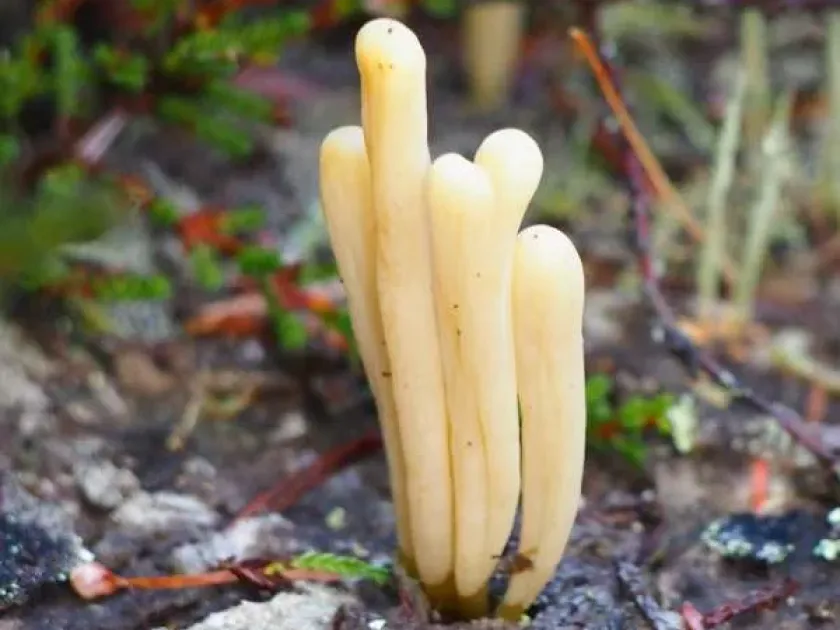
The fruiting bodies of Clavaria argillacea are typically club-shaped or cylindrical, often appearing in small, clustered groups directly from the soil surface.
They are relatively small, usually reaching heights between 2 and 7 centimeters, with a color that ranges from pale yellow to a distinct clay-like or buff hue.
The surface of the club can be smooth or finely wrinkled, and the texture is often brittle, which is characteristic of the genus Clavaria.
There are no lesions, spots, wilting, or necrotic tissue on nearby plants, as the fungus does not interact parasitically with the surrounding vegetation.
Observations in the field show these fungi growing in open areas, heaths, or amongst mosses where they coexist peacefully with grasses and other ground cover.
Pathogen
Clavaria argillacea, commonly known as the moor club, is a species of fungus in the Clavariaceae family that functions as a saprotroph in its ecosystem.
It is not a plant pathogen; therefore, it does not infect, cause disease, or destroy living tissue of agricultural crops, garden plants, or forest trees.
The biological role of this organism involves decomposing organic matter, such as plant debris and leaf litter, which is essential for nutrient cycling in nutrient-poor soils.
The fungus lacks the specific enzymes required for pathogenesis in plants and does not produce toxins harmful to vascular plants or their root systems.
In modern agronomy and plant pathology, it is correctly classified as a beneficial soil microorganism rather than a threat to agricultural productivity.
Conditions for development
This species thrives in high-humidity environments, particularly during autumn or after consistent rainfall events that keep the soil surface moist.
It has a preference for acidic, nutrient-poor soil conditions, which explains its prevalence on heaths and moorlands rather than cultivated fields.
The fungus requires moderate temperatures for the development of its fruiting bodies, usually peaking in the cool, moist conditions of the late growing season.
A sufficient layer of organic mulch or decaying plant material is necessary for the mycelial network to develop and produce visible fruit bodies.
Well-drained, fertile, and balanced agricultural soils are typically inhospitable to this species, as it cannot compete with aggressive soil flora.
Why it matters
There is no economic harm associated with Clavaria argillacea, as it is completely benign to all types of commercial and domestic crops.
It does not cause yield loss, spoilage of harvest, or degradation of crop health, making it an irrelevant object for phytosanitary control.
The presence of the fungus should not be interpreted as a sign of an outbreak or a disease; rather, it is a marker of local soil moisture and organic content.
Agronomists do not include this species in any pest management programs, as it poses zero risk to the agricultural ecosystem.
Misidentifying this fungus as a plant disease may lead to unnecessary chemical usage, which is counterproductive for soil health.
Protection
No control measures are necessary for Clavaria argillacea, as it is a harmless member of the soil microbial community.
If its appearance is undesirable in landscaping, improving drainage and adjusting soil pH levels through standard liming can effectively prevent its growth.
Regular cultivation and aeration of the soil surface are mechanical methods that discourage the development of this fungus by reducing surface moisture.
Maintaining proper soil fertility will naturally promote the growth of competitive organisms, limiting the niche space for this specific fungus.
It is strongly recommended to avoid the use of fungicides against this species, as they will kill beneficial microflora and negatively affect the soil structure.
Discussion
No discussions yet — be the first.