
Amazonian Cladosporiosis
Cladosporium amazonense
Description
Symptoms
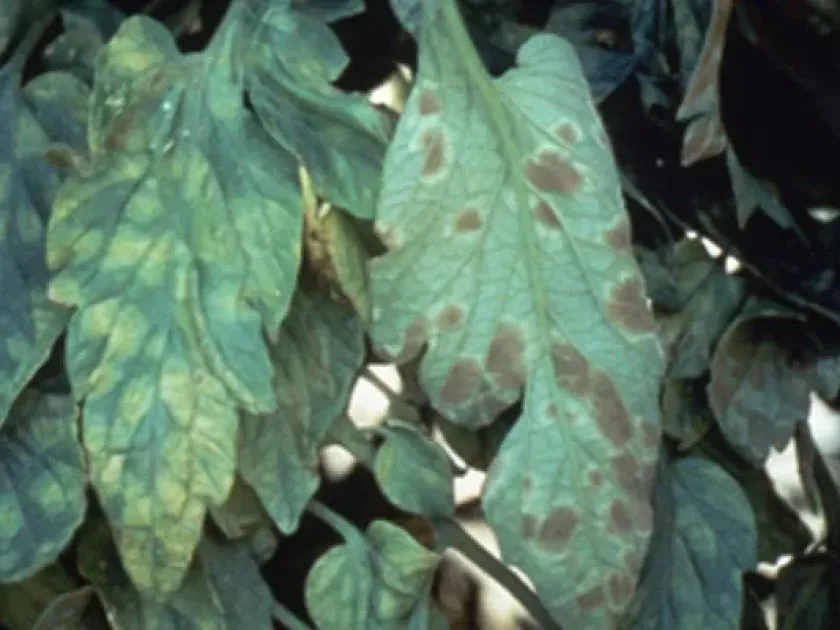
The initial symptoms appear as characteristic spots on the leaf blades. Typically, these spots have a round or irregular shape, gradually turning a dark olive-brown color as the infection advances.
On the underside of the leaf, within the affected areas, a specific velvety coating develops over time, consisting of the fungus's conidiophores and conidia. This feature serves as a primary visual marker for identifying this pathogen.
As the disease progresses, the spots may coalesce, covering significant portions of the leaf surface. In severe cases, premature yellowing and leaf shedding are observed throughout the canopy.
The damage is not limited to leaves; the pathogen often spreads to petioles and young shoots, causing deformation and growth inhibition. The plant loses turgor pressure, growth stalls, and overall productivity significantly decreases.
The presence of sporulation is a key indicator, appearing as a dense turf-like growth under high humidity. Visually, the tissue at the necrosis site may appear slightly raised or depressed, depending on the stage of fungal mycelium development.
Pathogen
The disease is caused by the microscopic imperfect fungus Cladosporium amazonense. This pathogen belongs to the group of mycelial fungi known to affect a wide range of tropical and ornamental plant species.
The fungus is an obligate parasite, entering plant tissues through stomata or microscopic lesions in the epidermis. Its biological cycle is closely linked to seasonal fluctuations in air humidity and temperature.
Reproduction occurs asexually via conidia, which are easily dispersed by air currents, rain splashes, or insect vectors. The fungal mycelium primarily colonizes the intercellular spaces of the host plant.
Inoculum accumulation occurs primarily in crop debris, where the fungus can survive for extended periods. This makes rigorous sanitation and the removal of plant residues a critical step in disease management.
The aggressiveness of the pathogen varies depending on the genotype of the host plant and environmental factors. The pathogen shows high resilience to adverse temperature conditions in its dormant state.
Conditions for development
Optimal conditions for infection and active fungal growth include high relative humidity, typically exceeding 80-85%. Free moisture on leaf surfaces is essential for spore germination and successful colonization.
The temperature optimum for the development of Cladosporium amazonense ranges from +20 to +26 degrees Celsius. While lower temperatures may slow down the process, the fungus remains viable and can resume growth when conditions improve.
Poor ventilation and high planting density create localized microclimatic zones with increased humidity, which often triggers disease outbreaks. In greenhouse environments, inadequate air circulation is the primary risk factor.
Improper agricultural practices, such as overhead irrigation that keeps foliage wet, facilitate rapid infection spread. Frequent rains combined with moderate warmth significantly accelerate the initial infection phase.
Plants weakened by poor mineral nutrition or stress caused by temperature fluctuations are significantly more susceptible to infection compared to healthy, robust specimens.
Why it matters
The economic impact of the disease stems from a drastic reduction in the photosynthetic leaf area. This leads to the disruption of metabolic processes and a significant decrease in crop yields.
Severe infestations interfere with the transport of assimilates, which negatively affects fruit quality and ripening uniformity. For ornamental crops, the disease completely ruins the commercial value of the product.
The pathogen often acts as a precursor to secondary infections, as weakened tissues become easy targets for opportunistic bacterial rots. This significantly reduces the post-harvest shelf life and marketability.
Economic losses include not only direct yield reduction but also the increased costs associated with remedial defensive measures. In cases of severe epiphytotics, the entire crop may be rendered non-marketable.
The long-term persistence of the infection in soil and plant debris creates a constant threat for subsequent seasons, necessitating strict crop rotation and rigid phytosanitary discipline.
Protection
The protection system is based on an integrated approach combining agronomic, biological, and chemical control methods. The primary measure is the complete destruction of plant residues where the pathogen overwinters.
Maintaining optimal plant density and timely thinning are essential to ensure adequate air circulation. In greenhouses, environmental control must focus on maintaining humidity levels that prevent spore germination.
The use of systemic and contact fungicides is effective during the early stages of disease development. It is recommended to rotate products with different active ingredients to prevent the development of fungal resistance.
- Utilizing certified disease-free planting material.
- Incorporating resistant cultivars and hybrids where available.
- Implementing drip irrigation to prevent foliage wetting.
- Regular disinfection of tools and agricultural equipment.
- Providing timely fertilization to enhance host plant immunity.
Biological preparations based on antagonistic bacteria can be effective for preventive management under moderate infection pressure. These agents are environmentally friendly and do not leave residues in the final produce.
Discussion
No discussions yet — be the first.