
Citrus vein enation
Citrus yellow mottle virus
Description
Symptoms
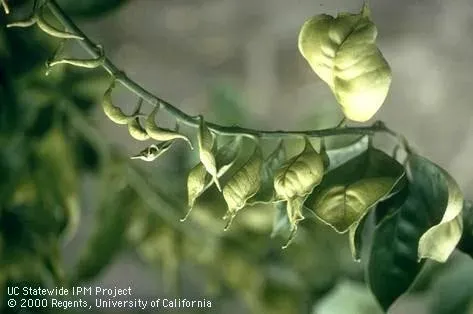
The most distinctive symptom is the appearance of translucent or yellowing veins, which often become more noticeable as the leaf tissue matures.
The disease is named for the presence of "enations," which are small, gall-like tissue outgrowths that develop on the undersides of leaves along the main veins.
Affected leaves may exhibit slight to moderate curling, waviness, or asymmetric development, significantly disrupting normal foliage structure.
In severe cases, the infected trees may show signs of overall vigor loss, including reduced shoot growth and sparse canopy development.
These symptoms are most easily identified during the spring flush, when young leaves are rapidly expanding and the specific vein patterns are clearly visible.
Pathogen
Citrus vein enation is caused by the Citrus vein enation virus (CVEV), which specifically targets the vascular tissue of citrus plants.
This pathogen belongs to the family of viruses that are primarily transmitted through grafting or by specific insect vectors such as aphids.
It affects a wide variety of citrus species, including sweet orange, lemon, lime, and various rootstocks, often remaining latent for long periods.
The virus is biologically characterized by its ability to induce cellular proliferation, which results in the development of characteristic growths on the leaf veins.
Once introduced into a citrus orchard, the virus can persist indefinitely, particularly if insect vectors are not managed effectively.
Conditions for development
The spread of the virus is heavily dependent on the population density of its primary vectors, particularly aphid species like Toxoptera citricidus.
Environmental conditions that favor rapid insect reproduction, such as warm and humid climates, directly accelerate the transmission of the virus between plants.
The use of infected, asymptomatic budwood for propagation is the primary method of long-distance dispersal and new orchard contamination.
High-density nursery environments provide ideal conditions for the rapid multiplication of vectors and the subsequent spread of CVEV.
Stress factors such as drought or nutritional imbalances may make plants more vulnerable to the physiological damage caused by the viral infection.
Why it matters
The economic impact of Citrus vein enation is primarily manifested through decreased yields and lower quality of harvested fruit.
Infected trees often exhibit smaller fruit sizes and reduced overall productivity, which leads to significant financial losses for citrus growers.
Long-term infection weakens the tree's immune system, making it more susceptible to secondary fungal or bacterial pathogens.
The physical deformity of leaves impairs photosynthetic capacity, leading to lower sugar accumulation and reduced fruit flavor intensity.
Stunted growth of young trees often forces premature replacement of orchards, further increasing operational costs for agricultural enterprises.
Protection
Effective management begins with the use of virus-free, certified budwood obtained from reputable and strictly monitored nursery programs.
Strict quarantine measures should be implemented to prevent the introduction of infected materials from regions where the virus is prevalent.
A rigorous insect control program is essential, focusing on systemic insecticides to suppress aphid populations throughout the growing season.
- Regular monitoring of orchard foliage for early symptoms and vector presence.
- Immediate removal and destruction of infected trees to eliminate the source of the virus.
- Sanitization of pruning tools using appropriate disinfectants to prevent mechanical spread.
Implementing integrated pest management (IPM) helps maintain a balance that minimizes the need for heavy pesticide use while controlling vectors.
Discussion
No discussions yet — be the first.