
Citrus ringspot
Citrus ringspot virus
Description
Symptoms
The most distinctive symptoms are chlorotic spots that form rings, arcs, or mosaic-like patterns on the leaves. These patterns often vary in intensity, appearing as yellowish discolorations that disrupt the normal green pigmentation of the foliage.
In some citrus varieties, the disease manifests as leaf deformation or thickening. The appearance of these spots can fluctuate based on environmental stressors, often becoming more pronounced during periods of high temperature or water deficit.
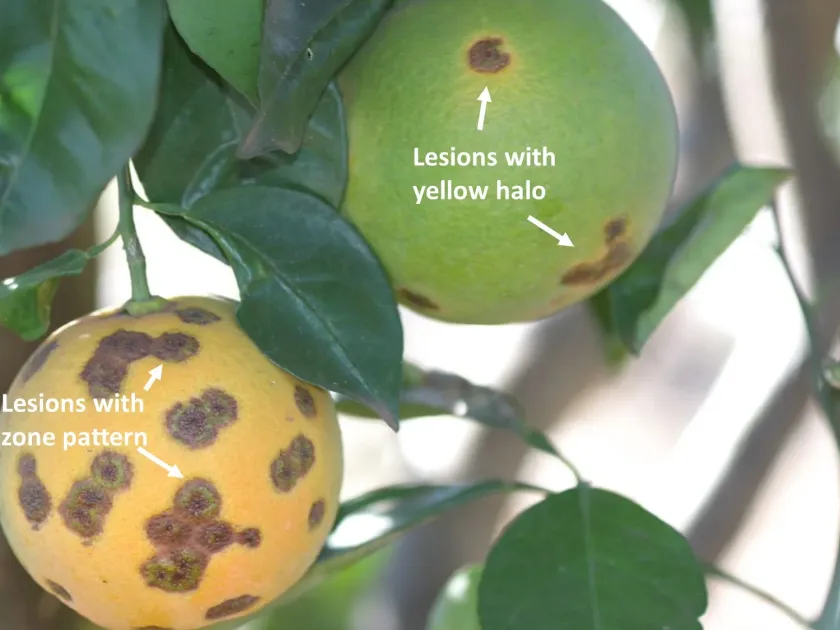
Fruit symptoms, while less common, can include skin spotting, pitting, or general shape distortion. These blemishes significantly reduce the cosmetic quality of the fruit, making them unsuitable for fresh market sale and commercial packaging.
Systemic infection leads to a general decline in the tree's vigor. Stunted growth, shorter internodes, and a reduced canopy density are common signs that the tree has been suffering from the virus for an extended period.
Because symptoms can be intermittent and may only appear on specific branches, growers might overlook an early-stage infection. Consistent monitoring is necessary because a tree can appear healthy while still harboring and spreading the virus.
Pathogen
The causal agent of this disease is the Citrus ringspot virus (CiRSV), a systemic virus that infects various species of citrus. The virus impacts the plant by disrupting metabolic pathways and reducing the overall physiological efficiency of the host tree.
The primary transmission method is through contaminated grafting material. Because the virus can reside in the scion or rootstock without being immediately detected, the distribution of infected nursery stock is the main driver of its global spread.
Mechanical transmission via contaminated tools is another major risk factor. Pruning shears, knives, and other implements used for tree maintenance can carry the virus from an infected tree to healthy ones unless they are thoroughly sanitized between uses.
Once inside the plant, the virus moves through the phloem to infect various organs. It remains present in the tree throughout its entire lifespan, as there is currently no cure to eliminate the virus from already infected perennial woody plants.
Advanced diagnostic techniques, such as ELISA or PCR testing, are used by pathologists to identify the presence of the virus. These methods are essential for certifying nurseries and ensuring that only virus-free material is used for propagation.
Why it matters
Citrus ringspot causes a progressive decrease in fruit yield over time. As the virus diverts resources away from plant growth and fruit development, the cumulative production capacity of the orchard significantly declines.
Economically, the impact is severe, particularly for professional growers who rely on high-yield and high-quality fruit. Infected trees often need to be uprooted and replaced, representing a substantial loss of investment and long-term production potential.
Nursery operations are severely threatened by this virus. If infected rootstocks or buds are used, the resulting young trees are inherently weak, prone to failure, and become active sources of infection for new plantings.
Infected trees exhibit reduced resistance to environmental stressors. Cold weather, drought, and secondary attacks by other pests become much harder for the tree to withstand, often leading to total tree mortality in poorly managed groves.
The quality of the harvest is compromised, as sugar content and vitamin levels may be affected. This degradation prevents the fruit from meeting the standards required for international export and premium retail markets.
Protection
The cornerstone of control is the exclusive use of virus-free, certified nursery stock. Establishing an orchard with clean material obtained through tissue culture or rigorous certification programs is the most effective preventative measure.
Strict sanitary practices must be followed by all personnel working in the grove. Tools used for grafting, budding, and pruning should be disinfected with appropriate agents after every single tree to prevent mechanical virus transmission.
Regular visual inspections and diagnostic testing are essential to catch and remove infected trees. Early rogueing, or the removal and destruction of infected trees, helps to contain the spread of the virus within the grove.
Effective management also includes maintaining optimal plant health through balanced fertilization and irrigation. While these measures do not cure the virus, a healthy tree is generally more resilient to the stresses caused by the infection.
- Sourcing only certified virus-free seedlings.
- Strict tool sanitation between all maintenance tasks.
- Prompt rogueing of infected trees to protect neighbors.
- Ongoing training for field staff on hygiene protocols.
- Routine laboratory screening of orchard health.
Discussion
No discussions yet — be the first.