
Citrus leathery spot
Citrus leathery leaf agent
Description
Symptoms
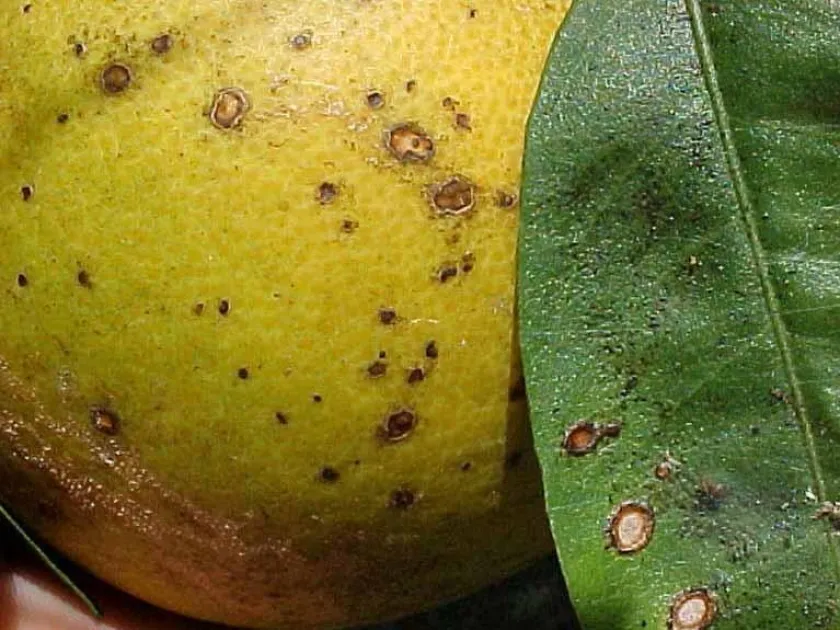
The initial signs of the disease appear as small, slightly sunken lesions on the surface of the fruit. Over time, the affected area develops a texture that resembles tanned leather, hence the name.
These spots often turn brown or grayish, appearing distinct from the healthy, vibrant skin of the citrus. The firmness of the spot is due to localized tissue dehydration and necrosis of the epidermis.
Lesions frequently form at points of mechanical injury or where fruit has been in contact with branches, providing a protected, humid micro-niche for fungal spore germination.
As the disease progresses, these individual spots can expand and coalesce. This covering of the fruit surface severely degrades its aesthetic value, making it unsuitable for commercial sales.
- Sunken patches on the citrus peel.
- Leathery or tough texture of the infected area.
- Discoloration ranging from light tan to dark brown.
- Reduced shelf-life and loss of skin turgor.
Pathogen
Citrus leathery spot is an economically significant disease often attributed to fungi such as Colletotrichum gloeosporioides. The pathogen targets the outer tissues of the citrus peel, causing distinct structural changes.
The disease is categorized as a superficial peel disorder. The fungus secretes specific enzymes that degrade the cell walls in the flavedo, leading to the characteristic leathery appearance of the fruit surface.
The pathogen typically survives in the orchard on dead branches, decaying leaves, or previously infected fruit, serving as a primary reservoir for secondary spread during the growing season.
Environmental conditions play a dual role, as the pathogen acts both as an opportunistic invader of physically stressed fruit and as a direct infective agent under favorable conditions.
Molecular research indicates that various strains of fungi can contribute to this condition, making it a complex disease to manage in humid citrus-growing regions across the globe.
Conditions for development
High relative humidity is the most critical environmental factor for the development of leathery spot. Persistent dampness allows fungal spores to germinate effectively on the fruit skin.
Temperatures ranging from 20 to 25 degrees Celsius are ideal for rapid fungal colonization. During such windows of weather, the disease can spread throughout an orchard in a short time.
Dense tree canopies that lack proper pruning restrict airflow. This stagnant air traps moisture, creating an ideal environment for pathogens to thrive on developing fruit.
Excessive irrigation or rainfall that leads to sudden changes in fruit volume can cause microscopic ruptures in the peel. These physical injuries serve as entry points for the fungal mycelium.
Orchard hygiene is paramount, as the presence of debris provides an ongoing source of spores that are easily splashed onto healthy fruit by rainfall or heavy dew.
Why it matters
The primary harm caused by leathery spot is the total loss of marketability. Fruit affected by the condition cannot pass quality standards for fresh produce markets or exports.
Leathery spots facilitate the entry of secondary decay organisms, such as Penicillium or Botrytis, which quickly cause the internal tissue of the citrus to rot during storage.
In regions with high rainfall, yield losses can be substantial, often necessitating significant post-harvest culling of the crop, which increases labor and operational costs.
The disease impairs the fruit's natural barrier against water loss, leading to accelerated dehydration. Consequently, the quality of the juice and the overall weight of the fruit decrease.
Producers face economic pressure due to the need for rigorous sorting, which reduces the output of saleable high-grade fruit and impacts the overall profitability of the orchard.
Protection
Cultural management is the first line of defense. Regular pruning is essential to increase air circulation within the canopy, which helps keep the fruit surface dry after rain.
Sanitation practices, including the removal and destruction of fallen fruit and diseased plant material, significantly reduce the amount of inoculum present in the orchard.
The application of copper-based fungicides during the critical fruit-set and development phases provides a protective barrier against fungal infection on the peel surface.
Balanced fertilization, particularly ensuring adequate calcium levels, helps maintain the structural integrity and toughness of the citrus peel, making it more resistant to fungal penetration.
Implementing modern drip irrigation systems instead of overhead sprinkling helps minimize the wetness of the foliage and fruit, thereby reducing the conditions necessary for disease development.
Discussion
No discussions yet — be the first.