
Citrus bahia
Citrus Bahia psorosis agent
Description
Symptoms
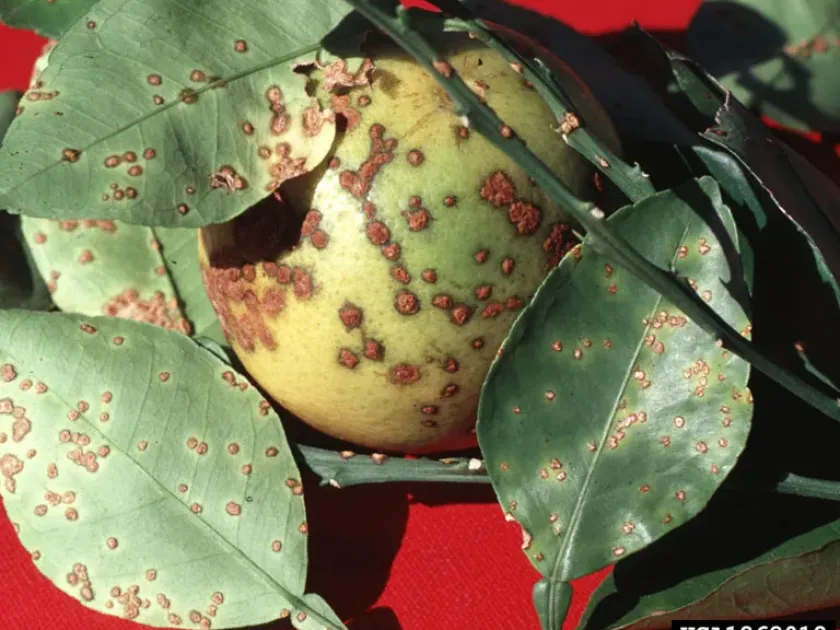
The primary symptom is the appearance of small, circular, dark-colored spots on the leaves. As the disease progresses, these spots expand, leading to significant chlorosis and premature leaf drop.
On the fruit, the disease manifests as sunken, dark lesions that ruin the fruit's surface quality. These areas often harden, making the fruit unacceptable for fresh market distribution.
Under high-humidity conditions, one can observe a distinct, powdery sporulation on the necrotic tissue. This fungal growth may appear in various colors, ranging from off-white to shades of pink or orange.
Twig dieback is a common observation in severe cases. The bark darkens, and the branches lose their structural integrity, eventually drying out and breaking off from the main framework.
Flower blight and fruit set abortion are major symptoms during the blooming stage. This significantly impacts the total yield potential of the orchard for the season.
Pathogen
Citrus bahia, typically associated with the Colletotrichum fungal complex, is a significant threat to citrus cultivation. This pathogen primarily impacts the integrity of leaves, stems, and developing fruit.
The fungus overwinters in infected twigs and necrotic tissue on the ground. When conditions are suitable, the fungus produces spores that are easily disseminated by wind and splashing water.
Once the spores land on susceptible host tissue, they germinate and penetrate the epidermis. This creates internal infections that can remain latent until the host is stressed or environmental factors change.
The disease affects a wide range of citrus species, including sweet oranges, lemons, and grapefruits. It is particularly aggressive in orchards where trees are already weakened by poor management.
The biological life cycle of the pathogen is closely tied to humidity levels. A persistent damp environment allows the fungus to reproduce continuously, leading to rapid spread throughout the plantation.
Conditions for development
High humidity and consistent rainfall are the primary catalysts for the development and spread of Citrus bahia. Moisture on the canopy is required for spore germination.
The disease thrives in warm temperatures, typically between 20°C and 28°C. These conditions maximize the metabolic rate of the fungus, leading to exponential growth of infections.
Poor orchard sanitation is a critical factor. Leaving dead branches or fallen fruit within the orchard canopy creates a massive reservoir of inoculum for future outbreaks.
Lack of canopy management, specifically overcrowding and insufficient pruning, prevents sunlight penetration and airflow. This leads to a persistent microclimate that favors fungal pathogens.
Any physiological stress on the tree, including nutrient deficiencies or water-logging, makes the trees significantly more susceptible to infection compared to healthy, well-nourished specimens.
Why it matters
The economic impact of this disease is substantial due to yield loss and the increased cost of intensive fungicide applications required to maintain orchard health.
The aesthetic degradation of the fruit means a lower market price or total rejection of the crop by retailers, directly affecting the profit margins of citrus farmers.
Chronic infections lead to the gradual decline of tree vigor. Over several seasons, the cumulative stress can result in the complete death of productive, mature citrus trees.
The need for repeated chemical interventions adds significantly to the environmental footprint and operation costs, creating a long-term burden on agricultural sustainability.
Delayed or reduced growth of young trees in infected nurseries can set back the development of future orchard blocks by several years.
Protection
Integrated Pest Management (IPM) is the most effective approach. This includes a combination of cultural practices, such as proper pruning, and the strategic use of fungicides.
Sanitation is paramount. Removing and burning infected debris, twigs, and fallen fruit significantly reduces the spore load within the immediate environment.
Copper-based fungicides are standard for prophylactic control. These should be applied before predicted rainy weather to create a protective barrier on the plant surface.
Systemic fungicides are recommended when visible symptoms appear to stop the progress of existing mycelium deep within the host tissues.
- Ensure adequate orchard spacing to promote drying of the canopy.
- Monitor the orchard regularly during high-humidity periods for early detection.
- Disinfect all pruning tools between trees to prevent the mechanical spread of the fungus.
Discussion
No discussions yet — be the first.