
Silver leaf disease
Chondrostereum
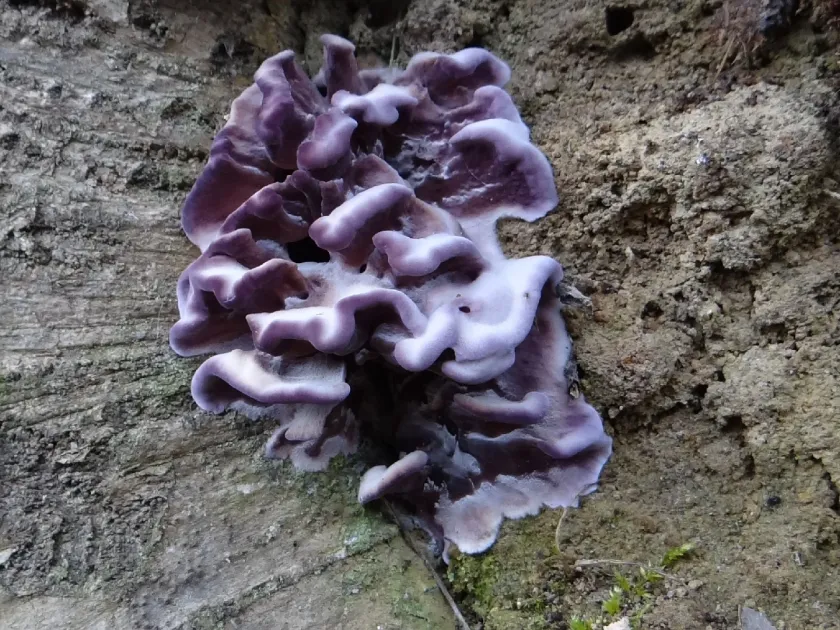
Description
Symptoms
The most distinctive sign is the metallic silver sheen on the leaves, which occurs due to the reflection of light off air pockets between the separated leaf layers.
Affected leaves often become brittle and distorted. In severe cases, the entire canopy of the tree takes on a silvery appearance, leading to premature defoliation.
When cutting into a branch infected by Chondrostereum purpureum, one will observe distinct dark brown or reddish-brown staining in the wood, indicating necrosis.
Visible fruiting bodies of the fungus develop on the bark of dying branches, confirming the presence of the pathogen in the tree's internal structure.
Progressive dieback is common, starting from individual branches and eventually affecting the entire tree as the fungus compromises the plant's vascular integrity.
Pathogen
The disease is caused by the fungus Chondrostereum purpureum, a member of the basidiomycete group. It acts as a facultative parasite, primarily attacking trees that are already stressed or wounded.
The fungus infiltrates the tree's vascular system, traveling through the xylem. It produces toxins that move into the leaves, causing the separation of the leaf epidermis from the mesophyll tissue.
Reproductive structures, known as basidiocarps, appear on dead wood as leathery, bracket-like fungi with a characteristic purple or grayish color.
These fungal brackets release millions of spores that are easily carried by wind and moisture, facilitating the spread of the pathogen throughout the orchard.
The fungus is capable of surviving for several years in decaying wood, making old stumps and neglected tree debris primary reservoirs for the disease.
Conditions for development
Spore release and infection are most active during periods of high humidity and rainfall, particularly when temperatures range between 10°C and 25°C.
Fresh pruning wounds serve as the most common entry points for the fungus, especially if the cuts are not properly sealed after pruning.
Trees suffering from drought, poor nutrition, or damage from frost are significantly more susceptible to infection compared to healthy, vigorous trees.
Poor orchard sanitation, including leaving dead wood or prunings near healthy trees, increases the concentration of airborne spores in the immediate environment.
Dense, poorly ventilated tree canopies create microclimates with stagnant air and high humidity, which favor the germination of fungal spores.
Why it matters
Silver leaf disease poses a severe threat to a wide range of fruit trees, including apples, pears, cherries, plums, and peaches, often leading to tree mortality.
The infection severely inhibits photosynthesis, resulting in weakened trees, reduced fruit yields, and poor fruit quality that fails to meet market standards.
Internal wood decay weakens the structural integrity of branches, significantly increasing the risk of mechanical failure during strong winds or heavy harvests.
Without intervention, the pathogen can spread rapidly throughout the orchard, necessitating the removal and destruction of entire trees to contain the outbreak.
The economic impact involves significant financial losses from reduced production and the high cost associated with tree removal and replanting efforts.
Protection
Strict sanitation is the primary control measure; infected branches must be pruned back to healthy wood, ensuring no brown staining remains in the cross-section.
All pruning tools must be thoroughly disinfected with alcohol or other appropriate biocides between each cut to prevent cross-contamination.
Sealing large wounds with high-quality wound paint or wound sealant immediately after pruning is critical to block potential entry sites for fungal spores.
Remove and destroy dead trees and old stumps promptly to eliminate the primary sources of inoculum from the orchard environment.
- Maintaining tree vigor through proper fertilization.
- Ensuring adequate irrigation during dry spells.
- Protecting the bark from physical or frost damage.
- Selecting resistant varieties where applicable.
Discussion
No discussions yet — be the first.