
Description
Symptoms
The initial symptoms appear as water-soaked lesions on flowers and young ovaries, followed by a rapid loss of turgor and structural integrity in the affected tissues.
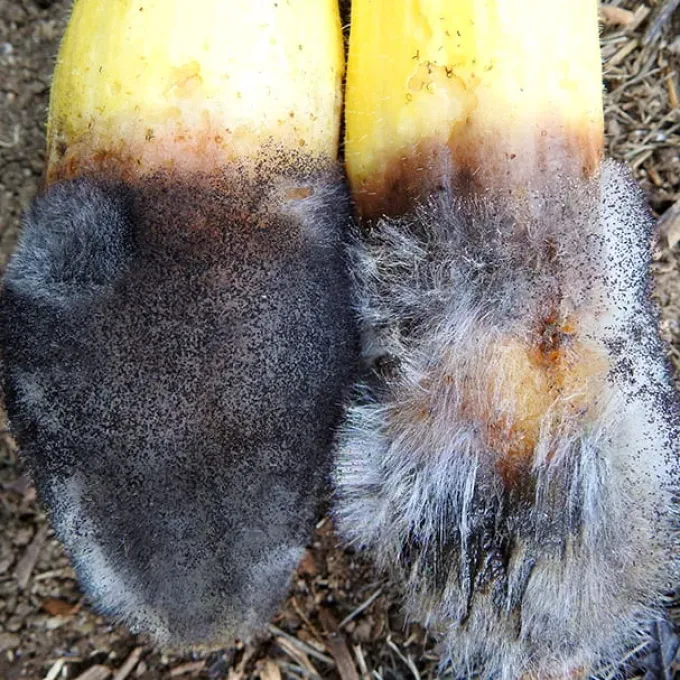
A definitive diagnostic sign is the presence of an abundant fuzzy growth on the infected areas, which ranges in color from white to grey or dark brown.
Under magnification, this growth consists of a dense mass of sporangia on elongated stalks, giving the plant surface a distinctive dusty or bristly appearance.
Infection often initiates at the decaying floral parts and spreads aggressively into the ovary, leading to fruit abortion and death within a few days.
Stem infections manifest as large necrotic areas that eventually transition into a soft, malodorous rot, often destroying the entire fruit.
Pathogen
The disease is caused by the fungus Choanephora cucurbitarum, a member of the Zygomycota phylum. This pathogen acts as a facultative parasite, affecting a broad range of vegetable crops.
The fungus survives in the soil and on plant debris as mycelium or resistant spores. During the growing season, it spreads via conidia dispersed by wind, water splashes, and insect activity.
The pathogen is characterized by an extremely high rate of sporulation, allowing it to colonize host tissues rapidly under favorable environmental conditions.
Its biological cycle is strongly linked to moisture availability, which dictates the formation of the distinctive fungal growth on the plant surface.
It primarily attacks cucurbitaceous crops, including watermelon, squash, cucumber, and pumpkin, causing rapid decay of flowers, ovaries, and fruit.
Conditions for development
High relative humidity, typically exceeding 80-90%, is the primary trigger for the development and spread of Choanephora rot, often following prolonged rainfall.
The fungus thrives in warm temperatures, with the optimal range between 25 and 30 degrees Celsius, matching the peak flowering period of many host crops.
Crowded plantings that restrict airflow and prevent rapid drying of foliage and fruits create an ideal microclimate for the rapid germination of fungal spores.
The presence of free water, such as dew or rain droplets on the plant surface, is essential for the pathogen to penetrate host tissues.
Cultural practices that improve drainage and encourage air circulation are crucial for minimizing the risk of outbreaks in both field and greenhouse settings.
Why it matters
The primary economic damage is the mass abortion of flowers and young fruits, which can result in yield losses reaching 50-80% during severe epidemics.
Infected fruits are rendered completely unmarketable and inedible due to the rapid enzymatic breakdown of plant tissues into a watery mush.
Because the disease spreads so quickly, an entire crop can be compromised in a very short window of time if environmental conditions remain favorable for the fungus.
The disease also weakens the plant host, potentially making it more susceptible to secondary infections from other soil-borne or airborne pathogens.
Controlling the disease is complicated by the speed at which it progresses, making early detection and intervention difficult for commercial growers.
Protection
Crop rotation is fundamental; it is highly recommended to avoid planting cucurbits in the same field for at least three to four years to break the infection cycle.
Strict sanitation measures, including the immediate removal and destruction of crop debris and infected fruits, are necessary to reduce the inoculum load.
Transitioning to drip irrigation and avoiding overhead sprinklers helps maintain lower humidity levels around the foliage and fruit zones, inhibiting spore germination.
Fungicide applications may be utilized as a preventative or early-intervention measure, provided they are labeled for use on the specific host crop.
- Utilizing wider plant spacing for improved aeration;
- Selecting cultivars with higher resistance levels;
- Improving greenhouse ventilation and air movement;
- Timely removal of symptomatic blossoms and ovaries.
Pathogens and affected parts
Affects crops · 1
Discussion
No discussions yet — be the first.