
Chickpea stunt
Chickpea stunt disease associated virus
Description
Symptoms
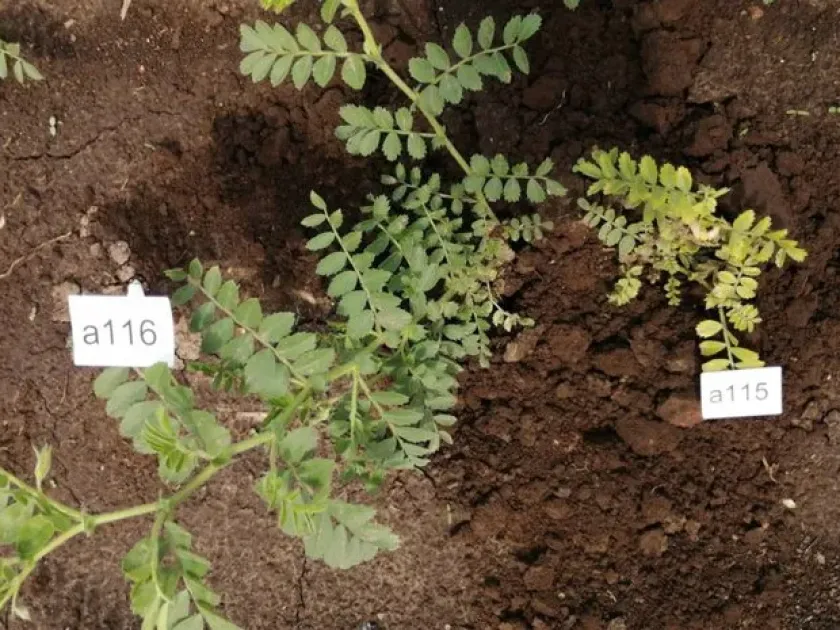
Plants affected by Chickpea stunt exhibit severe stunting, characterized by shortened internodes and a bushy, rosetted appearance.
Foliage symptoms typically include yellowing (chlorosis) or reddening/orange discoloration, often appearing first on the lower leaves and moving upwards.
Infected plants show excessive proliferation of side shoots, resulting in an abnormally dense growth habit compared to healthy plants.
Reproductive development is heavily impaired; flowering is either delayed or completely absent, leading to significant pod abortion.
The root system of stunted plants is poorly developed, which further stresses the plant and increases its vulnerability to drought and soil-borne pathogens.
Pathogen
Chickpea stunt is a viral disease primarily caused by the Beet western yellows virus (BWYV) or the specific Chickpea stunt virus (CpSV) belonging to the luteovirus group.
These viruses are phloem-limited, meaning they colonize the vascular tissues of the plant and interfere with the transport of photoassimilates to the roots and developing pods.
The pathogen is not seed-transmitted; instead, it relies on persistent transmission by aphid vectors, such as the pea aphid (Acyrthosiphon pisum).
The virus persists in alternate hosts, including perennial legumes and common weeds, which serve as reservoirs during the off-season.
Once an aphid acquires the virus through prolonged feeding on an infected plant, it remains a vector for the remainder of its lifespan, facilitating the spread of the virus across fields.
Conditions for development
The spread of the disease is highly dependent on the population dynamics and migratory patterns of aphid vectors in the surrounding environment.
Warm and dry weather conditions favor the rapid buildup of aphid populations, increasing the frequency of virus transmission events.
Large-scale outbreaks are often associated with proximity to infected perennial host plants or previous legume crops that harbor the virus during winter.
The crop is most susceptible during the early vegetative stages; early infection often results in the most severe symptoms and yield losses.
Secondary spread within the field is facilitated by wingless aphids moving between adjacent plants, especially in dense crop canopies.
Why it matters
Chickpea stunt can cause devastating economic losses, with yield reductions ranging from moderate levels to total crop failure in susceptible varieties.
Beyond total yield loss, surviving plants often produce shriveled, small, and unmarketable seeds with significantly reduced nutritional value.
The presence of stunted plants within a field disrupts uniform crop growth, complicates harvesting operations, and reduces the efficiency of farm equipment.
The disease reduces the plant's overall vigor, predisposing it to opportunistic infections by root rot fungi such as Fusarium or Rhizoctonia.
Management costs increase significantly due to the necessity of chemical intervention to control aphid populations before the virus can be transmitted.
Protection
Utilizing resistant or tolerant chickpea cultivars is the primary and most sustainable approach to managing the impacts of Chickpea stunt.
Strategic weed management is critical, as removing weeds from field perimeters eliminates primary virus reservoirs for overwintering aphids.
Effective aphid control using systemic insecticides during the early growth stages is essential to prevent primary infection and subsequent field spread.
Adjusting planting dates to avoid the peak flight times of aphids can help minimize the exposure of young, susceptible plants to viral transmission.
- Maintaining spatial isolation from perennial legume pastures.
- Monitoring aphid populations using yellow sticky traps.
- Ensuring proper soil nutrition to maintain plant vigor.
Discussion
No discussions yet — be the first.