
Cherry spur blight
Cherry spur cherry agent
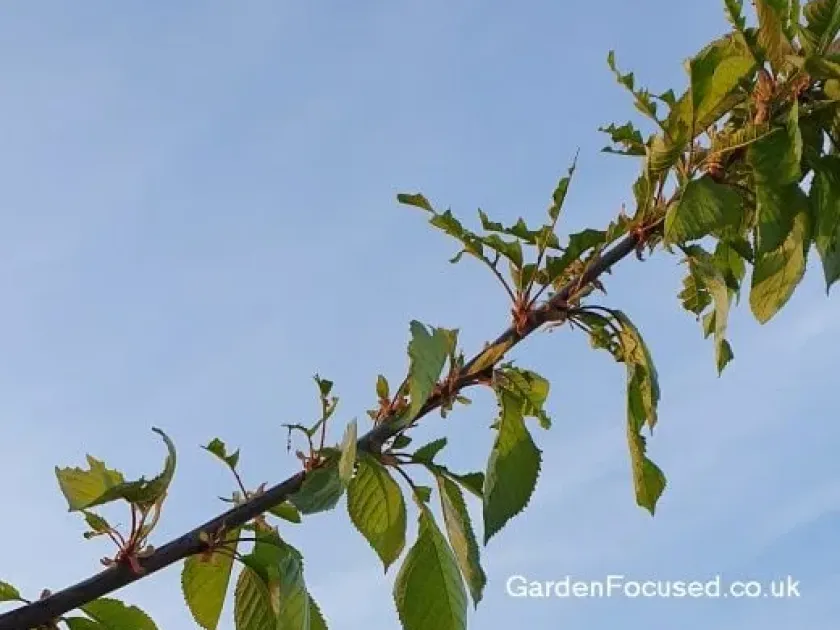
Description
Symptoms
The most distinctive sign of spur blight is the sudden wilting and browning of blossoms, which appear scorched as if they had been exposed to fire.
Infected spurs wither and die, but unlike healthy tissue, these dead spurs and the attached blossoms often remain firmly attached to the branches for a long time.
In humid conditions, small, grayish tufts of fungal sporulation can be observed on the surface of the infected spurs and twigs.
As the infection spreads to the supporting branches, the bark may crack, and gummy exudates (gummosis) frequently appear as the tree attempts to seal off the damaged areas.
- Blossoms that appear scorched or burned.
- Dead spurs remaining on the tree.
- Gray fungal spore tufts in damp weather.
- Cankers and gumming on branches.
Pathogen
Cherry spur blight is primarily caused by the fungus Monilinia cinerea, which is also responsible for blossom blight and brown rot in stone fruit trees.
The pathogen overwinters in mummified fruits, infected twigs, and cankers on branches, remaining dormant until the favorable conditions of early spring arise.
The infection initiates when fungal spores are dispersed by wind or rain and land on open flowers, penetrating the floral tissues during the bloom period.
The fungus progresses from the blossoms into the fruit spurs (the short stems that bear fruit), destroying the vascular tissue and causing rapid wilting.
Environmental factors dictate the severity of the pathogen's attack, with cool and wet weather being the primary catalyst for disease outbreak.
Conditions for development
The development of the disease is highly dependent on environmental conditions, specifically moisture and temperature during the critical bloom phase.
High humidity and consistent rainfall promote the rapid germination of spores, making the trees extremely vulnerable during the spring flowering season.
Orchards with poor air circulation, often due to dense or unpruned tree canopies, provide a protected microclimate where moisture persists and infection thrives.
Trees that have suffered winter injury or nutritional stress are more susceptible to the encroachment of the fungus into their tissues.
A history of uncontrolled disease in previous seasons creates a high inoculum pressure, making subsequent spring outbreaks nearly inevitable if not managed.
Why it matters
The primary economic impact is the direct loss of fruit production, as the spurs are the vital structures responsible for bearing the cherry harvest.
Chronic infections lead to the gradual decline of tree vigor, eventually reducing the overall lifespan of the orchard if left untreated.
The presence of cankers on the main branches can cause structural weakness, making the tree more prone to breakage during heavy fruit loads or high winds.
By killing the fruit-bearing wood, the disease disrupts the balance of the tree, often resulting in excessive vegetative growth that is unproductive and harder to prune.
Persistent blight can significantly reduce the tree's hardiness, leaving it unable to recover properly from harsh winter freezes.
Protection
Rigorous sanitation is the cornerstone of control; this includes pruning out all infected spurs and twigs, ensuring cuts are made into healthy wood.
All removed infected material should be promptly destroyed by burning or deep burial to eliminate the primary sources of fungal spores.
The application of protective fungicides during the blossom period is essential to prevent the fungus from entering the blossoms and establishing the infection.
Cultural practices such as thinning the canopy to improve light penetration and air movement are crucial for reducing the humidity levels that favor the pathogen.
Maintaining tree health through balanced fertilization and controlling wood-boring insects helps the tree develop stronger natural defenses against fungal invasion.
Discussion
No discussions yet — be the first.