
Cherry rust
Cherry rusty spot agent
Description
Symptoms
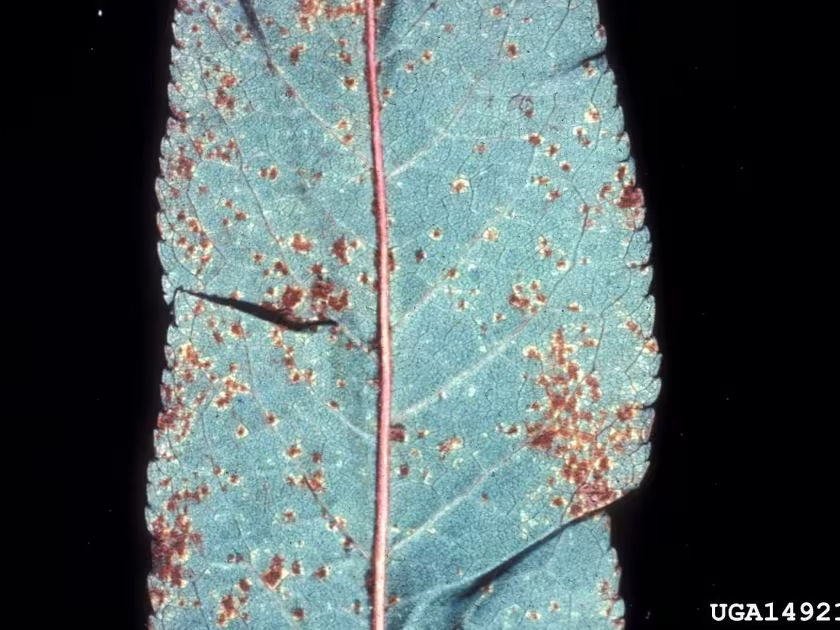
Initial symptoms of cherry rust appear in early summer as small, chlorotic spots on the upper leaf surface. Over time, these spots develop a distinct yellow or reddish-brown coloration as the infection progresses.
On the underside of the infected leaves, characteristic cushions or pustules (aecia) form. These are filled with a dusty, orange-to-rusty spore mass, which is the most definitive diagnostic feature of the disease.
In cases of severe infestation, the spots may coalesce, causing the leaf tissue to curl, deform, and eventually die. This leads to premature leaf drop, which can significantly weaken the overall health of the tree.
The infection can also affect fruits and young shoots, manifesting as sunken lesions. These affected fruits lose their quality, aesthetic appeal, and market value, making them unsuitable for fresh consumption or processing.
- Development of yellow-brown spots on the upper leaf surface.
- Presence of orange, rusty pustules on the underside of leaves.
- Premature leaf defoliation in mid-summer.
- Deformation and lesions on young shoots and fruits.
- Reduced vigor and stunted growth of the cherry tree.
Pathogen
The causal agent of cherry rust is the fungus Thekopsora areolata (formerly known as Pucciniastrum areolatum). This obligate parasite has a complex life cycle that often requires a coniferous host, typically spruce trees, to complete its development.
The disease belongs to the rust fungi group, which affects the leaves and fruits of stone fruit trees. The fungus produces multiple spore types, enabling it to spread efficiently over long distances through wind currents throughout the growing season.
The life cycle involves overwintering of the fungal mycelium on fallen leaves or on the needles of coniferous hosts. In the spring, basidiospores are released, which infect young cherry leaves and fruits when environmental conditions are suitable.
This is a fungal infection that interferes with the plant's metabolic processes and photosynthesis. Unlike bacterial infections, rust is easily identified by the specific orange or brown pustules that develop on the underside of the foliage.
The biology of the pathogen is closely tied to the host's health and the presence of moisture. Without proper management of debris and host plants, the fungus can survive in the orchard environment for many consecutive years.
Conditions for development
Cherry rust development is favored by prolonged periods of wet, rainy weather and moderate temperatures (between 15°C and 20°C). Leaf wetness is a mandatory requirement for the germination of fungal spores.
Dense canopies with poor air circulation create a microclimate that remains humid for extended periods. Lack of pruning prevents the foliage from drying out quickly after rain or dew, which drastically increases the risk of infection.
Proximity to spruce trees serves as a significant risk factor, as these trees act as intermediate hosts and primary reservoirs for the fungus. Spores can easily travel from infected conifers to nearby stone fruit orchards.
Trees that are already stressed due to poor nutrition or pest pressure are more susceptible to rust. A robust, well-maintained tree is generally more capable of withstanding the initial stages of infection.
The overall seasonal weather determines the severity of the outbreak. While hot and dry summer months can pause the spread of the disease, humid and overcast conditions facilitate rapid sporulation and wider distribution.
Why it matters
The primary economic impact of cherry rust is the drastic reduction in functional leaf surface area, which leads to a significant decrease in photosynthetic capacity and overall energy production for the tree.
Premature leaf drop deprives the tree of the ability to store vital carbohydrates and nutrients in its buds and woody tissues. This negative energy balance directly impacts the development of fruit buds for the following year.
Infected trees suffer from reduced winter hardiness. Because they cannot accumulate sufficient reserves, they are significantly more prone to cold damage and may struggle to recover during the following spring.
Direct losses occur due to unmarketable, infected fruit. Repeated yearly infections cause a gradual decline in the tree’s lifespan, productivity, and general resistance to other environmental stresses or diseases.
The buildup of the inoculum in the orchard environment over time makes control increasingly difficult if sanitation practices are not strictly implemented to break the disease cycle.
Protection
The most critical cultural practice is the thorough collection and destruction of fallen leaves, as the fungus overwinters in this debris. Burying the leaves deeply or burning them outside the orchard is essential.
Regular pruning is vital for maintaining an open, well-aerated canopy. This practice reduces humidity levels around the foliage, making the environment less hospitable for fungal spore germination and development.
Chemical control involves the application of fungicides during high-risk periods, specifically before and after the flowering stage. Systemic fungicides are often more effective in protecting new growth from infection.
Maintaining a balanced nutritional program, particularly with potash and phosphorus, helps strengthen the tree’s natural immune system and allows it to better withstand potential fungal challenges.
If spruce trees are located nearby, monitoring them for rust symptoms is recommended. In severe cases, managing the health of the intermediate host can significantly reduce the infection pressure on the cherry orchard.
Discussion
No discussions yet — be the first.