
Cherry rosette
Cherry rosette virus
Description
Symptoms
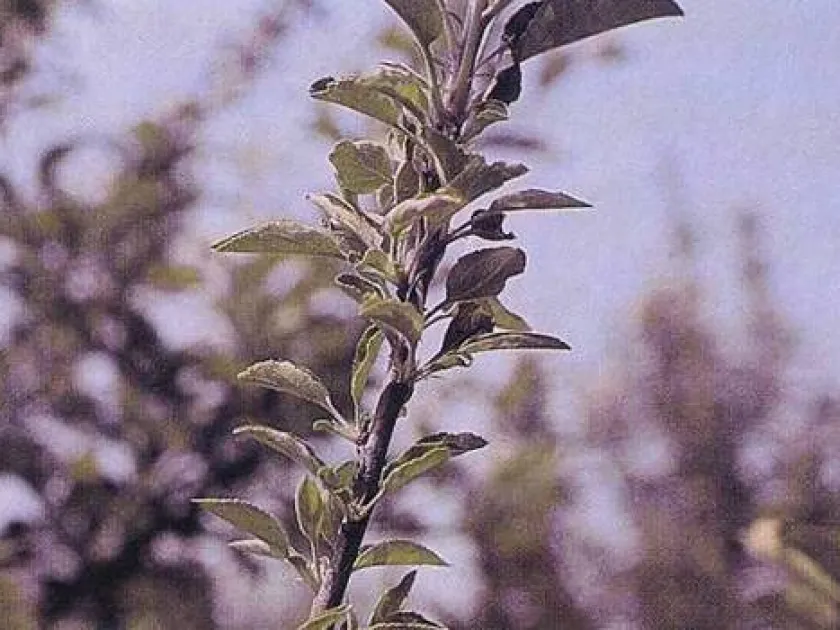
The most prominent symptom of cherry rosette is the severe shortening of internodes on affected branches. This leads to the clustering of leaves at the tips of shoots, creating the characteristic rosette appearance from which the disease gets its name.
Leaves on infected shoots are frequently deformed, often becoming narrow, lanceolate, or irregularly curled. Chlorosis, or yellowing of the leaf tissue, is common, sometimes appearing as a distinct mosaic pattern across the foliage.
Flowering is significantly impacted in diseased trees, with affected branches producing very few or no blossoms at all. The buds that do develop are typically stunted, distorted, and lack the viability required for successful pollination and fruit set.
Infected trees exhibit a marked reduction in growth compared to healthy ones, leading to an overall stunted appearance. The canopy often develops unevenly, leaving the tree looking sparse and visibly weak throughout the growing season.
As the disease progresses over several years, shoot tip dieback becomes evident, eventually leading to a condition known as stag-headedness. If left unmanaged, the tree continues to decline in vigor and eventually dies.
Pathogen
Cherry rosette is caused by a virus that specifically infects stone fruit species. It is a systemic pathogen, meaning that once the virus enters the plant, it moves through the vascular tissues to colonize all parts of the tree, including the roots and fruits.
The virus is an obligate parasite, meaning it depends entirely on the host plant's cellular machinery to replicate. It disrupts normal physiological processes by interfering with the transport of nutrients and essential plant hormones.
The primary method of spread in new orchards is through infected nursery stock. Because the virus can remain latent for extended periods without showing symptoms, asymptomatic nursery trees are frequently responsible for introducing the disease to new locations.
Insect vectors, particularly aphids and mites, play a critical role in the transmission of the virus. By feeding on the sap of infected trees and then moving to healthy ones, these pests effectively disseminate the virus throughout the orchard.
Mechanical transmission is also a significant concern during standard orchard operations. Pruning tools, if not properly disinfected between trees, can easily transfer viral particles via infected sap residues left on blades, leading to localized outbreaks.
Why it matters
The primary economic impact of cherry rosette is the severe reduction or total loss of fruit production. By disrupting the tree's hormonal balance, the virus prevents the normal development and maturation of flower buds.
Infected trees experience a significant decrease in winter hardiness, making them highly susceptible to cold injury. Even mild winters can cause extensive tissue damage in trees weakened by the virus, further accelerating their decline.
Weakened trees become highly vulnerable to secondary infections, such as fungal pathogens, and increased pressure from other pests. This compounding effect significantly shortens the lifespan of the tree in the orchard.
There are significant financial losses associated with the need to remove and replace infected trees. In cases of nursery infestation, entire batches of planting material must be destroyed to prevent the further spread of the disease.
Any fruit produced by symptomatic trees is usually of poor quality, often undersized, deformed, and lacking in flavor. Such produce is commercially unmarketable and represents a wasted input of resources for the grower.
Protection
The most effective strategy for managing cherry rosette is the immediate identification and removal of symptomatic trees. Affected trees must be uprooted and destroyed, as they serve as a constant reservoir for the virus.
Prevention begins with the selection of certified virus-free planting stock from reputable nurseries. Ensuring that the orchard starts with healthy, tested trees is the most crucial step in preventing long-term viral issues.
Active control of insect vectors like aphids and mites is essential to minimize the spread of the virus within the orchard. Regular monitoring and appropriate pesticide application help to break the transmission cycle between trees.
Strict hygiene protocols must be followed during pruning and other maintenance activities. Disinfecting tools with alcohol or appropriate commercial sanitizers between every tree is vital to preventing mechanical transmission.
Maintaining optimal tree health through proper fertilization, irrigation, and general orchard care can help mitigate the impact of disease. While it does not cure the virus, a vigorous tree can better withstand physiological stress.
Discussion
No discussions yet — be the first.