
Pink disease
Cherry pink fruit agent
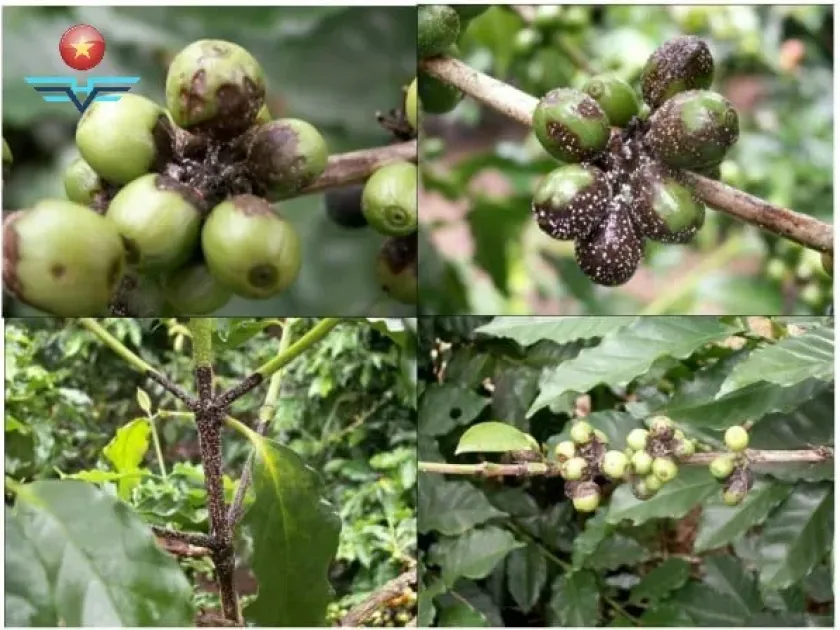
Description
Symptoms
The disease is characterized by a cobweb-like mycelial growth on the bark, which later turns into a distinct pink or salmon-colored powdery crust.
As the infection progresses, the bark begins to crack and peel away, revealing necrotic tissues and leading to the eventual death of the affected twig or branch.
Leaves on infected branches show signs of wilting and yellowing due to the blockage of nutrient and water flow caused by the fungal colonization.
In advanced stages, the fungus may produce pustules or fissures on the bark surface, from which spores are released to infect adjacent parts of the tree.
Symptoms are often localized, with specific branches showing severe damage while the rest of the canopy may initially appear unaffected.
Pathogen
Pink disease is caused by the basidiomycetous fungus Corticium salmonicolor (synonym Phanerochaete salmonicolor), a serious pathogen of woody plants.
The fungus produces a mycelial mat that colonizes the bark and cambium, eventually disrupting the vascular system of the host plant.
Spores of the pathogen are primarily disseminated by wind and splashing rain, which is why the disease is highly prevalent in tropical and subtropical regions.
The fungal life cycle involves different phases, including a crustose form and a pustule-forming stage, which allow it to survive periods of environmental stress.
The pathogen is known for its ability to persist in diseased twigs and branches, making it difficult to eradicate completely once it has established itself.
Conditions for development
High relative humidity, typically exceeding 80 percent, is the primary environmental driver for the development and spread of Corticium salmonicolor.
The fungus thrives in warm temperatures, with an optimal range between 20 and 28 degrees Celsius, characteristic of tropical rainfall patterns.
Poor ventilation within the orchard canopy prevents rapid drying of the bark, creating ideal conditions for the colonization of the fungus.
Trees that are already weakened by pest infestations, nutrient deficiencies, or mechanical damage are significantly more susceptible to infection.
Continuous rainfall events facilitate the mass production and spread of spores, often leading to rapid disease development across entire plantations.
Why it matters
Pink disease causes substantial economic losses by killing productive branches, which significantly reduces fruit yield and overall tree vigor.
Severe infections can lead to the death of the main trunk, effectively destroying the entire tree and requiring expensive replanting efforts.
The structural damage caused by the fungus makes trees prone to snapping during high winds, posing further risks to the integrity of the orchard.
The disease depletes the resources of the tree, making it more vulnerable to opportunistic pests and secondary infections by other fungi.
Managing the disease is labor-intensive, requiring constant surveillance and costly pruning interventions to prevent total canopy collapse.
Protection
The most effective strategy involves rigorous sanitary pruning, where infected branches are removed at least 30-50 cm below the visible lesion.
Pruned material must be collected and destroyed, preferably by burning, to eliminate the reservoir of spores from the orchard environment.
Copper-based fungicides are widely used as protectants, applied to the bark surface during the beginning of the rainy season to inhibit spore germination.
Proper orchard hygiene, including regular canopy thinning and the removal of dead wood, helps improve aeration and reduces humidity levels.
Maintaining tree health through balanced fertilization and robust pest control measures significantly enhances the natural resistance of trees to Pink disease.
Discussion
No discussions yet — be the first.