
Cherry bacterial spot
Cherry black canker agent
Description
Symptoms
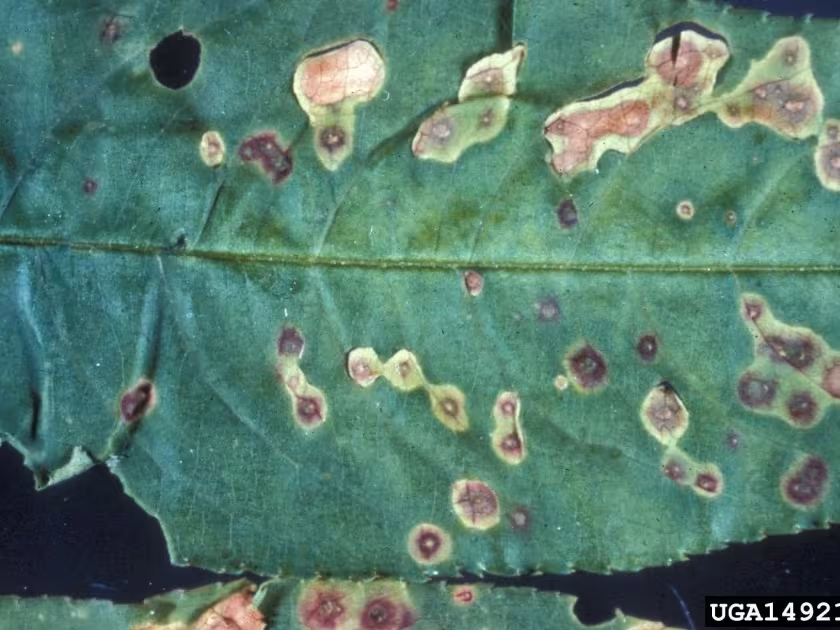
The disease first appears on leaves as small, water-soaked, angular spots. As the infection progresses, these spots darken, often becoming deep brown or black with a distinct yellow halo.
In severe cases, the necrotic spots may fall out of the leaf blade, a symptom known as "shot-hole." Infected leaves often turn yellow and fall prematurely, causing partial or total defoliation of the tree.
On young shoots, the bacterium causes the formation of dark, sunken cankers. These lesions may crack, releasing a bacterial exudate that appears as a slimy discharge in humid weather conditions.
Fruit symptoms include small, dark, depressed spots. These lesions can cause the fruit to become deformed and may lead to cracked skins, allowing for opportunistic fungi and rot to infect the ripening cherry.
- Water-soaked, angular leaf spots.
- Yellow halo surrounding necrosis.
- Premature yellowing and leaf drop.
- Sunken cankers on young twigs.
- Dark, depressed lesions on fruit.
Pathogen
The causative agent of this disease is the bacterium Xanthomonas arboricola pv. pruni. It is a gram-negative, rod-shaped bacterium known for causing significant damage to various stone fruit species, including cherry, peach, and plum.
This pathogen survives the winter in infected tissues, such as twig cankers, dormant buds, and fallen leaves. It remains quiescent during cold weather and activates when favorable conditions arise in spring.
The bacterium utilizes various entry points to infect host plants, including natural openings like stomata and mechanical wounds caused by pruning or insect activity. Once inside, it colonizes the intercellular spaces.
Dissemination occurs primarily through rain splashes and wind, which transport the bacterial cells from lesions on leaves and twigs to healthy tissue. Insects can also act as mechanical vectors.
The production of extracellular polysaccharides and cell-wall-degrading enzymes allows the pathogen to break down host tissues, leading to the formation of characteristic necrotic spots and lesions.
Conditions for development
Bacterial spot thrives in warm, humid environments. High rainfall during the spring and early summer is the most significant factor in triggering an epidemic spread of the disease.
Optimal temperatures for bacterial multiplication range between 20°C and 25°C. Excessive moisture on leaf surfaces provides the necessary medium for bacteria to multiply and enter plant tissues.
Orchards with poor air circulation, often due to high planting density or lack of pruning, are at higher risk. Still air allows moisture to remain on foliage for longer durations, facilitating infection.
Mechanical damage is a major risk factor. Pruning during wet weather or failing to sanitize equipment between trees creates multiple entry points for the bacteria to colonize the host.
Soil management also plays a role, as trees under stress from improper fertilization or lack of proper moisture management exhibit reduced natural resistance to pathogen penetration.
Why it matters
The primary damage caused by bacterial spot is the reduction in photosynthetic capacity. Massive premature defoliation prevents the tree from storing enough energy, leading to overall decline.
Long-term infections cause twig dieback and stunted growth. The tree becomes increasingly susceptible to winter damage due to the loss of nutrients required for cold hardiness.
The quality of the fruit is severely compromised. Lesions on the cherries make them unmarketable, leading to substantial economic losses for commercial growers and home gardeners alike.
If left unmanaged, the cumulative impact of the disease can lead to the death of the tree over several growing seasons, as the tree’s structural integrity is damaged by cankers.
The disease is highly contagious within an orchard setting. Once a focus of infection is established, the bacteria can rapidly spread, threatening the entire block if not contained.
Protection
Management focuses on prevention, starting with the selection of resistant varieties. Certified disease-free nursery stock is essential for avoiding the introduction of the pathogen into new areas.
Rigorous sanitation practices are required. Pruning out infected twigs and removing fallen leaves from the orchard floor significantly reduces the amount of inoculum available for the next season.
Copper-based sprays applied during the dormant season and early leaf development can help suppress bacterial populations on the tree surface and protect emerging tissue.
Maintaining tree vigor through proper fertilization and irrigation is key to disease resistance. Avoid excessive nitrogen, which can produce succulent, highly susceptible growth.
Always sanitize pruning equipment with a disinfectant solution between trees to prevent mechanical transmission. Regular scouting allows for the early removal of symptomatic branches to limit spread.
Discussion
No discussions yet — be the first.