
Chenopodium necrosis
Chenopodium necrosis virus
Description
Symptoms
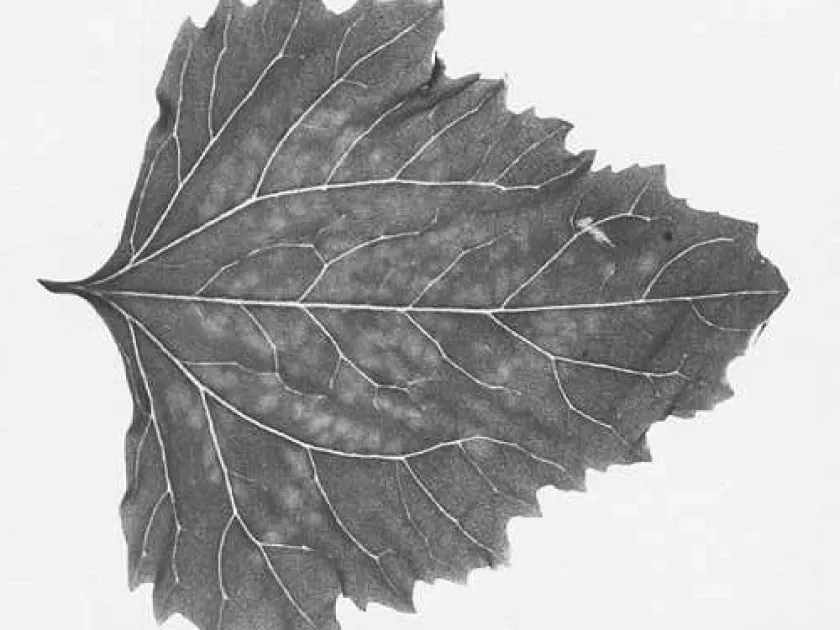
The initial symptoms include chlorotic spotting on the leaves, which gradually develop into distinct necrotic lesions that often appear brown or dark in color.
Infected plants frequently show severe leaf deformation, curling, and crinkling. Over time, these tissues become brittle and may drop prematurely, leading to significant foliage loss.
Stunting is a primary indicator of the infection. Affected plants fail to reach their full potential, appearing stunted, thin, and generally weaker than healthy neighbors.
Reproductive organs are often impacted, leading to reduced flower formation, fruit deformation, and lower seed viability, which directly influences the final yield.
Symptoms usually appear in localized clusters or patches within the field, representing areas where the virus has established itself through soil or mechanical transmission.
Pathogen
The causal agent of this disease is the Chenopodium necrosis virus (ChNV), a member of the Alphanecrovirus genus within the Tombusviridae family. It is a small, stable RNA virus that can infect a wide range of host plants.
This is a systemic viral infection that spreads primarily through mechanical contact, contaminated soil, and irrigation water. The virus is known for its ability to persist in the environment for extended periods.
The pathogen can survive in infected crop residues and seeds, creating persistent reservoirs that ensure the infection returns season after season in susceptible fields.
Viral particles remain highly infectious even when exposed to fluctuating environmental conditions, facilitating spread through soil movement and farm machinery.
Studies on the biology of the virus indicate that it has a high rate of transmission via root contact, which explains the characteristic patchiness of the disease in the field.
Conditions for development
The development of the virus is favored by moderate temperatures and high soil moisture, which help maintain the viability and mobility of viral particles.
Periods of heavy rain or excessive irrigation facilitate the movement of the virus through the soil profile, allowing it to spread from infected patches to previously healthy areas.
The presence of susceptible weed species, particularly those in the Chenopodiaceae family, acts as a primary reservoir, maintaining the virus cycle throughout the year.
High planting density contributes to the spread of the disease by increasing the frequency of contact between the roots and leaves of adjacent plants, speeding up the epidemic process.
Any mechanical damage to plants, whether caused by insect feeding or field operations, creates entry points that significantly increase the susceptibility of the crop to viral infection.
Why it matters
The primary impact of Chenopodium necrosis is a significant reduction in overall biomass and harvest quality, leading to substantial economic losses for farmers.
The disease impairs critical physiological functions such as photosynthesis, weakening the plant's ability to store energy and develop robust fruit or root systems.
Infected plants are significantly more prone to secondary infections, such as bacterial or fungal rots, which capitalize on the necrotic tissues to further damage the plant.
Marketable quality is severely degraded due to the physical deformation of the plant parts, making the produce unsuitable for sale or long-term storage.
Managing the disease requires extensive inputs, including soil sanitation and potential quarantine measures, which further reduce the profitability of the agricultural operation.
Protection
Implementing a strict crop rotation program is the most effective way to manage the disease, ensuring that susceptible crops are not grown in the same soil consecutively.
Rigorous weed management is essential, as eliminating the alternate hosts within the Chenopodiaceae family is key to breaking the virus infection cycle.
Farmers should prioritize the use of certified, disease-free seed and sanitize all farming equipment thoroughly to prevent the mechanical transport of the virus.
Proper sanitation practices after harvest, including the removal and destruction of crop residues, are vital to preventing the virus from overwintering in the field.
- Disinfecting tools and machinery to prevent cross-contamination between fields.
- Early detection and removal of symptomatic plants to limit the spread within a patch.
- Avoiding excessive irrigation that leads to water stagnation and viral spread.
Discussion
No discussions yet — be the first.